
Vitamin D Alone vs D3 + K2: What Actually Changes?
If you are choosing between a plain vitamin D product and a D3 + K2 combo, the fastest answer is this: adding K2 changes the formula, but it does not create a blanket rule that everyone taking vitamin D also needs K2. For most people, the main reason for buying the product is still the vitamin D. If you want broader supplement comparisons, start in our compare hub.
Fast verdict for Vitamin D Alone vs D3 + K2: What Changes, What Does Not, and Who Should Be Careful
D3 + K2 is not an automatic upgrade over vitamin D alone; the combination simply adds a form of vitamin K to the label, and there is no universal rule that every vitamin D user must add K2.
- Vitamin D alone gives you vitamin D only, usually as D2 or D3.
- D3 + K2 gives you vitamin D3 plus a form of vitamin K.
- What changes: the combo adds vitamin K to the label and to your routine.
- What does not automatically change: your need for vitamin D, the usefulness of checking a 25(OH)D blood level when appropriate, or the fact that there is no universal rule that every vitamin D user must add K2.
- Why combo marketing can confuse people: it often makes the pairing sound mandatory when the evidence does not support that for everyone.
- Important caution: if you use warfarin or similar anticoagulation, do not casually add vitamin K products without clinician guidance.
On this pageTable of Contents
- 1Fast verdict for Vitamin D Alone vs D3 + K2: What Changes, What Does Not, and Who Should Be Careful
- 2Vitamin D alone vs D3 + K2: quick decision table
- 3What changes between vitamin D alone and D3 + K2?
- 4What does not change as much as marketing suggests?
- 5How do bone health, labs, and dose fit in?
- 6What practical routine and label notes matter?
- 7Which option fits which use case?
- 8FAQ
Featured Product Routes
If the formula choice is clear, compare actual labels next. These product routes make the vitamin D amount, serving burden, and D-only versus D3+K2 tradeoff easier to check.
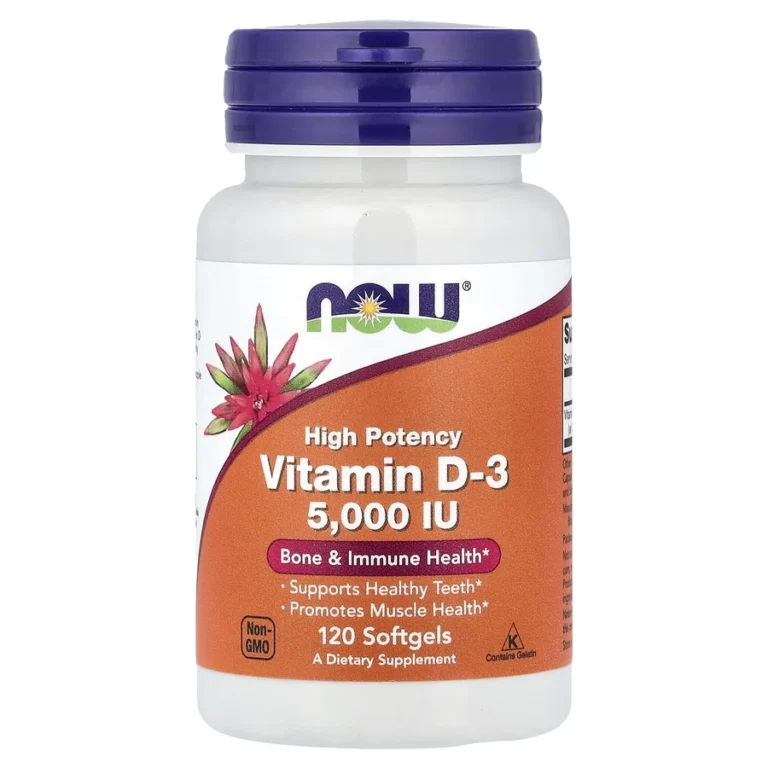 Softgels NOW Vitamin D3 5000 IU D3 125 mcg (5,000 IU) per label serving.
 Softgels Doctor's Best Vitamin D3 5000 IU D3 125 mcg (5,000 IU) per label serving.
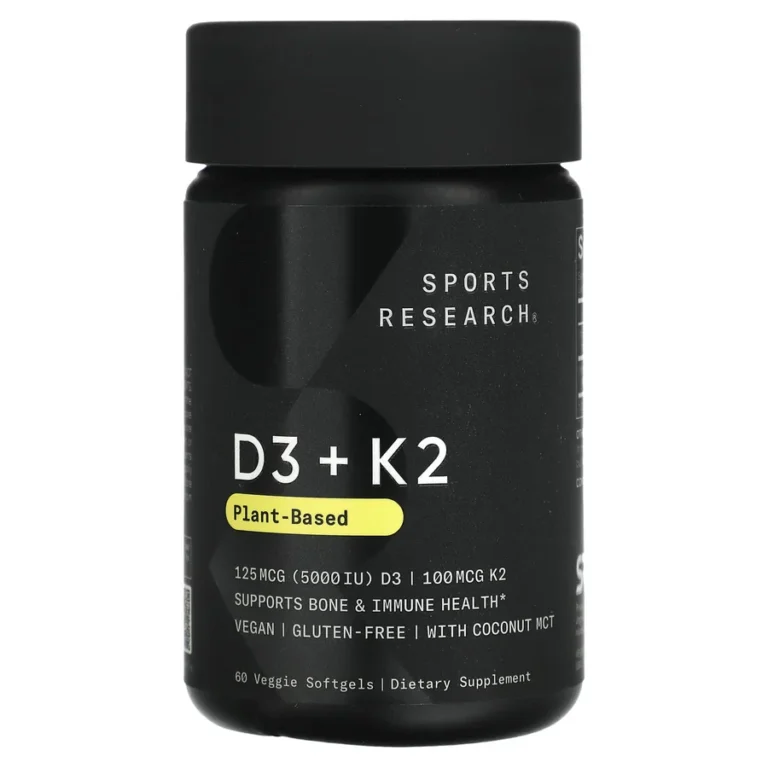 Softgels Sports Research D3 + K2 Plant Based 5000 IU Lichen D3 125 mcg (5,000 IU); chickpea K2 MK-7 100 mcg per label serving.
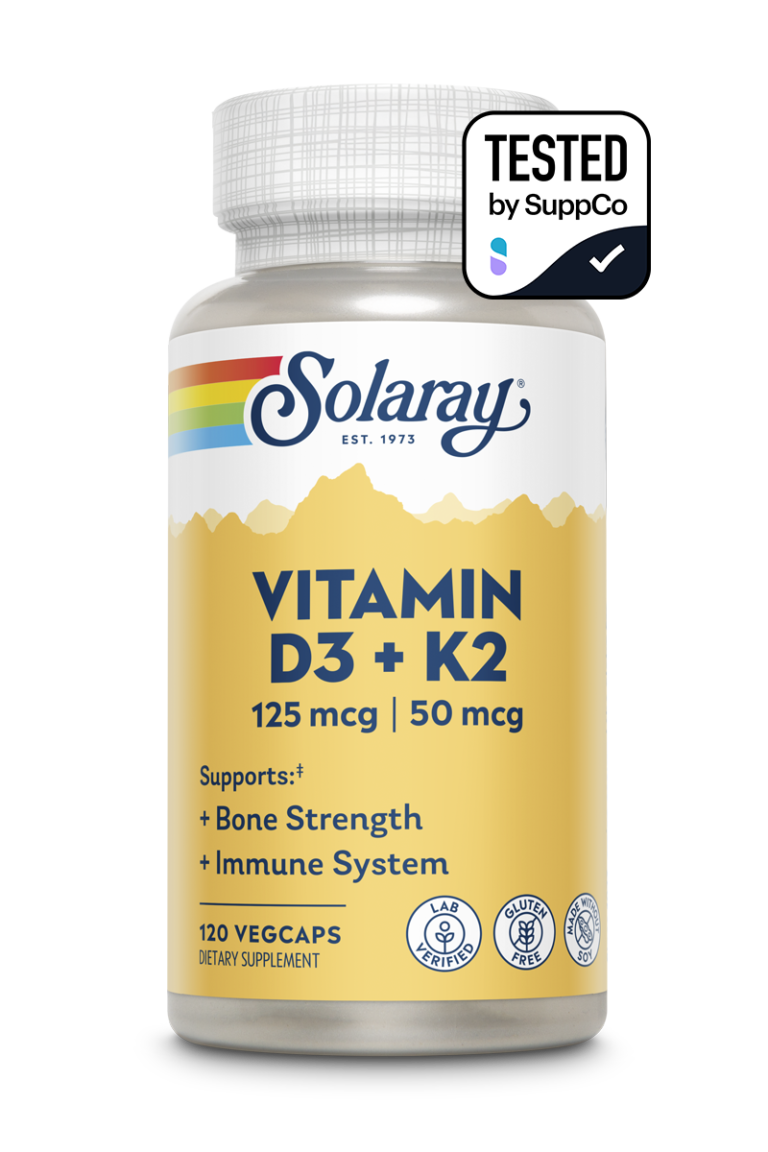 Capsules Solaray Vitamin D3 + K2 D3 125 mcg (5,000 IU); K2 MK-7 50 mcg; calcium 110 mg; phosphorus 85 mg per label serving.
Need another D-only baseline? Compare 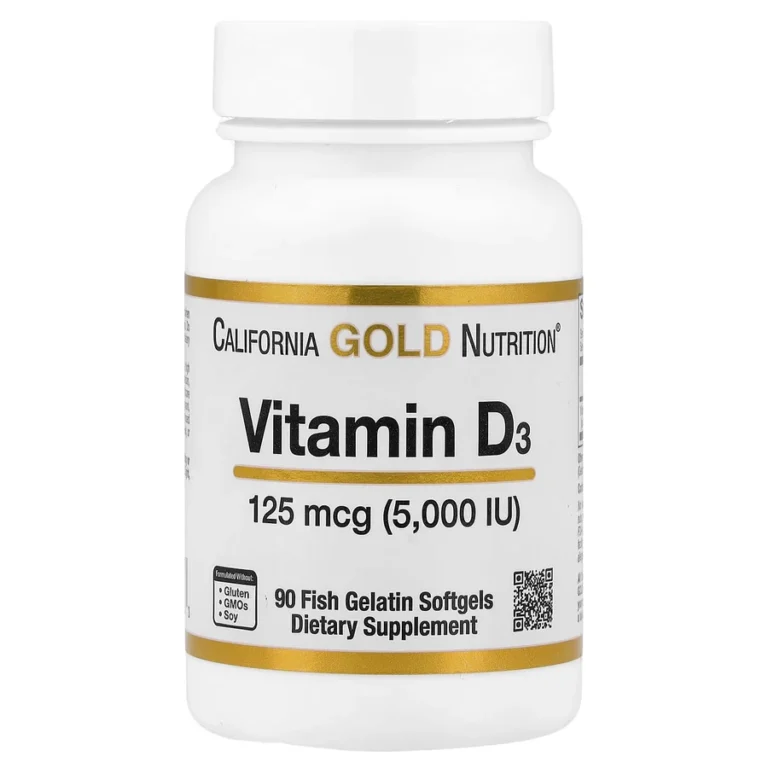 California Gold Nutrition Vitamin D3 5000 IU or browse the broader Products Hub.
Vitamin D alone vs D3 + K2: quick decision table
| Decision point | Vitamin D alone | D3 + K2 |
|---|---|---|
| Best reason to choose it | You want the simplest vitamin D-only routine. | You want one bottle that combines vitamin D3 with vitamin K2. |
| What actually changes | The label focuses on vitamin D form, amount, and routine fit. | The label adds vitamin K/K2, which changes the formula and caution checklist. |
| Label checks | Check serving size, vitamin D amount, form, and Daily Value. | Check serving size, D3 amount, K2 form, Daily Value, and other ingredients. |
| Choose this if | You mainly want to correct or maintain vitamin D intake without extra formula complexity. | You prefer a combo product and have no warfarin or vitamin K management concerns. |
What does not change as much as marketing suggests?
The biggest thing that does not automatically change is whether you personally need extra vitamin K. NIH notes that vitamin K includes K1 and K2, and that most U.S. diets already provide adequate vitamin K. So a combo product is not proof that a separate vitamin K need exists.
Marketing can also imply that adding K2 makes vitamin D inherently smarter, safer, or more complete for everyone. That is too broad. Adding K2 changes the formula, but it does not erase the need to choose an appropriate vitamin D dose, watch for side effects, or decide whether blood testing makes sense for your situation.
In other words, a D3 + K2 label may be reasonable, but it is not automatically better for every buyer. Often it is simply a convenience choice.
How do bone health, labs, and dose fit in?
Vitamin D and vitamin K are both tied to bone health in NIH materials, but that does not mean everyone needs them together in supplement form. The more useful question is usually: what problem are you trying to solve?
If your main goal is correcting or maintaining vitamin D intake, the key issues are still the vitamin D form, dose, consistency, and your overall context. When clinicians assess vitamin D status, NIH says they use a 25(OH)D blood test. Adding K2 to the bottle does not change that. If you are wondering which labs matter before starting or adjusting vitamin D, see what blood tests matter before vitamin D.
This is also why a combo product should not distract from dose questions. If the vitamin D amount is too low, adding K2 does not solve that. If the vitamin D amount is too high for you, adding K2 does not make the dose question disappear either. For side-effect context, see vitamin D side effects.
What practical routine and label notes matter?
If you already know you want vitamin D, the simplest routine is usually the one you will actually follow consistently. For some people that means a plain vitamin D product. For others it means a combined D3 + K2 capsule because it reduces pill count.
- Read the label for the actual vitamin D amount. Check the serving size, amount, and Daily Value before the headline ingredient list distracts from the dose.
- Notice whether the product is D2 or D3. Many combo products specifically use D3.
- Do not assume “with K2” means “required.” It often means “included.”
- Keep timing simple. Consistency usually matters more than supplement branding. If timing is your next question, see best time to take vitamin D.
- Be careful with vitamin K if you use anticoagulation. NIH specifically notes an interaction with warfarin, and consistency of vitamin K intake matters.
Which option fits which use case?
Vitamin D alone may fit better if:
- You want the simplest possible product.
- Your main question is just vitamin D intake or vitamin D status.
- You prefer to avoid other ingredients or added nutrients unless there is a clear reason to add them.
- You use warfarin or similar anticoagulation and need to be especially careful with vitamin K products.
D3 + K2 may fit better if:
- You prefer a combined formula for convenience.
- You specifically want both nutrients in one product and understand that this is a preference choice, not a universal requirement.
- You are not on warfarin and do not have a clinician telling you to keep vitamin K intake tightly managed.
If you are unsure which path fits your medical context, medication list, or lab history, use when to talk to a clinician as a guide for when professional input makes sense.
FAQ
Do you need K2 with vitamin D?
No blanket rule says that everyone taking vitamin D also needs K2. NIH notes that most U.S. diets already provide adequate vitamin K, so the answer depends on your situation rather than on marketing claims.
Is D3 + K2 always better than vitamin D alone?
Not automatically. It is a different formula, not a universal upgrade. For many people, the main reason for taking the product is still vitamin D itself.
What actually changes when K2 is added?
You are adding vitamin K to the supplement. That may change convenience, label complexity, and medication considerations, especially if you use warfarin or similar anticoagulation.
Does adding K2 change which blood test matters for vitamin D?
No. NIH says vitamin D status is assessed with a 25(OH)D test. Adding K2 to the product does not change that lab framework.
Why do combo products sound so important in ads?
Because combo marketing often frames the pairing as essential. In practice, that can overstate the case. A combined formula may be reasonable, but it is not automatically necessary for every person taking vitamin D.
Who should be especially careful with D3 + K2?
Anyone using warfarin should be especially careful, because NIH notes that vitamin K interacts with warfarin and intake consistency matters. People on similar anticoagulation plans should also avoid casual changes without clinician advice.
References
- NIH Office of Dietary Supplements: Vitamin D Fact Sheet for Consumers
- NIH Office of Dietary Supplements: Vitamin D Fact Sheet for Health Professionals
- NIH Office of Dietary Supplements: Vitamin K Fact Sheet for Consumers
- NIH Office of Dietary Supplements: Vitamin K Fact Sheet for Health Professionals
Evidence map
What the evidence changes in the decision
| Claim | Evidence type | Reader decision | Freshness risk |
|---|---|---|---|
| D3/K2 is not automatically better for everyone | Evidence boundary | The combination can be reasonable for some routines, but it should not replace lab context, dose fit, or medication review. | Medium |
| Vitamin K context matters for blood thinner users | Safety boundary | People using warfarin or related anticoagulants should not treat K2 as a casual add-on. | High |
| A simple D3 product can be the cleaner choice | Decision synthesis | If the question is basic vitamin D intake, a D3-only product may be easier to dose and evaluate than a bundled formula. | Low |
This table is a decision aid. It does not diagnose a deficiency, predict individual benefit, or replace medication-specific advice.
When the Vitamin D Alone vs D3 + K2: What Changes, What Does Not, and Who Should Be Careful answer changes
The better choice depends on your goal, dose, preferred form, medicines, tolerance and budget. No single option suits everyone.
- Safety changes the answer: medications, pregnancy, kidney/liver issues, surgery, abnormal labs, or side effects can outweigh convenience.
- Label details change the answer: serving size, active amount, other ingredients, testing proof, and price per useful dose can shift the practical pick.
- Goal changes the answer: sleep, digestion, training, deficiency correction, and general wellness can require different forms or timing.
Common D3 + K2 questions
Is a D3 + K2 supplement better than vitamin D alone?
Not automatically. D3 + K2 is a different formula, not a universal upgrade. The main decision is still whether the vitamin D amount, serving size, and routine fit make sense for you.
Do you need vitamin K2 with vitamin D3?
There is no blanket rule that everyone taking D3 also needs K2. A combo product may be convenient, but it should not distract from vitamin D dose, blood-test context, and medication cautions.
Who should avoid casual D3 + K2 use?
People using warfarin or similar anticoagulation should not casually add vitamin K products. If vitamin K intake needs to stay consistent, a D3 + K2 combo changes the routine in a way that deserves clinician guidance.
What should I check on a D3 + K2 label?
Check vitamin D amount, K2 form, Daily Value, serving size, and other ingredients. Also compare whether a simpler D3-only product would answer the same question with less formula complexity.
Update Note
Last reviewed and updated on September 24, 2026. Added direct-answer blocks for D3 + K2 comparison queries, K2 necessity claims, warfarin caution, and label checks.
Editorial information
Reviewed for Trust
- Publisher: Supplement Explained Editorial Team
- Review model: Editorial evidence review; clinician review is shown only when a named clinician is listed.
- Last reviewed: September 24, 2026
- Last updated: September 24, 2026
- Editorial Policy | How We Review Evidence | Research Process | Disclaimer
- Use: Informational only. Not personal medical advice.