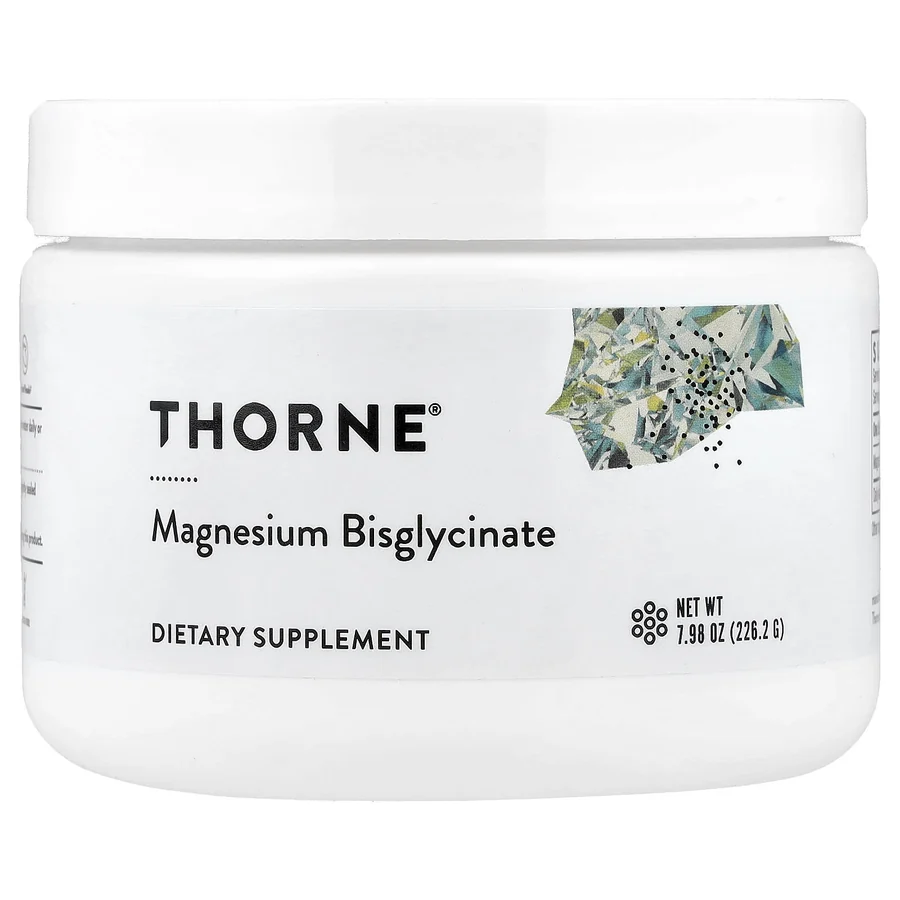
Editorial cover art for Thorne Magnesium Bisglycinate

Magnesium Product Analysis

Thorne Magnesium Bisglycinate

Premium powder format, NSF Certified for Sport, and real price-versus-convenience tradeoffs.

Thorne Magnesium Bisglycinate

This label-based review covers Thorne Magnesium Bisglycinate powder, a premium magnesium product built around one clear idea: a 200 mg magnesium bisglycinate serving in a scoopable, sweetened format with NSF Certified for Sport. That makes it more distinctive on powder convenience and sport certification than on being uniquely proven for everyone.

  • Best for: people who want a powdered magnesium bisglycinate, athletes who value NSF Certified for Sport, and shoppers who prefer mixing a drink over swallowing pills
  • Skip if: you want the cheapest magnesium option, dislike sweetened powders, or prefer a simple capsule or tablet
  • Form: magnesium as magnesium bisglycinate powder
  • Active dose: 200 mg magnesium per 1 scoop serving
  • Servings: 60 servings per container
  • Quality markers: NSF Certified for Sport, gluten free
  • Price band: premium, with the current public iHerb listing at $52.00, or about $0.87 per serving

Retail check

Check the current iHerb listing before you decide.

Use the retailer page for the latest price, package size, availability, shipping details, and label images. We use this as a decision check, not a guarantee that the product is right for you.

Disclosure: This button may use a retail partner link. If it does, Supplement Explained may earn a commission at no extra cost to you.

Buy at iHerb

Live retailer page, opens in a new tab.

Supplement Explained Score

Supplement Explained Score: 23/25. This is our editorial buying-decision score, not a lab certificate, customer rating, medical recommendation, or proof that the product will work for you.

Review proof status: Label-based editorial review. This page uses label facts, retailer data, public quality signals, and evidence boundaries. The score still varies by product, but it is not a hands-on lab test or personal-use review unless the page explicitly says so.

Score confidence: Moderate label confidence. The score is based on label facts, public retailer or brand data, and a visible testing or certification signal. It is not hands-on proof.

How to read it: the score summarizes label clarity, evidence fit, safety fit, quality proof, and value fit. It does not replace current labels, clinician input, or first-hand product proof.

See the score method or use the interaction checklist before combining products.

Quick decision snapshot

A fast read before the full analysis: score, evidence boundary, safety gate, value snapshot, and quality proof are separated so the page does not blur marketing claims into a buying recommendation.

SE Score23/25 Clear label-based decision signal across label clarity, evidence transfer, safety fit, quality proof, and value fit.
Score confidenceModerate label confidence The score is based on label facts, public retailer or brand data, and a visible testing or certification signal. It is not hands-on proof.
Review proofLabel-based editorial review This page uses label facts, retailer data, public quality signals, and evidence boundaries. The score still varies by product, but it is not a hands-on lab test or personal-use review unless the page explicitly says so.
Evidence gradeIngredient-level evidence discussed The page discusses evidence context while avoiding the shortcut that ingredient research proves this specific bottle.
Safety gateSafety cautions are visible Medication use, pregnancy, surgery, kidney/liver issues, abnormal labs, and high-dose stacks should slow the decision down.
Value check$52.00 Price and stock can change. Price checked: 2026-06-10. Compare by useful dose, not bottle price alone.
Quality proofCertification signal visible A named certification or sport-testing signal is discussed; still verify the exact package and retailer page.

Review status: This is a label-based editorial review unless a hands-on testing note is shown on the page. It is not a lab test, medical review, or user aggregate rating.

Affiliate note: retailer links may earn a commission at no extra cost to you. The score is editorial decision support, not a medical recommendation or guarantee of results.

On this pageTable of Contents
  1. 1Supplement Explained Score
  2. 2If you only compare one thing
  3. 3Who it fits — and who should skip it
  4. 4What is in the formula?
  5. 5Price and value analysis
  6. 6Is there third-party testing or quality proof?
  7. 7Use-case fit and evidence limits
  8. 8What do real users often report?
  9. 9Alternatives to compare
  10. 10FAQ

If you only compare one thing

Compare the premium price against what you actually get: 200 mg magnesium bisglycinate, powder format, sweetened flavor, and NSF Certified for Sport.

  • Proof status: label-based editorial review, not a hands-on taste or lab test.
  • Compare next: NOW Magnesium Glycinate Tablets if price and tablet practicality matter more.

Who it fits — and who should skip it

It may fit if:

  • you specifically want magnesium bisglycinate rather than a mixed or unspecified form
  • you prefer a powdered drink to capsules or tablets
  • you want a moderate, easy-to-read 200 mg magnesium serving
  • you are an athlete or drug-tested competitor who values NSF Certified for Sport
  • you are comfortable paying more for that combination of features

Skip it if:

  • you are shopping on price first and do not need sports certification
  • you dislike sweetened or flavored powders or prefer unflavored products with no monk fruit
  • you want the lowest-effort option, and a capsule or tablet would be more realistic for daily use
  • you are taking medicines with known magnesium interaction potential and have not reviewed magnesium interactions or the Magnesium Interaction Timing Map

If you are still deciding whether glycinate is even the right form for you, compare forms first, including glycinate vs citrate and citrate vs oxide. If you have kidney concerns, complicated medication use, or you are not sure whether magnesium is appropriate for you at all, review when to talk to a clinician before choosing a product.

What is in the formula?

According to the current public iHerb listing, one scoop is 3.11 g and provides 200 mg magnesium as magnesium bisglycinate. The container provides 60 servings. Suggested use on that listing is to mix 1 scoop with at least 8 ounces of water daily, or as recommended by a health-care practitioner.

The listed other ingredients are citric acid and monk fruit concentrate. That matters because this is not a plain unflavored powder. For some people, that improves usability. For others, it creates a taste or sweetener issue that a capsule would avoid.

Most of the evidence people care about here is evidence on magnesium as a nutrient and sometimes on magnesium forms, not on this exact branded product. If you are deciding between forms rather than between logos, see our comparison of magnesium glycinate vs citrate.

Routine burden

What daily use feels like

Low pill burden, higher prep burden

You skip the tablets, but you do have to mix a scoop. People who travel a lot or hate mixing may care more about that than the form itself.

Studied dose vs label reality

People search for things like “best magnesium glycinate dose for sleep” or “is 200 mg enough.” The honest answer is that there is no one magic magnesium number that works for every goal.

Label dose

What one serving gives you

200 mg

This lands in a very normal supplement range for people who just want to add magnesium without going straight to the high end.

What people compare

The real shopping question

100 to 350 mg is the usual comparison lane

Most shoppers are not comparing one “studied sleep dose.” They are comparing total supplemental magnesium, side effects, and whether the form feels easier on the stomach.

Dose verdict

Does the label make sense?

Roughly aligned Makes sense for everyday magnesium math

It is not underdosed for a basic magnesium product. The bigger issue is whether you want this powder format and price tier.

Biggest catch

What the label does not solve

No product-specific proof

The evidence is about magnesium intake and sometimes magnesium forms. It is not proof that this exact Thorne tub works better than every cheaper glycinate option.

Strengths, tradeoffs, and red flags

The form is clear and specific. This is not a vague “magnesium blend.” The product states magnesium as magnesium bisglycinate, which is exactly the kind of detail shoppers should look for when using our guide on how to compare magnesium products.

The certification is a real differentiator. Public NSF search results list this product as NSF Certified for Sport. That will matter most to competitive athletes or anyone who places extra value on that type of certification.

The powder format can be a feature, not just a format choice. Some readers simply do better with a drink mix than with tablets or capsules, especially if they are already using evening routines for sleep support habits or want flexibility around the best time to take magnesium.

The price is firmly premium. You are paying for brand positioning, powder format, and NSF Certified for Sport status, not just the mineral itself.

The powder format adds friction. A scoop and water can feel easy at home, but less easy during travel or busy mornings. If your main goal is simplicity, a basic capsule or tablet may win.

“Gentler form” does not mean “no side effects.” Magnesium can still cause stomach upset or loose stools in some users, and dose still matters. If that is a concern, read our guide on whether magnesium can cause diarrhea.

  • Stop here if you hate flavored powders. Monk fruit and citric acid are small details on paper but a big deal if taste already annoys you.
  • Do not buy this just because it says glycinate. Plenty of shoppers would do just as well with a simpler glycinate tablet at a much lower price.
  • NSF Certified for Sport matters most for a narrow group. If you are not a tested athlete or very certification-focused buyer, that premium may not be worth it.

Price and value analysis

The current public iHerb listing shows $52.00 for 60 servings, which works out to about $0.87 per serving, or about $0.44 per 100 mg of magnesium. That places Thorne Magnesium Bisglycinate in the premium tier for routine magnesium shopping, and the per-100-mg figure makes it easier to compare with labels that use smaller or larger magnesium servings.

That does not automatically make it overpriced. It means you should be clear on what you are paying for:

  • powder format instead of pill format
  • magnesium bisglycinate positioning
  • NSF Certified for Sport status
  • brand preference

If you do not strongly value those points, a simpler magnesium product may offer better value. The best way to compare is not by label claims alone, but by the actual magnesium form, active amount, servings, and verification details. We break that down in how to compare magnesium products and magnesium testing explained.

Is there third-party testing or quality proof?

The strongest public quality signal here is NSF Certified for Sport. The public NSF search tool lists Thorne Magnesium Bisglycinate as a certified powder product with 1 scoop serving size. That is a more meaningful verification point than vague “tested” language on its own.

It is also worth being precise about what certification does and does not mean. NSF Certified for Sport is not the same thing as saying a product is best for everyone, and it is not interchangeable with other seals. If you want the distinction, see USP vs NSF and what third-party tested means.

The iHerb listing also includes retailer language about sourcing products directly from brands or authorized distributors. That may be useful for retailer trust, but it should not be treated as proof of overall superiority beyond the specific listing and certification details.

What this product is really implying

This is where brand messaging and evidence can drift apart. The goal is not to call the product fake. It is to separate what the label implies from what the evidence really supports.

Marketing angle

What the page is nudging you to think

Premium glycinate powder, great-tasting, sport certified, and gentler than other forms. That can sound like the obvious “best magnesium” move.

Evidence reality

What the research actually supports

Magnesium matters. Form can matter. But the evidence people care about is not a head-to-head proof that this exact powder beats every simpler glycinate tablet.

Shopping takeaway

What to do with that gap

Buy this if the powder format and NSF signal solve a real problem for you. If not, compare cheaper glycinate products first and keep the decision boring.

Use-case fit and evidence limits

Use CaseEvidenceTypical Time Window
General magnesium supportModerateUsually days to weeks in routine use.
Bedtime routine supportMixedOften framed as days to a few weeks.
Muscle comfort or cramp questionsMixedDepends on cause, intake, and context.
Constipation reliefLower-fit formGlycinate is not the usual first pick here.

The best evidence context for this product comes from the National Institutes of Health Office of Dietary Supplements. Magnesium is an essential mineral involved in many body processes, and supplements are commonly used to help fill intake gaps. But the evidence people often want for goals like sleep, muscle comfort, or general calm is usually about magnesium intake or magnesium forms overall, not this exact Thorne powder.

That means the product decision should be practical: do you want a bisglycinate powder, in this dose, at this price, with this certification? If yes, the product makes sense. If you mainly want “some magnesium,” then the broader magnesium overview may help more than a brand page.

If your main question is routine use, timing, or goal fit, start with the basics on best time to take magnesium and our evidence-aware page on sleep. If your main concern is safety, read magnesium interactions, the Magnesium Interaction Timing Map, and when to talk to a clinician.

What do real users often report?

Anecdotal only. This block summarizes recurring themes from public discussion threads. It is useful for spotting tradeoffs, not for proving outcomes.

Recurring positives

  • Powder format can feel easier to fold into an evening routine than a pill.
  • NSF Certified for Sport stands out to athletes and certification-focused shoppers.
  • Some users like having a clearly labeled bisglycinate product instead of a vague blend.

Recurring negatives

  • Taste can feel too sweet or tart for people who wanted a neutral powder.
  • Mixing a scoop is less convenient than swallowing a simple capsule.
  • The premium price is a common sticking point when a basic glycinate option seems good enough.

Overall read

  • User chatter is driven more by taste, routine fit, and value than by dramatic effect claims.
  • This is the kind of product people either love for format and certification or skip on price alone.

Public threads reviewed: Thorne magnesium, good pure magnesium bisglycinate, magnesium bisglycinate and sleep.

Note: These are summarized recurring themes from public user discussions. They are anecdotal and do not replace clinical evidence or professional guidance.

Alternatives to compare

If you like the idea of magnesium bisglycinate but not the price or sweetened powder format, the first thing to compare is a plain magnesium glycinate capsule or tablet. For many readers, that is the simpler and cheaper way to get the same general form category without paying extra for drink mix format and sport certification.

If you are not committed to glycinate, compare forms before brands. Our side-by-side guides on magnesium glycinate vs citrate and magnesium citrate vs oxide are often a better next step than choosing between premium labels. And if you are still early in the process — asking which form to start with, how much to take, or whether you even need a supplement at all — start with the parent magnesium guide or browse the rest of our product coverage rather than this product page.

ProductBest ForMain Tradeoff
NOW Magnesium Glycinate TabletsValue tablet shoppersTablet burden and longer ingredient list.
Doctor's Best High Absorption MagnesiumLowest cost per servingLess premium feel and weaker certification story.
Magnesium GuideForm-first decisionsLess product-specific if you are ready to buy now.

FAQ

Short answers to the questions readers most often ask before taking the next step.

Is Thorne Magnesium Bisglycinate the same as magnesium glycinate?

It is in the same form family people usually mean when they say magnesium glycinate. The product listing specifically names magnesium as magnesium bisglycinate.

How much magnesium is in one serving?

One scoop provides 200 mg magnesium, according to the current public iHerb listing.

Is this product third-party certified?

Yes. Public NSF search results list it as NSF Certified for Sport. If you want to understand how that differs from other verification language, see what third-party tested means and USP vs NSF.

Does the powder format matter?

Very much. For some people, powder is easier than pills. For others, it adds hassle, taste issues, and travel inconvenience. With this product, the format is one of the main reasons to buy it or skip it.

Can this magnesium still upset your stomach?

It can. Magnesium supplements can cause digestive side effects in some users, and dose still matters. For more detail, read can magnesium cause diarrhea.

Is this a good choice for sleep?

Some people choose magnesium as part of an evening routine, but evidence discussions are generally about magnesium overall, not this exact product. If sleep is your main goal, see our guide to sleep and practical advice on the best time to take magnesium.

When should you ask a clinician before using magnesium?

If you have kidney concerns, take multiple medications, or are unsure about interactions or dose, it is sensible to review magnesium interactions and when to talk to a clinician before starting.

Review evidence package

This compact package separates what is label-based, what is evidence-based, what is current-price data, and what still needs manual verification before a purchase.

CheckStatusHow to use it
Label/source statusLabel-based editorial reviewThis page uses label facts, retailer data, public quality signals, and evidence boundaries. The score still varies by product, but it is not a hands-on lab test or personal-use review unless the page explicitly says so.
Score confidenceModerate label confidenceThe score is based on label facts, public retailer or brand data, and a visible testing or certification signal. It is not hands-on proof.
Evidence boundaryIngredient-level evidence discussedThe page discusses evidence context while avoiding the shortcut that ingredient research proves this specific bottle.
Quality proofCertification signal visibleA named certification or sport-testing signal is discussed; still verify the exact package and retailer page.
Price snapshot$52.00Price checked: 2026-06-10. Use the iHerb page for current stock, package size, subscription pricing, shipping, and regional changes.

What users tend to say across public reviews

This is a synthesis of recurring public-review themes, not our own clinical test and not a copied review feed. Individual results vary, and retailer reviews can be biased by self-selection.

Common praise

  • Users commonly mention the powder format, mixability, and flexible serving control as reasons to consider this over large tablets.
  • Positive discussions often connect the product with evening routines, muscle relaxation, or a cleaner-feeling magnesium formula.
  • Brand trust and NSF Certified for Sport language are recurring reasons people shortlist it despite the premium price.

Common friction

  • Price is the main objection: several discussions compare it with lower-cost magnesium glycinate options.
  • Taste is individual. Some users like the flavored powder; others dislike sweetened or flavored magnesium powders in general.
  • Anecdotal sleep responses vary, so the page should not frame magnesium glycinate as a guaranteed sleep fix.

Reader takeaway: Best interpreted as a premium, label-clear magnesium powder for people who value serving flexibility and brand/testing signals more than the lowest cost per dose.

Review mining date: June 5, 2026. Status: public-review synthesis; not personally tested unless a separate hands-on note appears on this page.

Source and evidence mapPage purpose, source types, and evidence boundaries

Page purpose: Thorne Magnesium Bisglycinate is reviewed as a label-based supplement decision page. It separates dose, value, quality proof, evidence boundaries, safety context, and retailer checks instead of treating the product page as a medical recommendation.

Sources are used for grounding and verification context. A source can support label accuracy, regulatory context, or evidence type without proving that a specific supplement is right for every reader.

  • NIH Office of Dietary Supplements Official nutrient fact sheetPrimary fact sheets for vitamins, minerals, upper limits, deficiency context, and safety notes.
  • FDA Dietary Supplements Official regulatory sourceU.S. regulatory context for supplement labels, claims, safety alerts, and dietary ingredient rules.
  • PubMed Biomedical literature / PMID sourceBiomedical literature database used for human trials, systematic reviews, safety papers, and PMID-backed references.
  • Supplement Explained Sources and Methodology External referenceSite-specific rules for evidence weighting, update cadence, citations, and uncertainty language.
  • www.reddit.com Retailer, manufacturer, or product-label sourcePage-specific external reference used for additional source context.
  • www.reddit.com External referencePage-specific external reference used for additional source context.

Evidence and freshness facts

These page-level claims keep the practical takeaway, evidence type, freshness risk, and source context together so readers can see what is supported, what may change, and where extra caution is needed.

ClaimEvidence typeFreshness riskSource context
Thorne Magnesium Bisglycinate is evaluated as a buying decision, not as a medical recommendation.Editorial method + product page analysisMediumCurrent page, score method, retailer snapshot
Ingredient-level evidence does not automatically prove that this exact product will work for an individual reader.Evidence boundaryLowHow we review evidence + linked sources
Price, stock, serving count, and label presentation can change after publication.Retailer/product metadataHighRetailer page and page modified date

Freshness note: Last page update: June 10, 2026. Product prices, labels, stock, regulations, and safety context can change; use current labels and clinician input where relevant.

What changed in this update

This page was tightened to make the buy-or-skip decision faster, plainer, and less dependent on brand hype.

  • Price math was clarified. The page now makes the premium tier obvious in per-serving and per-100-mg terms.
  • Sweetened-powder tradeoffs were made more visible. The monk fruit and citric acid details now show up earlier in the decision flow.
  • The evidence frame was tightened. We made it clearer that the support is for magnesium intake and form logic, not unique proof for this exact product.

Reviewed for Trust