
Magnesium Glycinate vs Citrate
If you are choosing between magnesium glycinate and magnesium citrate, the most useful question is not which one is “best.” It is why you want magnesium in the first place. For most people, the practical tradeoff comes down to bowel effects, day-to-day tolerance, and whether you are shopping for a clear use case or a vague promise. If you want a broader primer first, see our guide to magnesium.
Fast verdict for Magnesium Glycinate vs Citrate
- Neither form wins for everyone. The better choice depends on your goal, your tolerance, and whether loose stools are a problem or part of the reason you are considering magnesium.
- Magnesium citrate stands out in bowel-related use cases. It is also used in some laxative products, so constipation context matters.
- Magnesium glycinate is often considered for routine use. People commonly look at it when they want a form marketed as gentler or more sleep-friendly, but that is not the same as proving it works better for every goal.
- Side effects matter. The NIH Office of Dietary Supplements notes that high intakes from supplements or medicines can cause diarrhea, nausea, and abdominal cramping.
- Do not choose on absorption claims alone. A form can sound impressive on a label and still be the wrong fit for your actual use case.
On this pageTable of Contents
- 1Fast verdict for Magnesium Glycinate vs Citrate
- 2At a glance: the right pick depends on what you want magnesium to do
- 3Quick chooser: which one fits your situation better?
- 4If this comparison turned into a product decision
- 5What both forms have in common
- 6Where citrate stands out
- 7Where glycinate is often considered
- 8Tolerance and practicality tradeoffs
- 9Which form fits which use case
- 10Which is better for sleep: magnesium glycinate or citrate?
- 11Which is better for constipation: magnesium glycinate or citrate?
- 12Which gives you more elemental magnesium per serving?
- 13Can you take both magnesium glycinate and citrate on the same day?
- 14FAQ
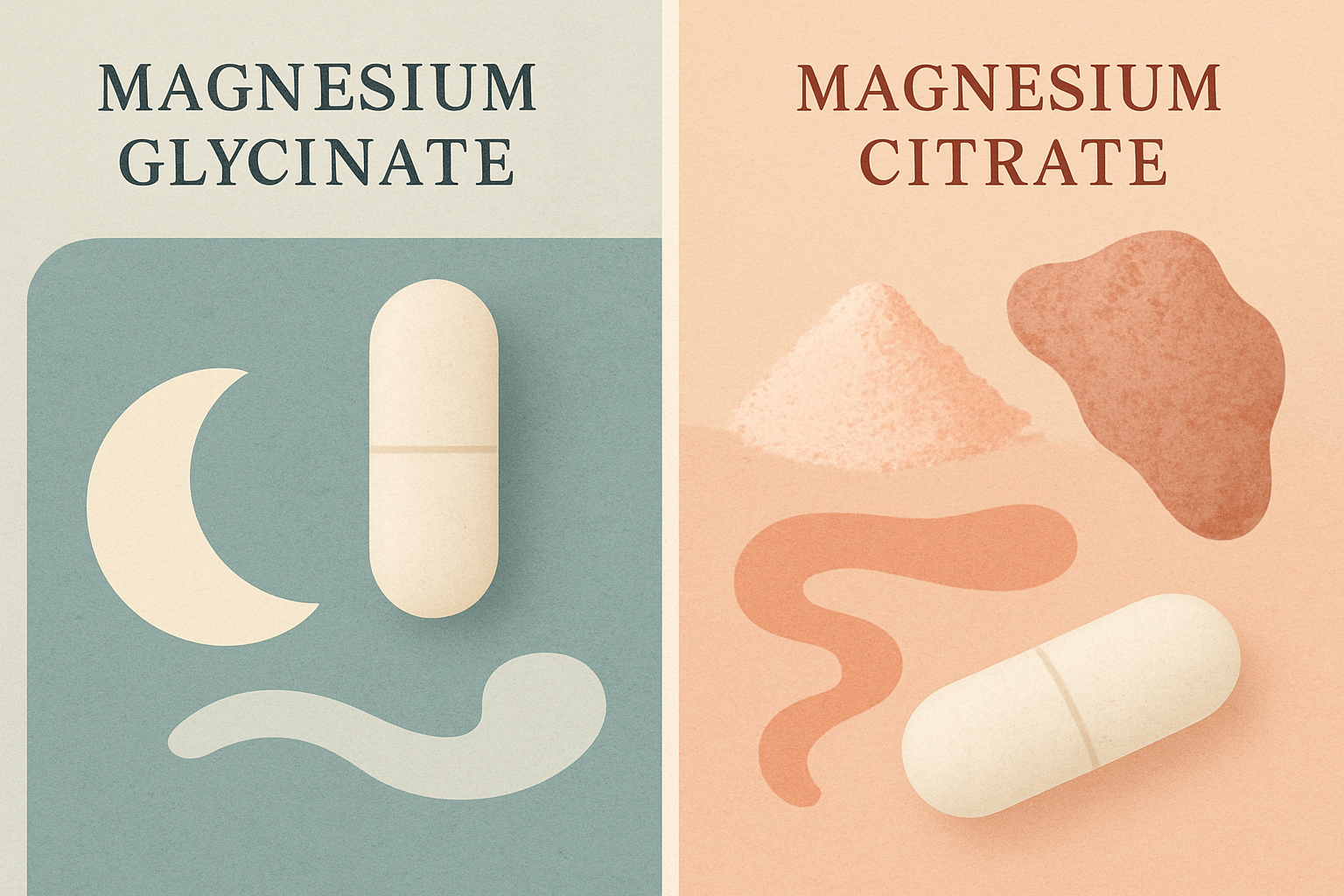
At a glance: the right pick depends on what you want magnesium to do
This visual is here to speed up the real-world choice. Glycinate usually fits sleep-oriented or routine use better, while citrate stands out more when constipation or bowel effects are part of the decision.
Quick chooser: which one fits your situation better?
Think of this as a fast shopping filter before you get lost in marketing claims.
| Question | Magnesium glycinate | Magnesium citrate |
|---|---|---|
| Most common reason people choose it | Sleep-oriented shopping, routine use, or a gentler day-to-day fit. | Constipation context or a situation where a bowel effect is not a deal-breaker. |
| What to watch out for | Do not assume “better for sleep” means proven better for everyone. | Loose stools, cramping, or diarrhea can matter more than absorption claims. |
| Who usually leans this way | People who want magnesium without bowel disruption being part of the plan. | People who are already thinking about bowel regularity or are less worried about GI effects. |
| What still matters on the exact label | Elemental magnesium per serving size, plus how many capsules or scoops it takes. | Elemental magnesium per serving size, plus whether the dose feels too aggressive for your stomach. |
If this comparison turned into a product decision
Use these product pages as label examples after the form decision is clear. The practical comparison is usually elemental magnesium, serving burden, tolerance, and whether other ingredients complicate the label.
 Powder Thorne Magnesium Bisglycinate Elemental magnesium 200 mg per label serving.
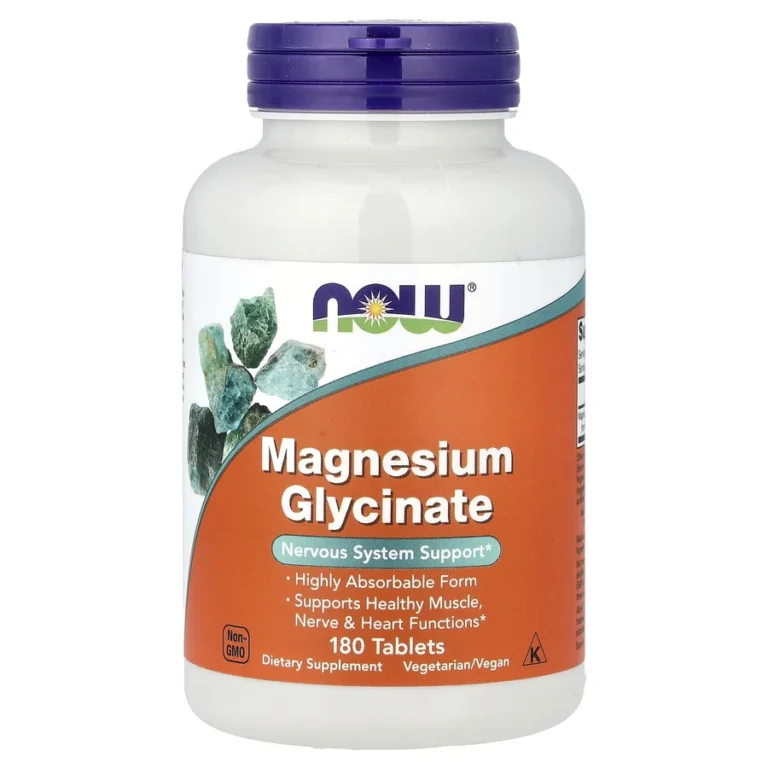 Tablets NOW Magnesium Glycinate Elemental magnesium 200 mg (100 mg per tablet) per label serving.
 Tablets Doctor's Best High Absorption Magnesium Elemental magnesium 200 mg; lysinate/glycinate chelate per label serving.
What both forms have in common
Both magnesium glycinate and magnesium citrate are ways to deliver magnesium. They are both common supplement forms, and both are usually chosen because someone wants to increase magnesium intake rather than because the form itself has a magic effect.
The NIH Office of Dietary Supplements notes that magnesium comes in different supplement forms and that forms such as magnesium citrate tend to be more bioavailable than oxide and sulfate. That is useful, but it does not settle every shopper question. The source notes used for this page do not establish that glycinate is universally superior, or that it beats citrate for every goal.
In plain English: both forms can make sense. The choice is usually more about what you want magnesium to do for your routine, how your stomach handles it, and whether a bowel-loosening effect is helpful or unwanted.
Where citrate stands out
Magnesium citrate is the more obvious choice when bowel effects are part of the conversation. Mainstream patient references such as MedlinePlus describe magnesium citrate as a form also used in some laxative products, which is why it comes up so often in constipation-related shopping.
That does not make citrate “better” in general. It means citrate may be a more practical fit when someone wants magnesium and is not worried about looser stools, or when that effect is part of why they are looking at magnesium in the first place.
The tradeoff is just as important: if you want magnesium for routine use and you do not want bowel urgency, loose stools, or cramping, citrate may be the form that causes more frustration. If that is your concern, read can magnesium cause diarrhea?.
Where glycinate is often considered
Magnesium glycinate is commonly considered by shoppers who want a form marketed as gentler, more routine-friendly, or less likely to get in the way of daily life. It also comes up often in sleep-oriented shopping.
That shopping pattern is real, but it should be framed carefully. The source notes for this page do not establish that glycinate is better than citrate for sleep, better absorbed in every case, or the best choice for every person. It is more accurate to say that people often look at glycinate when they want magnesium without a bowel-focused effect.
If sleep is the main reason you are browsing, it helps to keep expectations grounded. See our sleep guide and best time to take magnesium for the practical questions that matter more than a label promise.
Tolerance and practicality tradeoffs
This is where the choice usually becomes easier.
- If loose stools are a concern, citrate can be harder to live with. The NIH Office of Dietary Supplements says high intakes from supplements or medicines can cause diarrhea, nausea, and abdominal cramping.
- If you want a routine supplement and would rather avoid a bowel effect, glycinate is often the form people consider. That is a practical preference, not proof of universal superiority.
- If constipation context is part of the reason you are shopping, citrate makes more sense to consider first.
- If you take medicines, check compatibility and timing. Magnesium can interact with some medicines, so review magnesium interactions before making a habit of any form.
- Timing is secondary to fit. The “best time” depends mostly on what you tolerate and whether you are taking it consistently. More on that here: best time to take magnesium.
Which form fits which use case
- You are considering magnesium in a constipation context: Citrate is usually the more relevant form to look at because of its bowel-loosening role in some products.
- You want a general magnesium supplement and want to minimize the chance of loose stools: Glycinate is often the form shoppers consider.
- You are buying mainly because of sleep marketing: Glycinate is commonly chosen, but do not assume that means it is proven better for sleep for everyone.
- You are highly sensitive to stomach or bowel disruption: Citrate may be less appealing if even a mild laxative-like effect would be a problem.
- You are not sure why you want magnesium: Pause before buying either one. A clear use case usually makes the decision much easier.
Which is better for sleep: magnesium glycinate or citrate?
Most shoppers lean toward glycinate for sleep-oriented use, mostly because citrate brings more bowel-effect baggage into the decision. That does not mean glycinate has been proven to beat citrate for sleep in every case. It means the practical fit is often cleaner when the goal is nighttime routine support rather than constipation context.
Which is better for constipation: magnesium glycinate or citrate?
Citrate is usually the more relevant form in a constipation conversation because bowel effect is part of why it comes up so often. If constipation is the actual reason you are shopping, citrate is usually the more logical starting point than glycinate.
Which gives you more elemental magnesium per serving?
That is a label question, not a universal form winner. One glycinate product may give less elemental magnesium per serving than one citrate product, while another label may do the opposite. The only reliable way to answer it is to check the Supplement Facts panel and the serving size on the exact product in your hand.
Actual products also differ in serving size: Solaray glycinate powder lists 350 mg per scoop; Solaray citrate capsules list 400 mg per three capsules and include a second magnesium source. Compare the complete labels, not just the form names.
Can you take both magnesium glycinate and citrate on the same day?
Some people do, but combining forms can make it easier to lose track of total magnesium intake. If diarrhea, cramping, or dose confusion is already a risk, using two forms in one day can make the decision messier instead of smarter.
For most shoppers, picking the form that matches the main use case is simpler than trying to build a custom blend from two bottles.
What users often get wrong
- Assuming one form is the winner for every goal. That is not what the source notes support.
- Confusing “popular for sleep” with “proven best for sleep.” Those are not the same thing.
- Ignoring bowel effects. For many people, this is the deciding factor between citrate and glycinate.
- Buying on a marketing promise instead of a use case. Ask whether you want magnesium for routine intake, bowel support context, or something else.
- Forgetting medicines and timing. Magnesium is not a standalone decision if you also take other products or prescriptions.
When to talk to a clinician
It is worth checking with a clinician or pharmacist if you take other medicines, keep running into stomach or bowel side effects, or are trying to solve an ongoing symptom with supplements alone. If you want a practical framework, see when to talk to a clinician.
FAQ
Is magnesium glycinate better than citrate?
Not across the board. The source notes for this page do not establish that glycinate is universally better. The more useful question is which form fits your goal and your tolerance.
Which form makes more sense in a constipation context?
Magnesium citrate is the more relevant form to consider because it is also used in some laxative products and is more associated with bowel-loosening effects.
Which form is less likely to cause diarrhea?
Citrate is more likely to raise that concern because of its bowel effect. The NIH Office of Dietary Supplements notes that high intakes from magnesium supplements or medicines can cause diarrhea, nausea, and abdominal cramping.
Is magnesium glycinate better for sleep?
Many shoppers reach for glycinate for sleep-oriented reasons, but the source notes here do not prove that it works better than citrate for sleep for everyone. If sleep is your main goal, see our sleep guide.
What about absorption?
The NIH Office of Dietary Supplements says forms such as magnesium citrate tend to be more bioavailable than oxide and sulfate. That does not mean glycinate loses every comparison, and it does not mean absorption alone should decide the purchase.
Can I take either form at any time of day?
Many people can, but practicality matters more than a rigid rule. The best timing is usually the time you tolerate well and can take consistently. See best time to take magnesium.
When should I get advice before choosing?
If you take medicines, are unsure about side effects, or are using magnesium to work around an ongoing problem, check with a clinician or pharmacist first. You can also review magnesium interactions.
Evidence map
What the evidence changes in the decision
| Claim | Evidence type | Reader decision | Freshness risk |
|---|---|---|---|
| Glycinate is usually the calmer tolerance route | Form/function synthesis | Use glycinate first when loose-stool risk or nighttime routine fit matters more than constipation support. | Low |
| Citrate is more relevant when constipation is part of the job | Form/function synthesis | Do not choose citrate only because it is common; choose it when the laxative-leaning tradeoff is acceptable. | Low |
| Medication spacing applies to both forms | Safety boundary | Antibiotics, thyroid medicine, and bisphosphonates can matter more than the glycinate-vs-citrate choice. | Medium |
This table is a decision aid. It does not diagnose a deficiency, predict individual benefit, or replace medication-specific advice.
When the Magnesium Glycinate vs Citrate answer changes
The better choice depends on your goal, dose, preferred form, medicines, tolerance and budget. No single option suits everyone.
- Safety changes the answer: medications, pregnancy, kidney/liver issues, surgery, abnormal labs, or side effects can outweigh convenience.
- Label details change the answer: serving size, active amount, other ingredients, testing proof, and price per useful dose can shift the practical pick.
- Goal changes the answer: sleep, digestion, training, deficiency correction, and general wellness can require different forms or timing.
Direct answers to common magnesium glycinate vs citrate questions
Which is better: magnesium glycinate or citrate?
Magnesium glycinate is often the cleaner routine pick when you want magnesium without a bowel-focused effect. Magnesium citrate is usually the more relevant pick when constipation or bowel regularity is part of the reason you are shopping.
Which magnesium is best for sleep?
Many shoppers lean toward magnesium glycinate for sleep-oriented routines because it is commonly positioned as gentler and less bowel-focused. That does not prove it is the best sleep supplement for everyone, so expectations should stay modest.
Which magnesium is best for constipation?
Magnesium citrate is usually the more relevant form for constipation discussions because bowel effect is part of why it is used in some products. If diarrhea or cramping would be a problem, that tradeoff matters.
Which magnesium is best for cramps?
There is no universal best magnesium form for cramps. If you are comparing glycinate and citrate, start with tolerance, elemental magnesium per serving size, and whether a bowel effect would help or hurt your routine.
Update Note
Last reviewed and updated on September 24, 2026. Refreshed the comparison visual with an OpenAI-generated asset, added product-route links, and strengthened glossary-linked label checks for serving size, bioavailability, and other ingredients.
Editorial information
Reviewed for Trust
- Publisher: Supplement Explained Editorial Team
- Review model: Editorial evidence review; clinician review is shown only when a named clinician is listed.
- Last reviewed: September 24, 2026
- Last updated: September 24, 2026
- Editorial Policy | How We Review Evidence | Research Process | Disclaimer
- Use: Informational only. Not personal medical advice.