
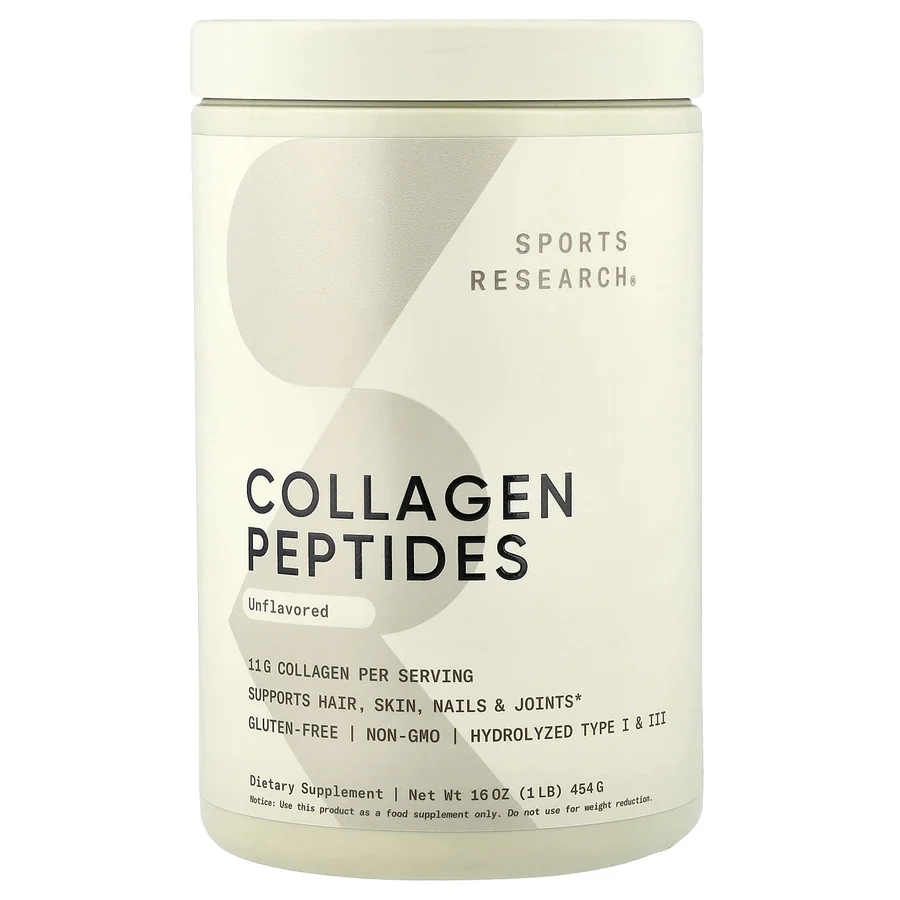
Sports Research Collagen Peptides Unflavored
Collagen Peptides · Unflavored · 454 g
Bovine collagen 11 g; declared protein 10 g per label serving.
- Amount
- Bovine collagen 11 g; declared protein 10 g
- Format
- Powder
- Review basis
- Label-based analysis
Good fit
People who want a plain collagen powder to add to coffee, smoothies, or food and who prefer a simple label.
Consider another option
You avoid bovine ingredients, want stronger product-specific evidence, dislike powder mixing, or need a lower long-term cost.
The product, at a glance
Amounts for the reviewed label serving.
- Reviewed variant
- Collagen Peptides · Unflavored · 454 g
- Label serving
- 1 scoop (11 g)
- Servings per reviewed pack
- ~41
- Ingredients per label serving
- Bovine collagen 11 g; declared protein 10 g
- Other ingredients
- None listed beyond collagen peptides
Label sources & rating context
~ means approximate; — means no published value in this record. Customer ratings are the named publisher’s snapshot and may include multiple sizes or earlier formulas. The Supplement Explained Score is our source-reviewed editorial assessment out of 25, separate from customer stars. Compare the five criteria and the same intended use; the total is not a clinical ranking. Prices are dated USD offer snapshots; cost uses the reviewed pack and label serving.
- Label clarity: 5/5
- Evidence transfer: 3/5
- Safety fit: 3/5
- Quality proof: 2/5
- Value fit: 3/5
On this pageTable of Contents
- 1Supplement Explained Score
- 2Who it fits — and who should skip it
- 3What is in the formula?
- 4Strengths, tradeoffs, and red flags
- 5Price and value analysis
- 6Is there third-party testing or quality proof?
- 7Use-case fit and evidence limits
- 8What do real users often report?
- 9Plain powder versus added ingredients
- 10Product examples to compare
- 11Alternatives to compare
- 12FAQ
Our editorial assessment
Supplement Explained Score
16/25
Sports Research Collagen Peptides Unflavored · Collagen Peptides · Unflavored · 454 g
Five equally weighted criteria, with a product-specific reason for every point. This is a buying-decision assessment, separate from customer stars and personal medical suitability.
- Label clarity 5/5
- Reviewed Collagen Peptides · Unflavored · 454 g: 1 scoop (11 g); ~41 label servings. Bovine collagen 11 g; declared protein 10 g.
- Evidence transfer 3/5
- Eleven grams of bovine collagen is clear; mixed skin evidence does not establish that this tub improves skin or joints.
- Safety fit 3/5
- Animal-source restrictions and GI tolerance matter; collagen protein is not a complete-protein substitute.
- Quality proof 2/5
- A certificate from another size or Sports Research product is not transferred to the reviewed 454 g tub.
- Value fit 3/5
- About 41 plain servings support comparison, but a matched current USD price is not established.
Review basis: Published labels, manufacturer/retailer information, clinical sources and exact-product quality records where available. We did not buy, personally use or laboratory-test this product for this assessment.
Reviewed · Method v2.0 · How we assign points
Sources behind this score
- Retailer label
- 2025 collagen skin-aging review: study quality and funding
- 2025 collagen hydration/elasticity meta-analysis
Product labels and independent directory records identify a formula or testing scope. Clinical references concern ingredients or studied regimens unless the explanation explicitly matches the finished formula.
Who it fits — and who should skip it
This product may fit you if you want a no-frills collagen powder and care more about label simplicity than extras. It is especially easy to understand if you are still learning how to read a supplement label.
- People who want a plain powder with no flavor system or proprietary blend
- People comfortable with bovine sourcing
- People looking at collagen for appearance or comfort goals such as hair, skin, and nails or joint support, while keeping expectations realistic
- People who prefer brand-level quality markers before buying
Who should skip it
- Anyone who wants a non-bovine option
- Anyone who strongly dislikes powders that can clump in cold drinks
- Anyone looking for stronger product-specific evidence instead of general collagen category evidence
- Anyone on a tight supplement budget who is unsure they want a daily collagen habit
- People who are pregnant, nursing, have a diagnosed medical condition, or take prescription medication unless a qualified clinician says it is appropriate
If you are not sure whether a supplement belongs in your plan, our guide on when to talk to a clinician is the better next stop.
Proof status for this review
This is a label-based editorial review, not a hands-on lab test of the product. We use the public product listing, Supplement Facts, serving size, active dose, price context, quality claims, and relevant ingredient evidence to judge whether the label supports the product’s positioning.
If we later add personal use notes, updated label photos, or third-party test documentation, this section should be updated so readers can tell which evidence comes from the label and which evidence comes from direct verification.
What is in the formula?
The public listing shows one active ingredient: hydrolyzed bovine collagen peptides. Each 1-scoop serving provides 11 g collagen peptides, 10 g protein, and 60 mg sodium. The collagen is listed as type I and III.
There are no added flavors, sweeteners, or blend ingredients in the supplement facts. That simplicity is one of the clearest strengths of the product. Suggested use on the listing is 1 scoop mixed into a beverage or meal 1 to 2 times daily.
Serving size
What the label asks you to take
1 scoop, 1 to 2 times dailyThe scoop is easy enough, but monthly cost changes quickly if you use more than one scoop a day.
Other ingredients
What changes product fit
None listed beyond collagen peptidesThat simple label is one of the product’s biggest strengths.
Routine burden
What daily use feels like
Easy powder routine, ongoing spendThe hard part is less about the scoop and more about keeping the habit going long enough to feel worth the cost.
Studied dose vs label reality
People here usually want a plain collagen powder that feels clean and easy to compare. The short answer is that the label is simple and the scoop size is reasonable, but collagen is still a habit product with a real long-term cost.
Label dose
What one scoop gives you
11 g collagen peptidesThat is a clear plain-collagen serving, not a tiny add-on dose.
What people compare
The real shopping fork
Simple collagen powder vs cheaper or bigger tubsMost buyers are trading label simplicity and quality signals against long-term cost per scoop.
Dose verdict
Does the label hold up?
Roughly aligned Clean plain-collagen scoopThe weak spot is not underdosing. It is whether the daily collagen habit is worth the spend and bovine sourcing tradeoff.
Biggest catch
What the label does not solve
Simple label does not create faster resultsA clean formula can still feel underwhelming if your expectations are too high or too short-term.
Strengths, tradeoffs, and red flags
- Very simple label: One ingredient makes this easy to compare against other collagen powders.
- Unflavored format: Useful for people who want to mix it into coffee, yogurt, oatmeal, or smoothies without added sweetness.
- Clear dose per scoop: 11 g per serving is easy to track if you are building a consistent routine.
- Quality signaling: The listing cites third-party testing, Informed Choice, NSF gluten-free certification, non-GMO status, and cGMP compliance.
- Allergen and preference fit for some users: The listing describes it as dairy free and gluten free.
What looks weak and what the tradeoffs are
The first tradeoff is evidence. Most research and consumer interest around collagen focuses on collagen peptides overall, not on this exact branded product. So the cleaner label does not automatically mean stronger outcome evidence.
The second tradeoff is fit. This is bovine collagen, which some readers will not use for dietary, ethical, or religious reasons. The listing also notes that collagen peptides may clump in cold liquids, so the unflavored convenience is real, but mixing may still take a little practice.
The third tradeoff is cost over time. The tub is not unusually expensive, but collagen is usually a daily habit product. If you use 1 to 2 scoops per day, the monthly spend matters more than the sticker price.
Red flags before you hit buy
These are the things most likely to make the product feel wrong later, even if the label looked fine at first.
- Skip it if you want a non-bovine collagen. This product is firmly in the bovine powder lane.
- Skip it if you hate powders that may clump in cold drinks. The plain label does not cancel a real usability annoyance.
- Do not buy it just because the quality markers look good. The main decision is still whether plain daily collagen makes sense for you.
Price and value analysis
No matched fresh USD serving-cost benchmark was available for the score review. The reviewed Collagen Peptides · Unflavored · 454 g supplies ~41 label servings of Bovine collagen 11 g; declared protein 10 g, using 1 scoop (11 g) per serving. About 41 plain servings support comparison, but a matched current USD price is not established.
The price looks more reasonable if you value the simple label and verification signals. It looks less attractive if you plan to use the listed 1 to 2 servings daily, because the container may last about 41 days at one scoop or roughly 20 days at two scoops.
Price per meaningful dose
This is a mid-range collagen page, not a bargain one. The real value case is the simple label plus strong trust signals, not unusually cheap collagen per scoop.
Per serving
Cost each time you use it
About $0.80That is a real daily cost for a plain collagen powder.
Per 11 g scoop
Cost for the full label serving
About $0.80The bottle becomes much more expensive if you follow the 1 to 2 scoops daily suggestion aggressively.
What you are paying for
Where the spend goes
Simple formula + quality markersThe bottle is selling label simplicity and verification signals more than low-cost bulk collagen.
Is there third-party testing or quality proof?
The strongest quality story here is on-paper verification. The listing describes the product as third-party tested, Informed Choice, NSF gluten-free certified, non-GMO, cGMP compliant, and non-BPA.
That is useful, but it is still worth knowing what those claims do and do not tell you. They can signal manufacturing and certification standards, but they are not a shortcut to guaranteed personal benefit. If contaminant screening is your main concern, compare it with our guide to collagen and heavy metals.
What this product is really implying
This product does not need a wild marketing story. It is mostly saying, ‘here is a clean collagen powder from a brand you can trust.’ That can be useful without making it the right collagen page for every buyer.
Marketing angle
What the product is trying to say
This is the clean easy collagen powder if you want no flavors, no fillers, and a solid quality story.
Evidence reality
What the research actually supports
The evidence conversation is still mostly about collagen peptides as an ingredient category, not special proof that this exact tub produces better outcomes than simpler competitors.
Shopping takeaway
What should decide the buy
Buy it if you want a plain bovine collagen powder with clean-label appeal and good trust markers. Skip it if you mainly want cheapest cost per scoop or a non-bovine option.
Use-case fit and evidence limits
People usually shop for collagen with goals like appearance support, joint comfort, or workout routine support in mind. This product fits the “simple daily collagen powder” use case well. It does not stand out as a specialty formula for any one outcome.
Evidence-wise, the important nuance is that supplement research is often ingredient-level, not product-level. Official U.S. guidance from NCCIH and NIH ODS emphasizes that supplements can vary in evidence quality and that labels and claims should be reviewed carefully. That matters here: the evidence conversation is mainly about collagen peptides as a category, not necessarily this exact tub.
If you are deciding how to use collagen at all, see our guides on the best time to take collagen peptides and whether collagen can cause bloating.
| Use Case | Evidence | Typical Time Window |
|---|---|---|
| Daily collagen routine | Limited to moderate | Usually judged over weeks to months, not days. |
| Easy mixing in hot drinks | Practical fit | That convenience is immediate if you use coffee or shakes daily. |
| Hair and nail expectations | Mixed | Anecdotal timelines vary widely and are not guaranteed. |
| Joint-support hopes | Mixed | Some routines are judged over months rather than quick changes. |
What do real users often report?
Anecdotal only. This block summarizes recurring public discussion themes, not controlled research and not hands-on testing by us.
Consensus scope: 3 public source pages listed below. Themes are anecdotal and are not a representative customer sample.
Recurring positives
- Many users like that it is unflavored and easy to add to coffee or smoothies.
- Some users mention trusting the brand more because of the quality and certification signals.
- Simple ingredient lists are often viewed as a plus compared with more complicated collagen blends.
Recurring negatives
- Some users report clumping, especially in cold liquids.
- Some question whether collagen is worth the ongoing cost if results feel subtle or slow.
- Bovine sourcing is a deal-breaker for some shoppers.
Overall read
- The overall anecdotal read is that this is a practical, easy-to-understand collagen powder rather than a standout innovation. People who value plain formulas tend to view it more favorably than people looking for obvious short-term payoff.
Public threads reviewed: Anecdotal community discussion from Reddit thread 1, Reddit thread 2, and Reddit thread 3.
Note: These are summarized recurring themes from public user discussions. They are anecdotal and do not replace clinical evidence or professional guidance.
Plain powder versus added ingredients
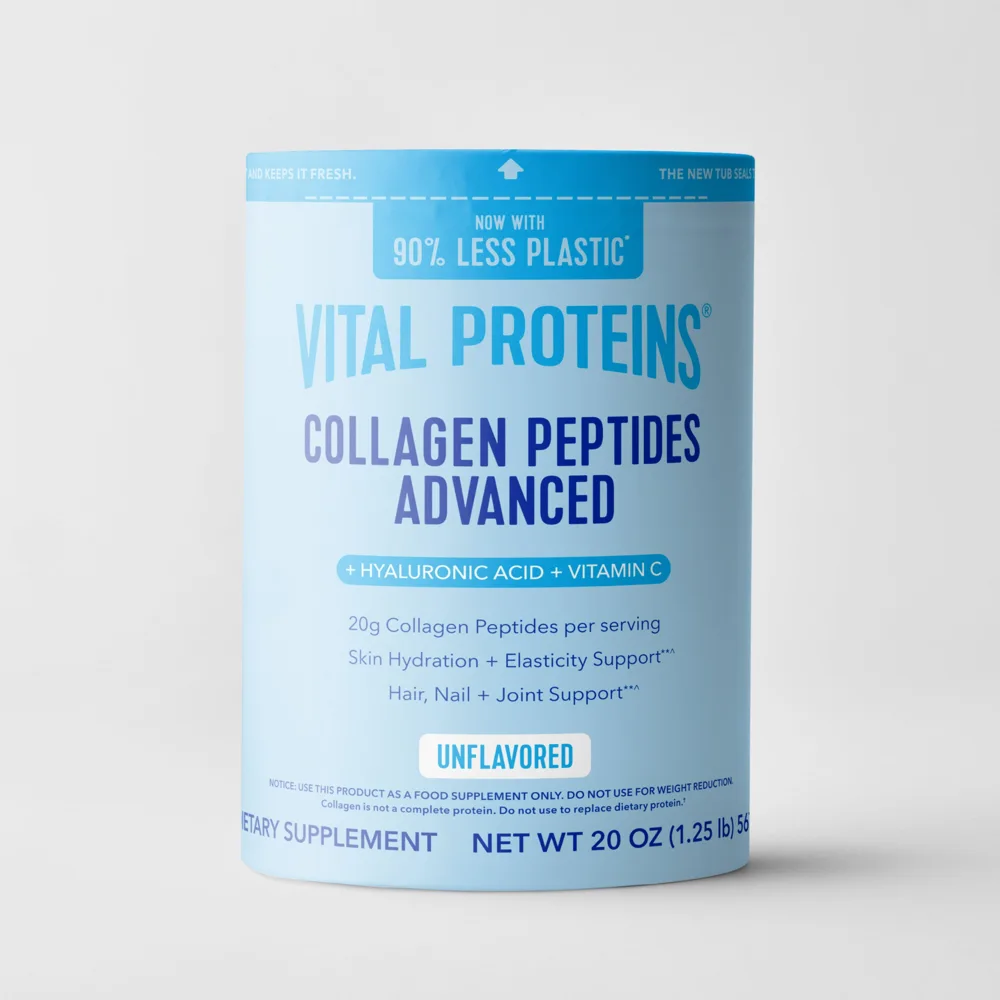
Vital Proteins Collagen Peptides Advanced Unflavored
20 g collagen with vitamin C and hyaluronic acid; compare the extras with plain powder.
Check price at Amazon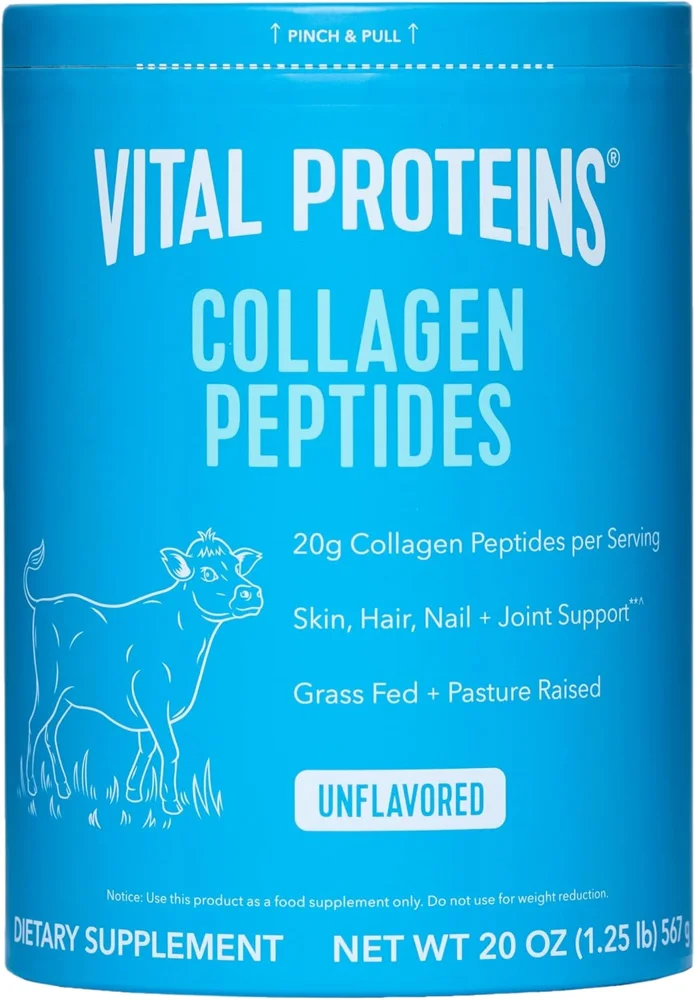
Vital Proteins Collagen Peptides Unflavored 20 oz
Single-ingredient bovine powder with 20 g collagen per labeled serving.
Check price at AmazonAffiliate links: we may earn a commission if you buy. Check the selected size, seller and current label on Amazon.
Product examples to compare
- Garden of Life Grass Fed Collagen Peptides: 20 g bovine collagen plus 250 million CFU of an identified probiotic strain; about 28 servings.
Alternatives to compare
Compare the same decision variables across similar products: active amount, serving burden, quality proof, safety fit, and current value.
- Ancient Nutrition Multi Collagen Protein 16 oz Open the label-based analysis and compare the tradeoffs on the same basis.
- Garden of Life Grass Fed Collagen Peptides Open the label-based analysis and compare the tradeoffs on the same basis.
- Vital Proteins Collagen & Protein Shake Open the label-based analysis and compare the tradeoffs on the same basis.
FAQ
Short answers to the product-specific questions readers most often ask before comparing or buying.
Who is Sports Research Collagen Peptides Unflavored best for?
This page frames Sports Research Collagen Peptides Unflavored as best for People who want a plain collagen powder to add to coffee, smoothies, or food and who prefer a simple label.
Who should skip Sports Research Collagen Peptides Unflavored?
Consider skipping Sports Research Collagen Peptides Unflavored if You avoid bovine ingredients, want stronger product-specific evidence, dislike powder mixing, or need a lower long-term cost.
What dose or serving does Sports Research Collagen Peptides Unflavored use?
Active dose: 11 g hydrolyzed bovine collagen peptides per scoop.; Form: Unflavored powder.; Servings: About 41 servings per 1 lb container.
What quality or price signals matter for Sports Research Collagen Peptides Unflavored?
Quality markers noted on the page: Third-party tested, Informed Choice, NSF gluten-free certified, non-GMO, cGMP compliant, dairy free, gluten free. Price band: Mid-range.
Is Sports Research Collagen Peptides Unflavored a medical recommendation?
No. This product page is editorial decision support, not personal medical advice. Check the current product label and talk with a qualified clinician if you use medicines, are pregnant, have a medical condition, or are unsure whether the supplement fits your situation.
Editorial information
Reviewed for Trust
- Publisher: Supplement Explained Editorial Team
- Review model: Editorial evidence review; clinician review is shown only when a named clinician is listed.
- Last reviewed: October 7, 2026
- Last updated: October 7, 2026
- Editorial Policy | How We Review Evidence | Research Process | Disclaimer
- Use: Informational only. Not personal medical advice.