
Best Time to Take Collagen Peptides
There is no one universal best time to take collagen peptides. For most people, the practical answer is simpler: take them at a time you can repeat consistently, and match the timing to why you are using them rather than chasing a magic hour.
If you are new to this category, our guide to collagen peptides covers the basics.
Quick answer
Collagen peptides can be taken at any consistent time of day, because no single time has been proven best for everyone.
- Morning and night are both reasonable if that is when you will actually remember to take it.
- Before exercise is a niche option, not a universal rule. One exercise-focused protocol has been studied, but it should not be treated as the default for all users.
- Consistency over weeks matters more than the clock. Skin-related studies used daily supplementation over time, not one universally superior hour.
- Routine and label practicality matter. The serving size, product instructions, and how well it fits your day usually matter more than morning-versus-night debates.
On this pageTable of Contents
Does timing matter much for collagen peptides?
Probably less than many marketing claims suggest. Based on the source notes for this page, the stronger practical message is that daily use over time matters more than taking collagen peptides at a specific hour.
For skin-related use, the relevant studies in the source notes used daily supplementation over weeks. They do not establish one universal best time of day. For exercise recovery and body composition, a 2021 systematic review describes a mixed evidence base and does not set one clear timing rule for everyone.
That means timing can be tailored to convenience. If you are trying to build a routine, the best time is often the one you will keep.
Is morning or night better?
There is no clear evidence in the source notes that morning beats night or that night beats morning.
Morning may be a good fit if you already have a repeatable habit and want to attach collagen peptides to it. Night may be a good fit if evenings are more predictable for you. The main goal is consistency, not precision.
If stomach comfort is part of your decision, do not oversell timing as a proven fix. A 2022 randomized trial in an exercise setting found no differences in subjective gastrointestinal symptoms between collagen peptides and a control. Some people may still prefer one time over another for personal comfort, but that is individual, not a universal rule. If bloating is your main concern, see can collagen cause bloating.
Should you take collagen peptides before exercise?
This is the one timing question that has a bit more nuance.
A 2017 study used a specific protocol: vitamin C-enriched gelatin taken before intermittent activity, with increased markers related to collagen synthesis. That finding is interesting, but it was a targeted exercise-oriented setup. It should not be presented as proof that everyone taking collagen peptides needs to take them before a workout.
The broader review evidence is still mixed, and it does not establish one universal best timing rule. So the practical takeaway is:
- If your goal is general daily use, any consistent time is reasonable.
- If your goal is specifically tied to training, some people choose a pre-exercise routine because of that exercise-oriented protocol, but the evidence does not prove this is necessary for all users.
What are the most common timing mistakes?
- Searching for a magic hour. Current evidence does not support one perfect time for all people.
- Changing the schedule too often. Constantly switching between morning, night, and pre-workout can make it harder to stay consistent.
- Ignoring the reason for use. General daily use and exercise-focused use are not the same timing question.
- Skipping the label. The serving size, amount per scoop, and instructions matter. Our guide on how to read a supplement label can help.
- Using timing to distract from product quality. A better routine starts with a product you can identify and evaluate, including basic quality checks. See collagen and heavy metals: what to check and the Collagen Heavy Metals and Testing Map.
What matters more than the clock?
- Consistency. The source notes point toward regular daily use over time being more important than a special hour.
- Your reason for taking it. Skin-related use and exercise-oriented use may lead to different practical timing choices.
- A routine you can keep. The best plan is usually the one that fits your real day.
- Label practicality. A clear serving size and instructions reduce guesswork. That matters more than internet arguments about morning versus night.
- Product quality. Timing cannot fix a poorly chosen product.
When to ask a clinician
Talk with a clinician if you have a medical condition, take medications, are dealing with ongoing digestive symptoms, or are unsure whether a supplement fits your care plan. It is also reasonable to ask for guidance if you keep having symptoms after trying a simpler routine.
Our page on when to talk to a clinician can help you decide when a quick check-in makes sense.
Formats that may fit your routine
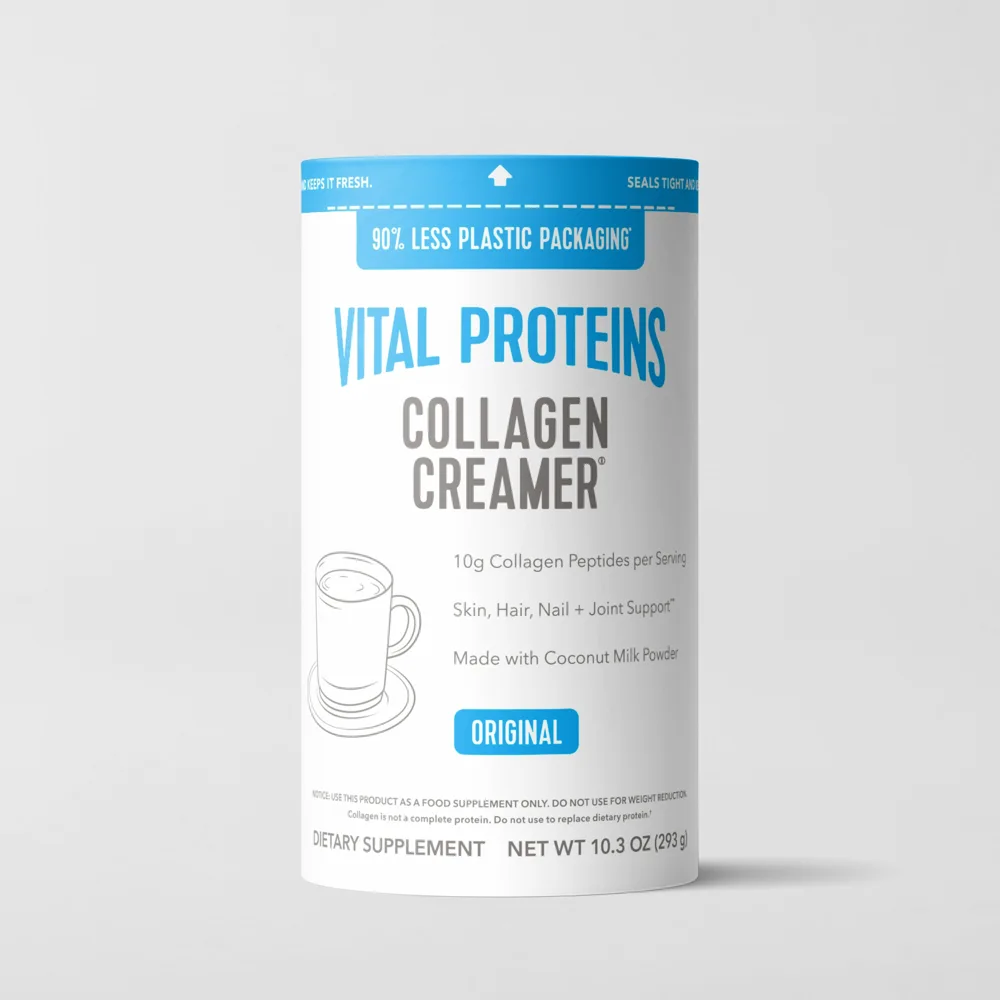
Vital Proteins Original Collagen Creamer
10 g collagen in an Original coffee creamer; the full serving is 1/4 cup.
Check price at Amazon
Vital Proteins Collagen Peptides 360 Capsules
No mixing, but twelve capsules daily under the manufacturer's suggested directions.
Check price at AmazonAffiliate links: we may earn a commission if you buy. Check the selected size, seller and current label on Amazon.
Product examples to compare
- Vital Proteins Matcha Collagen: 10 g bovine collagen and 50 mg caffeine in a matcha drink; about 21 servings.
FAQ
Is morning the best time to take collagen peptides?
No. The source notes do not show that morning is universally better. Morning is a good choice only if it helps you stay consistent.
Is it better to take collagen peptides at night?
Not necessarily. Night is fine if it fits your routine better, but there is no universal evidence that it works better than taking it earlier in the day.
Should I take collagen peptides before a workout?
Only if that matches your goal and routine. One exercise-focused study used a pre-activity protocol with vitamin C-enriched gelatin, but that does not create a blanket rule for all collagen users.
Can I take collagen peptides with coffee?
The source notes for this page do not show that coffee creates a special timing advantage. The more useful question is whether your routine is easy to repeat and whether you are following the product label.
Do I need to take collagen peptides at the exact same time every day?
No exact minute is required. What matters more is having a repeatable pattern you can maintain over time.
If collagen peptides bother my stomach, should I change the timing?
You can try a different routine, but timing should not be oversold as a proven fix for everyone. If symptoms continue, review can collagen cause bloating and consider speaking with a clinician.
References
- Systematic Review on Body Composition, Collagen Synthesis, and Recovery From Joint Injury and Exercise
- Study on vitamin C-enriched gelatin before intermittent activity
- Randomized trial on collagen peptides and exercise-related GI symptoms
- Systematic Review of Oral Collagen Supplementation for Skin-Related Outcomes
Update Note
Last reviewed and updated on October 2, 2026. We revisit priority pages when important evidence, safety, labeling, or regulatory context changes.
Editorial information
Reviewed for Trust
- Publisher: Supplement Explained Editorial Team
- Review model: Editorial evidence review; clinician review is shown only when a named clinician is listed.
- Last reviewed: October 2, 2026
- Last updated: October 2, 2026
- Editorial Policy | How We Review Evidence | Research Process | Disclaimer
- Use: Informational only. Not personal medical advice.