
Collagen Heavy Metals: A Five-Check Buying Screen
This is the short pre-purchase screen for a collagen product. It helps you decide whether the label and testing documents are transparent enough to continue evaluating, without turning a detectable contaminant into an automatic danger claim.
Quick answer
Before buying, check five things: the animal or marine source, an exact-product or lot-specific COA, the tested analytes, numeric results with units and limits, and the real daily serving. If the brand supplies only vague “clean” or “third-party tested” language, you do not have enough evidence to judge the claim.
- Detectable is not the same as harmful. A lab finding only tells you something was present; the amount and the standard used to judge it matter.
- Source and brand transparency matter. For shoppers worried about collagen peptides, the key checks are the raw-material source, whether the product is third-party tested, and whether a usable certificate of analysis is available.
- Direct evidence in marine collagen shows variability. A 2025 study of fish- and jellyfish-derived marine collagen supplements found meaningful differences between brands.
- Regulation does not equal pre-approval. FDA does not approve dietary supplements for safety and effectiveness before they are marketed.
- If contamination is your main concern, ask for proof. A brand that can explain its sourcing and share testing documents is usually easier to assess than one that relies on vague purity claims.
For technical interpretation of marine versus bovine sourcing, analytes, certification programs, and COA fields, use the Collagen Heavy Metals and Testing Map.
On this pageTable of Contents
Featured Product Routes
If contamination concerns are pushing you toward a product decision, the fastest next click is a page that shows source, testing language, and daily-use tradeoffs on a real collagen label.
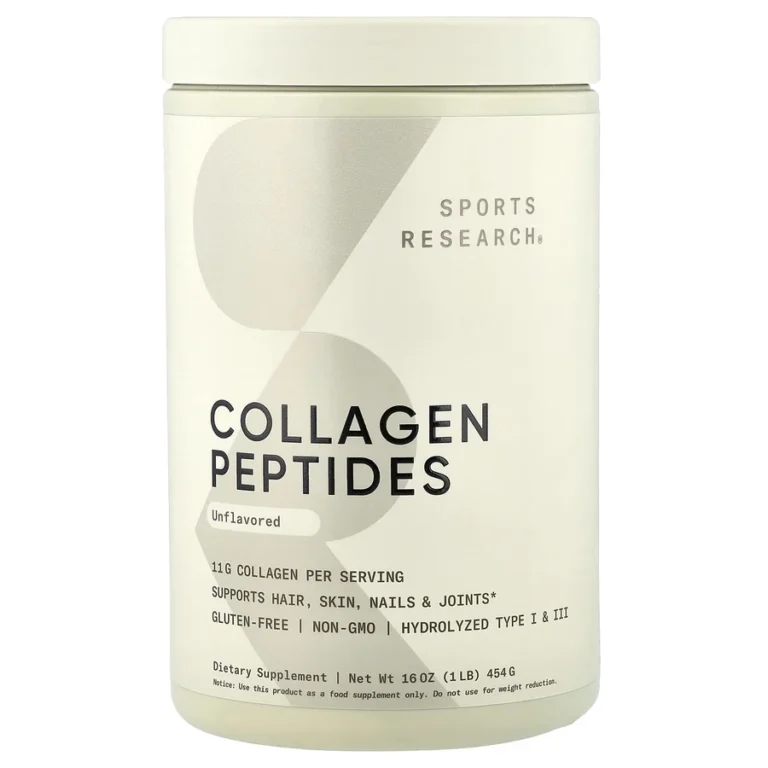 Powder Sports Research Collagen Peptides Unflavored Bovine collagen 11 g; declared protein 10 g per label serving.
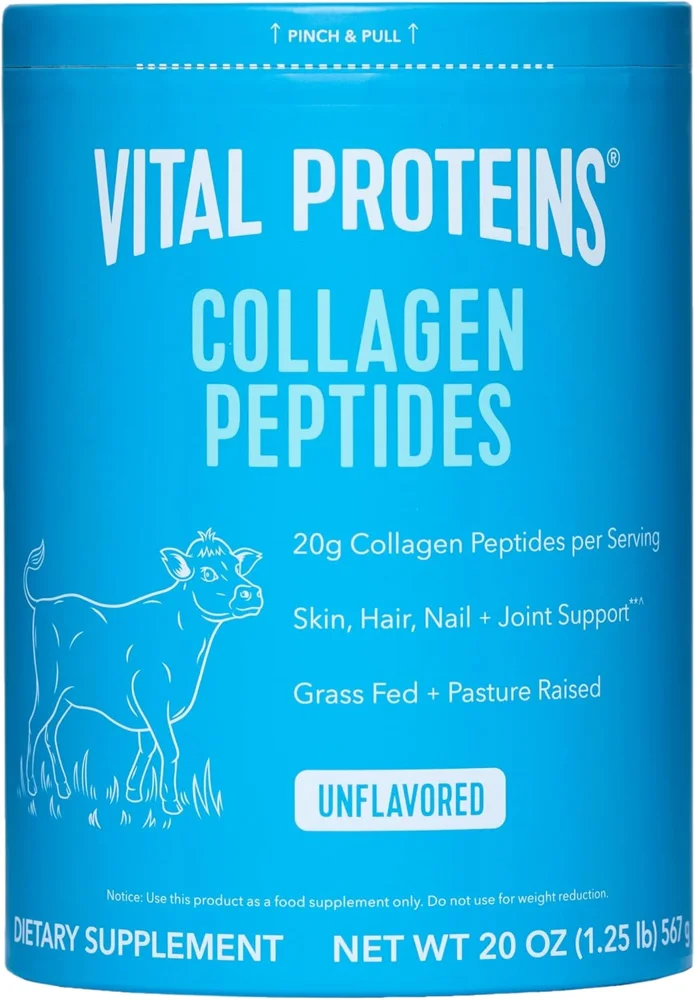 Powder Vital Proteins Collagen Peptides Unflavored 20 oz Bovine collagen 20 g; declared protein 18 g per label serving.
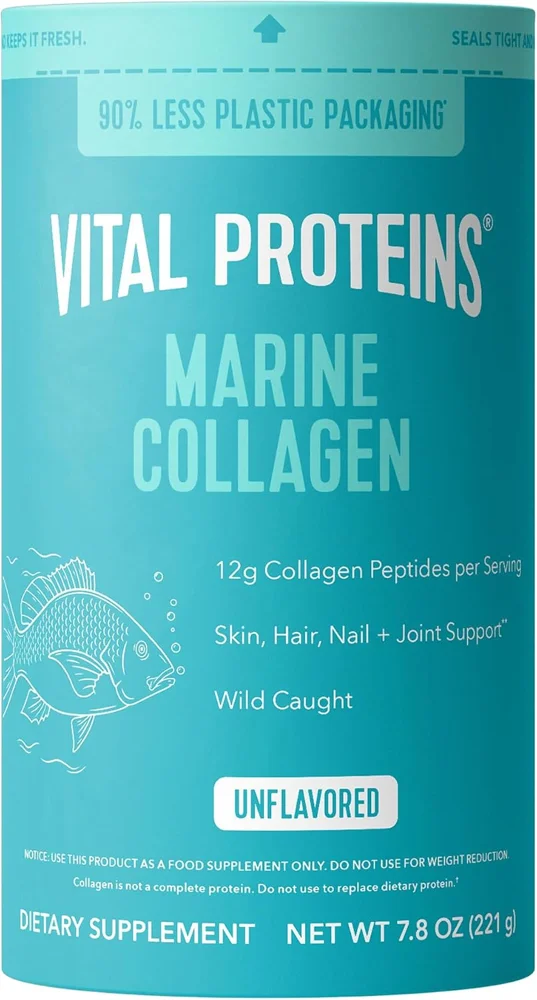 Powder Vital Proteins Marine Collagen Unflavored 7.8 oz Fish collagen 12 g; declared protein 11 g per label serving.
What the direct evidence says
The most relevant direct evidence here is a 2025 study of fish- and jellyfish-derived marine collagen supplements. Researchers measured arsenic, lead, cadmium, chromium, mercury, and other contaminants.
- Arsenic was the most abundant element detected.
- There was meaningful variability between brands.
- None of the samples exceeded EU regulatory limits.
- Estimated daily intakes at recommended doses were below tolerable daily intakes.
- The authors still recommended that food-safety regulation consider cumulative risks from taking contaminated supplements at the same time.
Strength of evidence: useful, but limited. This study helps answer questions about marine collagen contamination, but it does not tell you everything about every collagen product on the market. It is best read as a reminder that brands differ, not as proof that all collagen is risky.
What FDA and supplement rules do and do not guarantee
FDA says dietary supplements are not approved for safety and effectiveness before marketing. In plain English, a product being on sale does not mean FDA reviewed it first and confirmed that it is free of lead, arsenic, or other contaminants.
FDA also advises consumers to talk with a health professional before deciding to purchase or use a supplement. If you want help deciding whether collagen makes sense for you, or how cautious you should be, see when to talk to a clinician.
The practical takeaway is simple: regulation matters, but it does not replace your own quality checks. If contamination risk is what worries you, the brand should be able to show more than marketing language.
What shoppers often get wrong
- They treat “detectable” as “dangerous.” Detection alone is not a verdict. The amount, serving size, and reference standard matter.
- They assume every collagen product is the same. The direct evidence we have shows meaningful variability between marine collagen brands.
- They treat “third-party tested” as enough on its own. It is a good sign, but it is still worth asking what was tested and whether you can see a COA.
- They rely on packaging instead of documents. The label helps you identify the product, but testing records are what matter when contamination is the concern.
- They ignore cumulative intake. If you use multiple supplements, small exposures can add up, even when one product by itself does not look alarming.
Read product-specific checks
- Vital Proteins Collagen Peptides Advanced Unflavored: 20 g collagen with vitamin C and hyaluronic acid; compare the extras with plain powder.
- Vital Proteins Marine Collagen Unflavored 7.8 oz: Fish-derived collagen, 12 g per serving; a source choice, not proven superiority.
Product examples to compare
- Garden of Life Grass Fed Collagen Peptides: 20 g bovine collagen plus 250 million CFU of an identified probiotic strain; about 28 servings.
FAQ
Update Note
Last reviewed and updated on October 2, 2026. Reframed this page as a short pre-purchase screen; the testing map owns the technical documentation workflow.
Editorial information
Reviewed for Trust
- Publisher: Supplement Explained Editorial Team
- Review model: Editorial evidence review; clinician review is shown only when a named clinician is listed.
- Last reviewed: October 2, 2026
- Last updated: October 2, 2026
- Editorial Policy | How We Review Evidence | Research Process | Disclaimer
- Use: Informational only. Not personal medical advice.