
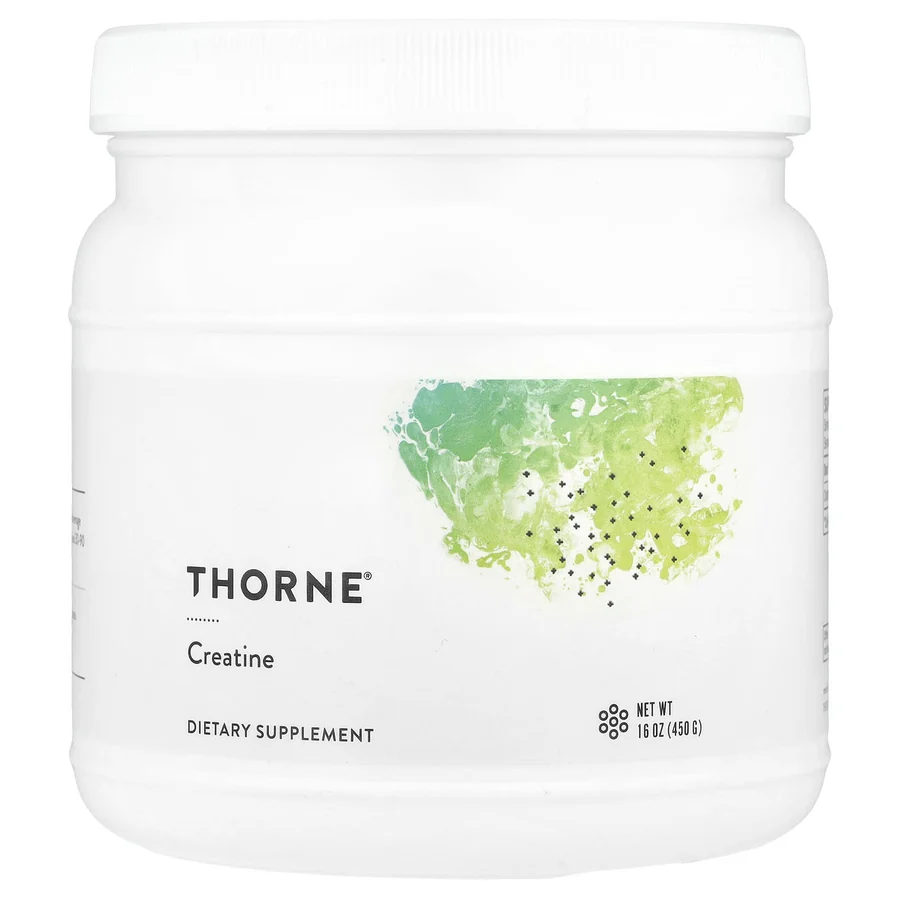
Thorne Creatine
Creatine · Unflavored · 450 g
Creatine monohydrate 5 g per label serving.
- Amount
- Creatine monohydrate 5 g
- Format
- Powder
- Review basis
- Label-based analysis
Good fit
athletes, tested-sport users, and buyers who want a simple premium creatine monohydrate powder with certification-focused branding
Consider another option
you want the lowest cost per serving or expect a special advantage over standard monohydrate
The product, at a glance
Amounts for the reviewed label serving.
- Reviewed variant
- Creatine · Unflavored · 450 g
- Label serving
- 1 scoop (5 g)
- Servings per reviewed pack
- 90
- Ingredients per label serving
- Creatine monohydrate 5 g
- Other ingredients
- No other ingredients listed
- Quality & testing
- NSF Certified for Sport · US 450 g · specified lots Source ↗
Label sources & rating context
Retailer label ↗ · Label source ↗
~ means approximate; — means no published value in this record. Customer ratings are the named publisher’s snapshot and may include multiple sizes or earlier formulas. The Supplement Explained Score is our source-reviewed editorial assessment out of 25, separate from customer stars. Compare the five criteria and the same intended use; the total is not a clinical ranking. Prices are dated USD offer snapshots; cost uses the reviewed pack and label serving.
- Label clarity: 5/5
- Evidence transfer: 5/5
- Safety fit: 4/5
- Quality proof: 4/5
- Value fit: 4/5
On this pageTable of Contents
Our editorial assessment
Supplement Explained Score
22/25
Thorne Creatine · Creatine · Unflavored · 450 g
Five equally weighted criteria, with a product-specific reason for every point. This is a buying-decision assessment, separate from customer stars and personal medical suitability.
- Label clarity 5/5
- Reviewed Creatine · Unflavored · 450 g: 1 scoop (5 g); 90 label servings. Creatine monohydrate 5 g.
- Evidence transfer 5/5
- Five grams of plain monohydrate closely matches extensive strength/power research; the brand is not awarded an efficacy premium.
- Safety fit 4/5
- Healthy-adult evidence is extensive, but water-weight/GI effects and kidney or medication context remain relevant.
- Quality proof 4/5
- An exact US 450 g NSF Certified for Sport directory record names specified lots.
- Value fit 4/5
- The $0.61 5 g serving snapshot and 90-serving pack make certified-powder cost transparent, without claiming it is cheapest.
Review basis: Published labels, manufacturer/retailer information, clinical sources and exact-product quality records where available. We did not buy, personally use or laboratory-test this product for this assessment.
Reviewed · Method v2.0 · How we assign points
Sources behind this score
Product labels and independent directory records identify a formula or testing scope. Clinical references concern ingredients or studied regimens unless the explanation explicitly matches the finished formula.
Who Thorne Creatine may fit
- Tested athletes: buyers who specifically want NSF Certified for Sport positioning may see real value here.
- Minimalist buyers: people who want plain monohydrate without extra ingredients, flavors, or marketing clutter.
- Brand-trust shoppers: readers who prefer established premium brands and are comfortable paying more for that preference.
- Readers building a broader training plan: creatine is often considered alongside strength and workout recovery goals, though expectations should stay practical.
What is in the formula?
The formula is straightforward: one scoop provides 5 g of creatine monohydrate. The public listing describes it as an unflavored powder with 90 servings per container.
Suggested use on the listing is one scoop daily with at least 8 ounces of water, juice, or another preferred beverage, or as recommended by a health-care or performance professional. The listing also says it can be used 30 to 90 minutes before or after exercise.
The important evidence caveat: most research and guidance here relate to creatine monohydrate as an ingredient category, not necessarily to this exact branded product. If you are comparing forms, see creatine monohydrate vs HCl. If you are comparing product formats, serving math, price, and testing signals, use the Creatine Form Decision Matrix.
Studied dose vs label reality
People usually get here with searches like ‘Thorne creatine worth it’ or ‘best NSF creatine powder.’ The honest answer is that the dose is not the hard part. The hard part is deciding how much the NSF Certified for Sport layer matters to you.
Label dose
What one serving gives you
5 gThat is the same mainstream daily monohydrate number you see on many less expensive tubs.
What people compare
The real dose question
3 to 5 g is the common daily laneShoppers usually are not stuck on dose here. They are stuck on whether premium testing confidence is worth paying extra for the same basic monohydrate idea.
Dose verdict
Does the label hold up?
Roughly aligned The dose is standard and fineThe formula does what a plain creatine label should do. The premium sits around the formula, not inside it.
Biggest catch
What the label does not solve
Premium price for standard monohydrateThe evidence supports creatine monohydrate broadly. It does not say this exact premium tub will outperform cheaper monohydrate tubs.
What looks strong
- Simple, studied ingredient: creatine monohydrate is the form most often used in evidence summaries.
- Clear full serving: 5 g per scoop is easy to understand and easy to compare with other creatine powders.
- Certification-focused positioning: the NSF Certified for Sport callout is the main differentiator here.
- No unnecessary complexity: this is a plain powder, not a proprietary blend dressed up as something special.
- Good container size: 90 servings is enough for a meaningful run without frequent reordering.
What looks weak and what the tradeoffs are
The biggest limitation is also the clearest tradeoff: this is still just creatine monohydrate. That is not a bad thing. In fact, it is usually a positive. But it does mean the premium price is not buying a novel ingredient or a clearly superior form.
In practical terms, you are paying extra for brand positioning, a clean simple label, and certification-focused reassurance. If those matter a lot to you, the premium may be justified. If they do not, the same ingredient category can often be found in less expensive options. If you are still learning how to compare labels, our guide on how to read a supplement label can help.
Red flags before you hit buy
These are the friction points most likely to make you regret the purchase later, even if the label looked good at first.
- Skip this if price per serving is your main filter. The cost is the first real objection and probably the right one for a lot of buyers.
- Do not buy it expecting a stronger ingredient form. This is still plain monohydrate, not a special formula category.
- If you are not a tested athlete, think twice. The NSF angle is real, but it matters a lot more to a narrower group than the brand story sometimes suggests.
Cost for the reviewed serving
Matched HerbsPro snapshot, 2026-10-02: $54.68 for the reviewed pack, approximately $0.61 per label serving, before shipping, tax or discounts. The reviewed Creatine · Unflavored · 450 g supplies 90 label servings of Creatine monohydrate 5 g, using 1 scoop (5 g) per serving. The $0.61 5 g serving snapshot and 90-serving pack make certified-powder cost transparent, without claiming it is cheapest.
What this product is really implying
Compare the creatine amount, certification, and cost with other monohydrate products rather than choosing by brand name alone.
Marketing angle
What the page is nudging you to think
If you want the clean smart athlete-safe version of creatine, this is probably it.
Evidence reality
What the research actually supports
Creatine monohydrate is the supported ingredient category. The extra value here is the testing signal, not a different evidence tier for the powder itself.
Shopping takeaway
What should decide the buy
Buy this if certification confidence is a real need, not just a nice-sounding extra. Otherwise compare cheaper monohydrate first.
What do real users often report?
Anecdotal only. This block summarizes recurring public discussion themes, not controlled research and not hands-on testing by us.
Consensus scope: 3 public source pages listed below. Themes are anecdotal and are not a representative customer sample.
Recurring positives
- Reviewers who choose Thorne often cite brand trust, a plain unflavored formula, and perceived quality consistency.
Recurring negatives
- The price premium is the dominant objection because creatine monohydrate is widely available for less. Public discussions also include isolated reports of reflux, stomach upset, or mixing problems.
Overall read
- The anecdotal read is that Thorne is a premium-confidence purchase, not a demonstrably superior creatine. Price per 5 g, verified sourcing, and personal tolerance should decide whether the premium is worthwhile.
Public review sources: iHerb customer reviews, Reddit price discussion, Reddit tolerance report.
Note: These are summarized recurring themes from public user discussions. They are anecdotal, may include incentivized or syndicated retailer reviews, and do not replace clinical evidence or professional guidance.
Alternatives to compare
Compare the same decision variables across similar products: active amount, serving burden, quality proof, safety fit, and current value.
- California Gold Nutrition Sport Pure Creatine Monohydrate Open the label-based analysis and compare the tradeoffs on the same basis.
- Momentous Creatine Monohydrate 450 g Open the label-based analysis and compare the tradeoffs on the same basis.
- Nutricost Creatine Monohydrate Creapure 500 g Open the label-based analysis and compare the tradeoffs on the same basis.
FAQ
Short answers to the product-specific questions readers most often ask before comparing or buying.
Who is Thorne Creatine best for?
This page frames Thorne Creatine as best for athletes, tested-sport users, and buyers who want a simple premium creatine monohydrate powder with certification-focused branding.
Who should skip Thorne Creatine?
Consider skipping Thorne Creatine if you want the lowest cost per serving or expect a special advantage over standard monohydrate.
What dose or serving does Thorne Creatine use?
Active dose: 5 g creatine monohydrate per scoop; Form: unflavored creatine monohydrate powder; Servings: 90 servings per 16 oz (450 g) container.
What quality or price signals matter for Thorne Creatine?
Matched HerbsPro snapshot, 2026-10-02: $54.68 for the reviewed pack, approximately $0.61 per label serving, before shipping, tax or discounts. The reviewed Creatine · Unflavored · 450 g supplies 90 label servings of Creatine monohydrate 5 g, using 1 scoop (5 g) per serving. The $0.61 5 g serving snapshot and 90-serving pack make certified-powder cost transparent, without claiming it is cheapest.
Is Thorne Creatine a medical recommendation?
No. This product page is editorial decision support, not personal medical advice. Check the current product label and talk with a qualified clinician if you use medicines, are pregnant, have a medical condition, or are unsure whether the supplement fits your situation.
Public review mining
What users tend to say across public reviews
This is a synthesis of recurring public-review themes, not our own clinical test and not a copied review feed. Individual results vary, and retailer reviews can be biased by self-selection.
Common praise
- Users often praise mixability, neutral taste, clean ingredient positioning, and Thorne brand trust.
- Positive reviews commonly connect the product with strength, training performance, or fuller muscles, but these remain user anecdotes.
- The product fits buyers who want a premium monohydrate rather than the cheapest plain creatine tub.
Common friction
- Price is the main objection because creatine monohydrate is widely available in cheaper formats.
- A few users report digestive discomfort or no immediate benefit, which is common in creatine review sets.
- Brand trust does not change the basic evidence question: monohydrate dose, consistency, and tolerance matter most.
Reader takeaway: Best interpreted as a premium creatine monohydrate option for readers who value brand trust and mixability enough to pay more.
Review mining date: June 5, 2026. Status: public-review synthesis; not personally tested unless a separate hands-on note appears on this page.
Editorial information
Continue your decision
If this product is not an obvious fit, use one of these routes instead of leaving the decision unfinished.
- Creatine guide Review dose, loading, timing, and who should ask a clinician first.
- All product analyses Browse the full product analysis library for alternatives and category comparisons.
- Supplement Explained Score See how label clarity, evidence transfer, safety fit, quality proof, and value fit are scored.
- Interaction checklist Check common combination risks before stacking supplements or medications.
Update details
What changed in this update
This page was tightened to make the buy-or-skip decision faster, plainer, and less dependent on brand hype.
- The premium story was reframed around what you are actually paying for. NSF and brand trust are now more explicit in the decision flow.
- The formula itself was made more boring on purpose. This page now makes it clearer that the ingredient core is standard monohydrate.
- Buy-or-skip guidance was tightened. The page now speaks more directly to tested athletes versus regular value shoppers.
Reviewed for Trust
- Publisher: Supplement Explained Editorial Team
- Review model: Editorial evidence review; clinician review is shown only when a named clinician is listed.
- Last reviewed: October 7, 2026
- Last updated: October 7, 2026
- Editorial Policy | How We Review Evidence | Research Process | Disclaimer
- Use: Informational only. Not personal medical advice.