
Probiotic Capsules vs Fermented Foods
If you are trying to choose between a probiotic supplement and foods like yogurt or kefir, the clearest answer is that they do different jobs. Both can contain live microorganisms, but they are not interchangeable. Fermented foods are often the broader food-first option, while probiotic capsules can be the more targeted option when a specific strain and a clearer label matter.
Fast verdict for Probiotic Capsules vs Fermented Foods: Which Fits Better?
Choose fermented foods if you want an everyday food-based approach and you tolerate those foods well. Choose probiotic capsules if you want to look for a specific strain on the label and match it to a use case that has actually been studied.
- Biggest difference: capsules can offer more labeling detail, including genus, species, strain, and viable cell count.
- Biggest limitation of fermented foods: not all fermented foods contain probiotic microorganisms with proven health benefits.
- Biggest limitation of capsules: many commercial probiotic products have not been adequately examined, so a product being sold does not automatically mean it is well supported.
- Most practical rule: if label clarity and strain matching matter, capsules usually stand out; if daily food fit matters more, fermented foods may be the easier starting point.
- Important reality check: neither route is a universal fix for everyone with bloating or digestive symptoms. For more basics, see our guide to probiotics.
On this pageTable of Contents
- 1Fast verdict for Probiotic Capsules vs Fermented Foods: Which Fits Better?
- 2Probiotic capsules vs fermented foods: quick decision table
- 3If this comparison turned into a product decision
- 4What both have in common
- 5Where probiotic capsules stand out
- 6Where fermented foods stand out
- 7Practical tradeoffs
- 8Which option fits which use case
- 9What users often get wrong
- 10FAQ
Probiotic capsules vs fermented foods: quick decision table
This comparison is mostly about precision versus food-first fit.
| Decision point | Probiotic capsules | Fermented foods |
|---|---|---|
| Best reason to choose it | You want a specific strain, clearer CFU count, and a more targeted label. | You want a food-first routine and already tolerate cultured foods well. |
| Biggest strength | More precise label comparison across genus, species, strain, and viable count. | Easier to integrate into meals without adding another capsule. |
| Biggest limitation | A detailed label does not prove the exact product has strong evidence. | Not every fermented food contains probiotic organisms with proven health benefits. |
| Label or food check that matters | Check strain naming, CFU at end of shelf life, serving size, and storage directions. | Check whether the food actually contains live cultures and whether it fits your digestion. |
If this comparison turned into a product decision
If capsules now look more relevant than fermented foods, use product pages that make the strain, CFU, serving, and tolerance tradeoffs easier to compare.
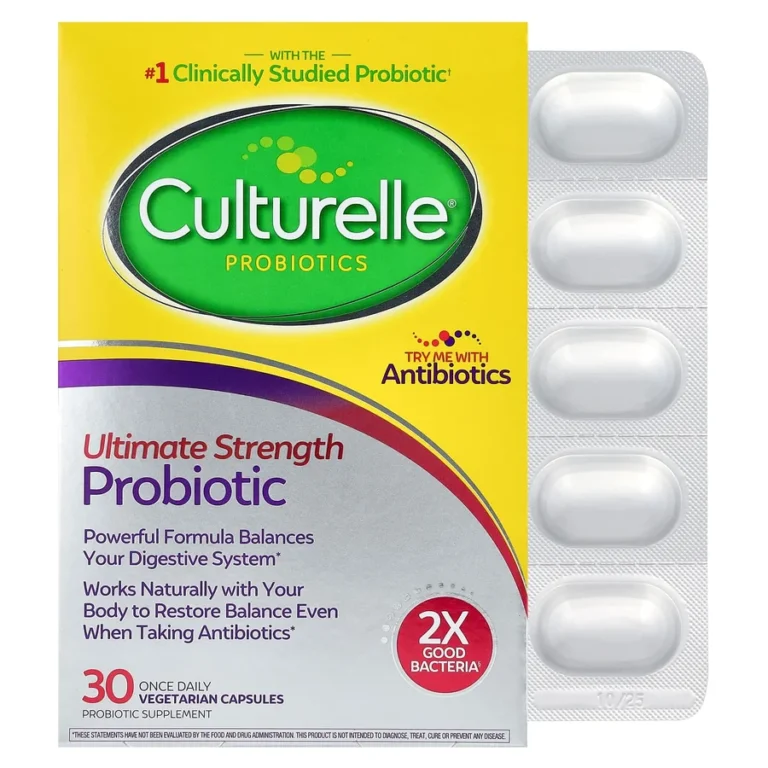 Capsules Culturelle Ultimate Strength Probiotic 20 Billion CFU L. rhamnosus GG 20 billion CFU; inulin 200 mg per label serving.
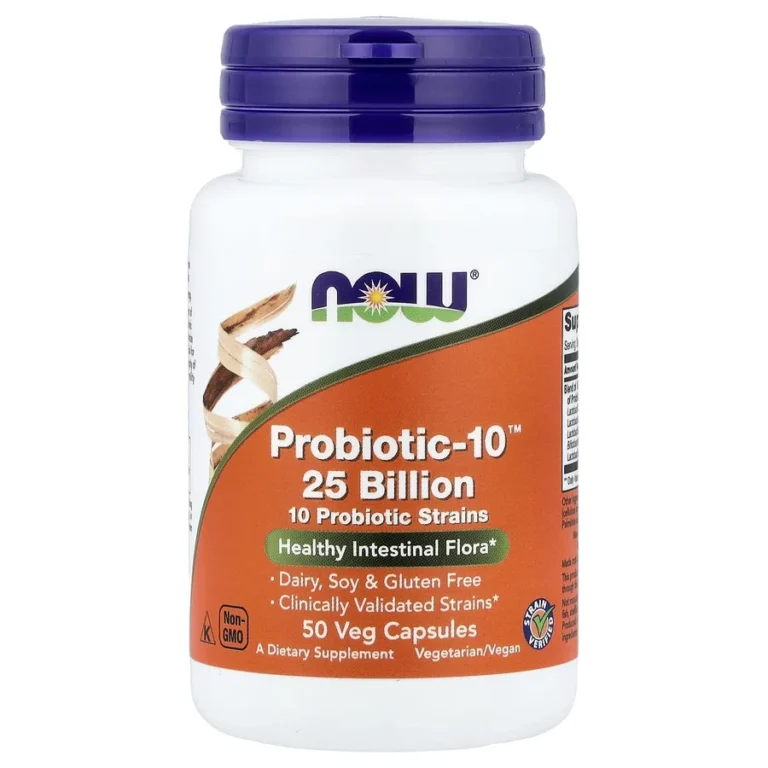 Capsules NOW Probiotic-10 25 Billion 25 billion CFU; 10 strains; potency through best-by date per label serving.
 Capsules Garden of Life Dr. Formulated Probiotics Once Daily 30 billion CFU; 14 strains per label serving.
What both have in common
According to NCCIH, probiotics are live microorganisms that may be beneficial to health. They can be found in yogurt and other fermented foods as well as dietary supplements.
That shared idea causes a lot of confusion. People often assume that if a food is fermented, it must provide the same thing as a probiotic capsule. That is not always true. The NIH Office of Dietary Supplements notes that some fermented foods contain live cultures, but not all fermented foods necessarily contain probiotics with proven health benefits.
They also have one more thing in common: effects are strain-specific. NCCIH notes that not all probiotic products have the same effects. That means the details matter more than the category name alone.
Where probiotic capsules stand out
The main advantage of capsules is targeting. Supplement labels can list the genus, species, and strain, along with viable CFU count. That makes it easier to compare one product with another and to ask whether a specific strain has been studied for the concern you care about.
That labeling detail matters because probiotic effects are not one-size-fits-all. If you are trying to be precise, capsules usually give you more information to work with than a general food label. If you want help decoding that information, see how to read a supplement label.
Capsules can also be more practical when you do not regularly eat fermented foods, when you want something portable, or when you want a product with a more consistent serving format.
But there is an important limit: the ODS also says that the effects of many commercial probiotic products have not been adequately examined. So a detailed label is helpful, but it is not proof that every product has meaningful evidence behind it.
Where fermented foods stand out
Fermented foods stand out as a food-first option. For people who like yogurt or other cultured foods and tolerate them well, they can be a simple way to include live microorganisms in a normal eating pattern.
This route may feel more natural and easier to stick with than taking a daily capsule. It can also be a better fit for people who would rather start with foods before buying a supplement.
The tradeoff is clarity. A fermented food may contain live cultures, but that does not mean it contains probiotic microorganisms with proven health benefits, and it may not tell you the strain detail that a supplement label can provide. In other words, fermented foods can be a sensible general choice, but they are often less precise.
Practical tradeoffs
- Labeling clarity: capsules usually win because they can list strain information and viable cell count.
- Food-first fit: fermented foods usually win if you want to build the habit into meals rather than add another product.
- Evidence matching: capsules are often better when you want to compare a label with a researched strain.
- Live cultures: both may contain live microorganisms, but not every fermented food offers probiotic organisms with proven benefits.
- Digestive tolerance: either route may not suit everyone. If you are worried about digestive side effects, read can probiotics cause bloating? and our guide to bloating and digestion.
- Routine and convenience: capsules can be easier for travel and consistent daily use; fermented foods can be easier if they are already part of your meals.
Which option fits which use case
A probiotic capsule may fit better if:
- you want to check for a specific genus, species, and strain on the label
- you want a more targeted product rather than a general fermented food
- you need something portable and easy to take consistently
- you want to compare products more directly
Fermented foods may fit better if:
- you prefer a food-first approach
- you already enjoy and tolerate foods like yogurt or similar cultured foods
- you want to include live cultures as part of meals rather than take a capsule
- you are not trying to match a very specific strain to a very specific use case
Either option may be reasonable if:
- you understand that strain details matter
- you are not expecting a guaranteed fix
- you are willing to adjust based on tolerance and practical fit
If timing is your next question, see can you take probiotics at night?.
What users often get wrong
- Mistake 1: thinking all fermented foods are probiotics. Some contain live cultures, but not all contain probiotic microorganisms with proven health benefits.
- Mistake 2: thinking all probiotics do the same thing. NCCIH says effects are strain-specific.
- Mistake 3: assuming a supplement with a long ingredient list is automatically better. A more useful question is whether the label clearly identifies the organism and whether that specific product or strain has been examined.
- Mistake 4: expecting one route to fix all bloating. Digestive symptoms can have many causes, and neither fermented foods nor capsules are a universal answer.
- Mistake 5: ignoring tolerance. A product or food that works well for one person may not feel good for another.
FAQ
Are probiotic capsules better than fermented foods?
Not across the board. Capsules are usually better for strain labeling and targeting. Fermented foods are often better for a food-first routine. The better choice depends on whether you value precision or everyday food fit more.
Do all fermented foods count as probiotics?
No. Some fermented foods contain live cultures, but not all fermented foods contain probiotic microorganisms with proven health benefits.
Why does strain labeling matter so much?
Because probiotic effects are strain-specific. A label that names the genus, species, and strain gives you more useful information than a general claim about “good bacteria.”
Can I use fermented foods and a probiotic capsule together?
Some people do, but they are still different routes. A fermented food may be part of a normal diet, while a capsule may be chosen for a more specific label profile. If symptoms are ongoing or confusing, it is reasonable to talk to a clinician.
If a product says it has live cultures, does that mean it is proven?
No. Live cultures and proven probiotic benefit are not the same thing. ODS notes that some fermented foods contain live cultures but do not typically contain proven probiotic microorganisms, and many commercial probiotic products have not been adequately examined.
Which is more practical for daily use?
Capsules are often more practical for travel and consistent serving size. Fermented foods are often more practical if they already fit naturally into your meals and you enjoy eating them.
When the Probiotic Capsules vs Fermented Foods: Which Fits Better? answer changes
The better choice depends on your goal, dose, preferred form, medicines, tolerance and budget. No single option suits everyone.
- Safety changes the answer: medications, pregnancy, kidney/liver issues, surgery, abnormal labs, or side effects can outweigh convenience.
- Label details change the answer: serving size, active amount, other ingredients, testing proof, and price per useful dose can shift the practical pick.
- Goal changes the answer: sleep, digestion, training, deficiency correction, and general wellness can require different forms or timing.
Common probiotic capsules vs fermented foods questions
Are fermented foods better than probiotic pills?
Fermented foods can be better for a food-first routine, but they are not automatically better for targeted probiotic use. Capsules usually make strain identity, CFU, and serving comparison easier.
Is kefir better than probiotic capsules?
Kefir may fit well if you tolerate it and want a fermented food habit. A capsule may fit better when you need a specific strain, clearer viable count, or a more consistent serving size.
Is yogurt the same as a probiotic supplement?
No. Yogurt may contain live cultures, but that does not mean it provides the same strain detail or studied probiotic profile as a supplement label. The useful question is whether the food or product gives enough information for your goal.
Should I use foods or capsules for bloating?
Neither route is a guaranteed bloating fix. If bloating is persistent, new, painful, or confusing, treat the food-versus-capsule choice as secondary and review the broader symptom pattern first.
Update Note
Last reviewed and updated on September 24, 2026. Added direct-answer blocks for fermented foods vs probiotic pills, kefir, yogurt, and bloating-oriented food-versus-capsule decisions.
Editorial information
Reviewed for Trust
- Publisher: Supplement Explained Editorial Team
- Review model: Editorial evidence review; clinician review is shown only when a named clinician is listed.
- Last reviewed: September 24, 2026
- Last updated: September 24, 2026
- Editorial Policy | How We Review Evidence | Research Process | Disclaimer
- Use: Informational only. Not personal medical advice.