
Garden of Life: Raw vs SPORT
Choose Raw Organic Protein if you want an unflavored, no-stevia plant powder with 22 g protein per serving. SPORT Vanilla provides 30 g and an athlete-focused certification that may matter for competition. Neither is automatically better for muscle gain or digestion. Compare the exact container label and cost per protein gram rather than assuming the larger serving offers better value.
On this pageTable of Contents
- 1Compare the matched products
- 2Which exact formulas are being compared?
- 3Do the extra ingredients establish better results?
- 4How should you use either powder?
- 5What safety checks matter?
- 6What do the certifications actually tell you?
- 7How should you compare price and alternatives?
- 8Product examples to compare
- 9FAQ
Compare the matched products
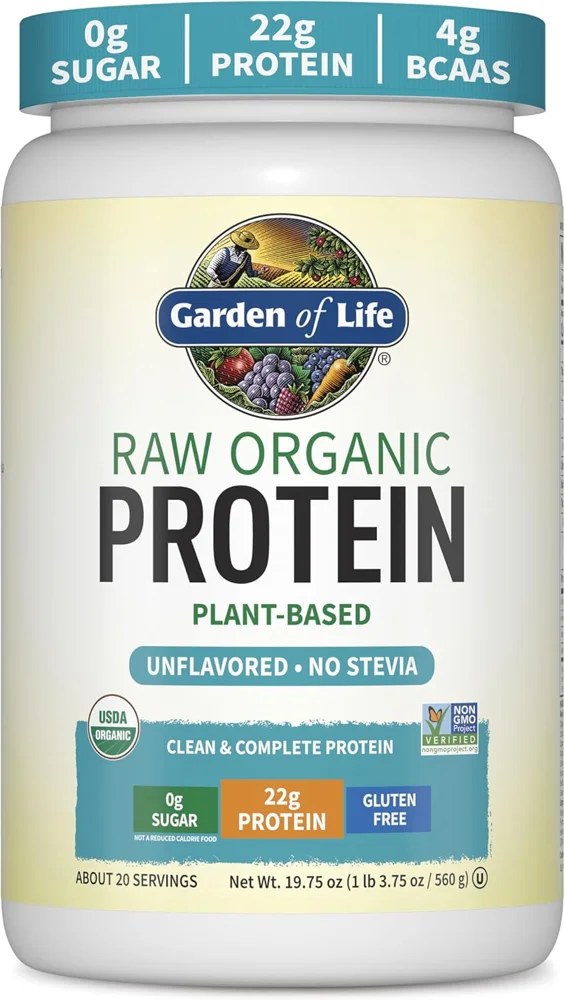
Garden of Life Raw Organic Protein
22 g plant protein, unflavored and no stevia; about 20 servings in the matched tub.
Check price at Amazon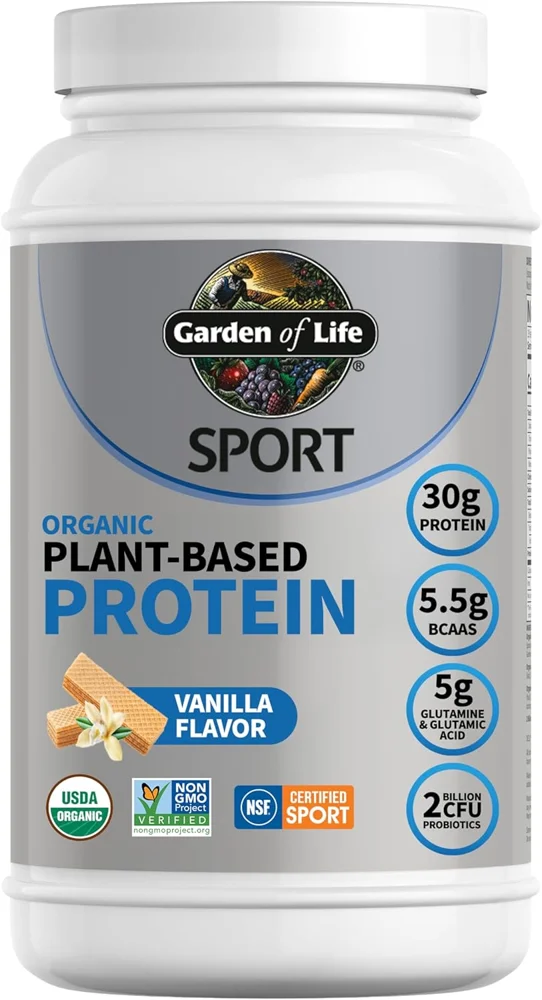
Garden of Life SPORT Organic Plant-Based Protein
30 g plant protein and an athlete-focused certification; Vanilla, not Raw Unflavored.
Check price at AmazonAffiliate links: we may earn a commission if you buy. Check the selected size, seller and current label on Amazon.
Compare the reviewed products
| Criterion | Garden of Life Raw Organic Protein | Garden of Life SPORT Plant-Based Protein |
|---|---|---|
| Format | Powder | Powder |
| Reviewed variant | Raw Organic Protein · Unflavored / No Stevia · 560 g | SPORT Vanilla · 806 g / 19-serving format |
| Label serving | 1 scoop (~28 g) | 2 scoops (42 g) |
| Servings per reviewed pack | ~20 | 19 |
| Ingredients per label serving | Protein 22 g; BCAAs 4 g included in protein | Protein 30 g; BCAAs 5.5 g; glutamine + glutamic acid 5 g |
| Ingredients & allergens | — | NSF listing: vegan; dairy-, soy- and gluten-free claims |
| Nutrition per label serving | — | 160 calories; 7 g carbohydrate; 3 g fat per 42 g serving |
| Sugar per label serving | 0 g sugar; no stevia | <1 g total sugar per 42 g serving |
| Quality & testing | — | NSF Certified for Sport · US Vanilla / 806 g · specified lots |
| Supplement Explained Score | ||
| Sources | ||
| Review & retailer offer |
~ means approximate; — means no published value in this record. Customer ratings are the named publisher’s snapshot and may include multiple sizes or earlier formulas. The Supplement Explained Score is our source-reviewed editorial assessment out of 25, separate from customer stars. Compare the five criteria and the same intended use; the total is not a clinical ranking. Prices are dated USD offer snapshots; cost uses the reviewed pack and label serving.
Which exact formulas are being compared?
This comparison covers Raw Organic Protein Unflavored/No Stevia in the 19.75 oz (560 g) Unflavored listing and SPORT Organic Plant-Based Protein Vanilla in the 19-serving format. Other flavors and container sizes can differ, so check the exact product before buying.
The Raw product page lists 22 g complete plant protein, 4 g BCAAs, 0 g sugar and no stevia. Its protein sources include peas, sprouted grains, seeds and legumes. It also includes vitamins A, D, E and K, probiotics and enzymes.
The SPORT Vanilla page lists 30 g complete plant protein, 5.5 g BCAAs, 5 g glutamine/glutamic acid and 2 billion CFU of Bacillus subtilis DE111 per serving. Sources include organic pea, garbanzo bean, navy bean, lentil and cranberry seed, alongside a fruit/recovery blend.
Raw fits recipes where you do not want vanilla flavor or stevia. SPORT supplies 8 g more protein per full serving, but that does not establish greater protein concentration without comparing serving weights. Raw Meal and Raw Fit are separate products, not interchangeable versions of Raw Protein.
Do the extra ingredients establish better results?
No. The product information does not establish that either finished formula produces better muscle gain, recovery or digestion than the other. Their clearest measurable difference is labeled protein per serving.
The NIH Office of Dietary Supplements describes protein as necessary for muscle maintenance and repair, with needs influenced by body size and activity. A powder can help supply protein, but its usefulness depends on your diet and training—not simply its ingredient count.
Do not add the BCAA figure to the headline protein amount: use 22 g for Raw and 30 g for SPORT. SPORT’s 5 g figure refers to glutamine and glutamic acid combined, not 5 g of isolated glutamine. Those figures alone do not prove faster recovery.
Probiotics and enzymes are ingredient differences, not guaranteed digestive benefits. SPORT identifies a strain and CFU amount; Raw’s probiotic and enzyme amounts are not established by the information available here. Our probiotic strain and CFU guide explains how to read those details without treating a bigger number as a promised benefit.
How should you use either powder?
Use the powder to fill a realistic protein gap, following the directions for your exact container. Raw’s manufacturer suggests one scoop with 8–10 fl oz of liquid. SPORT’s scoop count is not established here, so do not transfer Raw’s directions to it.
For breakfast protein without a large meal, compare ordinary-food combinations before adding a scoop by default.
A scoop is not a universal dose. Check whether the labeled serving requires one scoop or more; our serving-size guide explains the distinction.
Count protein from meals before deciding how much powder you need. Choose a routine that fits your day rather than buying primarily for a promised recovery window. Neither product name establishes the right serving for your body, activity or overall diet.
What safety checks matter?
Check the current allergen statement, your health circumstances and any overlapping supplements. These formulas contain several plant ingredients; vegan, organic or gluten-free claims are not blanket assurances that a product suits every allergy.
If lactose is the concern, compare whey isolate or dairy-free protein without treating isolate as suitable for milk allergy.
Raw’s added vitamins A, D, E and K count toward your total intake. If you also take a multivitamin or fortified supplements, compare the actual amounts before combining them. Do not assume a useful dose—or an excessive one—when quantities are unknown. The multivitamin overlap guide can help organize that check.
If you have kidney disease, discuss your protein intake with your clinician. If you are immunocompromised or seriously ill, ask your care team before using probiotic-containing powders. Neither product should be used to treat digestive disease or serious illness. Bring the full ingredient list to a pharmacist if you take medication.
What do the certifications actually tell you?
SPORT’s NSF Certified for Sport claim is the more relevant distinction for athletes subject to drug testing because it includes banned-substance screening. Confirm the exact product and flavor in the certifier’s directory before relying on it.
Raw’s manufacturer identifies certified organic, Non-GMO Project Verified, certified vegan and NSF gluten-free claims. Its gluten-free certification is not the same as SPORT’s sport-specific certification. SPORT identifies USDA organic, non-GMO and NSF Certified for Sport.
Organic and non-GMO claims do not establish superior muscle gain. Sport certification does not promise zero risk or zero heavy metals. Our third-party testing guide explains why the scope of a certification matters more than a general testing claim.
This is a label-based review, not hands-on testing, and no lot-specific certificate of analysis was obtained. There is therefore no basis here to rank taste, mixability, digestive tolerance or contaminant levels.
How should you compare price and alternatives?
Compare cost per labeled protein gram, then decide whether the flavor, added ingredients and certification justify any difference. Price per ounce of powder is a poor substitute because powder weight includes ingredients other than protein.
Divide the delivered price by servings per container multiplied by protein grams per serving. If the purchased SPORT label confirms 19 servings, its denominator is 19 × 30 = 570 g protein. The matched Raw photo lists about 20 servings, giving about 20 × 22 = 440 g protein; recheck the purchased label before calculating; do not derive that count from the tub’s net weight.
Hypothetical example only: a $40 powder containing 20 servings of 25 g protein provides 500 g protein. That equals $2 per serving and $0.08 per protein gram. These are example inputs, not either product’s current price or label. Multiply the per-gram cost by the same protein amount to compare equal portions. Our protein cost-per-gram calculator handles that arithmetic.
A simpler plant powder may suit buyers who do not want vitamins, probiotics or recovery blends. Compare its protein sources, grams and certification rather than assuming it matches either formula. If plant-only is not essential, whey is another option to compare using the same criteria. Protein-containing foods may make any powder unnecessary when meals already meet your needs.
Product examples to compare
- Garden of Life Raw Organic Meal: Chocolate: 20 g protein, 6 g fiber and 150 calories per scoop; about 14 servings.
- Garden of Life Raw Organic Protein & Greens: Chocolate plant protein with added greens; compare protein and actual fiber rather than the greens claim.
FAQ
Does SPORT provide 35.5 g protein when its BCAAs are included?
No. Its labeled protein total is 30 g per serving. Adding the separately listed 5.5 g BCAA figure would overstate that total.
Does “no stevia” apply to SPORT Vanilla too?
The verified no-stevia claim applies to Raw Unflavored. Do not transfer it to SPORT Vanilla; check that product's current ingredient list for sweeteners.
Can Raw Organic Protein replace a multivitamin?
The presence of vitamins A, D, E and K does not establish that Raw replaces a multivitamin. Check their actual amounts and the rest of your intake rather than assuming comprehensive coverage.
Can either powder replace a complete meal?
Do not treat either as a complete meal based on protein grams alone. A meal's nutritional balance depends on everything it contains. Garden of Life Raw Meal is a separate product line.
What if my container differs from a retailer's photo?
Confirm the exact product, flavor and size. A verified current label takes priority over older photos or generic marketing. Packaging can change; contact the manufacturer if details conflict rather than combining facts from different versions.
References
- Garden of Life: Raw Organic Protein Powder, Unflavored—No Stevia
- Garden of Life: SPORT Organic Plant-Based Protein, Vanilla
- NIH Office of Dietary Supplements: Dietary Supplements for Exercise and Athletic Performance—Health Professional Fact Sheet
Label and package details checked against the cited sources. Retailer prices and available versions can change; the page update date is shown above.