
Protein Powder for Lactose Intolerance: Isolate or Dairy-Free?
Whey isolate typically contains less lactose than concentrate, but a finished powder is not automatically lactose-free. Check the exact formula; a verified dairy-free option avoids milk-derived protein. Milk allergy is different: whey isolate and lactase are not workarounds. If dairy is not the trigger, added ingredients or the mixer may still matter.
Breathing difficulty, throat or tongue swelling, or faintness after a shake needs emergency care. Call 911; do not try another whey product to test a suspected milk allergy.
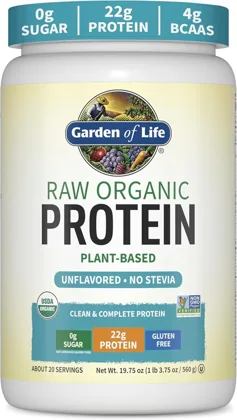
Garden of Life Raw Organic Protein
22 g protein; no stevia on the reviewed formula.
Contains sesame. Not a guarantee of symptom-free digestion.
Check price at AmazonRead the product analysisAffiliate links: we may earn a commission if you buy, at no extra cost to you.
- Separate lactose intolerance from milk allergy before comparing powders.
- Request lactose information for the exact flavor and formula.
- Verify current ingredients and allergens; plant-based is not enough.
On this page
- Is this lactose intolerance or a milk allergy?
- How do concentrate, isolate, hydrolyzed whey, and plant protein compare?
- What should you check on the exact package?
- Is unflavored Raw Organic Protein a dairy-free option to check?
- Can lactase solve the problem?
- What does a careful buying decision look like?
- Do you need a powder if you avoid dairy?
- FAQ
- References
Is this lactose intolerance or a milk allergy?
Lactose intolerance concerns digesting lactose, the sugar in milk. Milk allergy is different: it is an immune reaction to milk proteins and can be severe. That distinction should determine your first buying decision, before flavor, protein grams, or whether a powder is whey isolate.
Digestive discomfort after a shake does not by itself prove milk allergy or identify lactose as the cause. Lactase addresses lactose digestion, not every reason a shake might cause symptoms.
- Milk allergy is diagnosed or suspected: Do not use whey concentrate, isolate, or hydrolyzed whey as a workaround. Get allergy-specific guidance.
- Lactose intolerance is established without milk allergy: Compare exact-product lactose information and your known dietary tolerance, rather than assuming everyone tolerates the same amount.
- The cause is unclear: Seek medical advice instead of trying different whey powders to identify an allergy.
Lactose tolerance varies; there is no universal symptom-free amount to build a buying rule around.
How do concentrate, isolate, hydrolyzed whey, and plant protein compare?
Typical dairy-ingredient composition shows less lactose in isolate than in concentrate. That explains why isolate is worth checking, but it does not measure the lactose in a finished flavored blend.
Neither whey isolate nor plant protein wins automatically. For lactose intolerance, compare what you can establish about lactose in the exact product. For milk allergy, none of the whey types is an alternative to avoiding milk protein.
| Type | Lactose-intolerance buying check | What the name does not settle |
|---|---|---|
| Whey concentrate | Get lactose information for the exact formula. | Protein grams do not tell you its lactose amount. |
| Whey isolate | Look for a product-specific lactose statement or ask the manufacturer. | Isolate is not a lactose-free or symptom-free guarantee. |
| Hydrolyzed whey | Check lactose separately from the hydrolyzed-whey description. | It remains milk-derived; it is not a milk-allergy alternative. |
| Dairy-free plant protein | Confirm dairy-free status from current product information and inspect all allergens. | Plant-based does not mean allergen-free. |
Scroll sideways for all columns.
A category name is not a measurement for the tub you will buy. If the manufacturer cannot clarify lactose content, leave that question unresolved rather than converting isolate into lactose-free.
All three whey types are milk-based proteins. The milk-allergy boundary still applies regardless of the processing term on the front.
What should you check on the exact package?
Use the current package as your starting point, then resolve unanswered lactose or allergy questions with the manufacturer. Front-panel wording cannot replace checking the full formulation.
- Match the exact product. Confirm flavor, UPC, and package version. Online photos and ingredient records may describe an earlier revision.
- Read protein sources and allergen information. For a milk allergy, do not treat a whey product as acceptable because it is called isolate.
- Ask about lactose specifically. If the package does not establish it, request information about this exact formula, not the company's whey products in general.
- Record added ingredients. Keep the ingredient list separate from claims such as unflavored, no stevia, or 0 g sugar.
- Check what goes into the shake. A milk-containing mixing liquid or another added ingredient belongs in the same allergy and lactose assessment.
- Check nutrients separately. A protein figure is not a calcium figure, and a sugar claim does not settle milk-allergy risk.
For a step-by-step walkthrough, see how to read a supplement label.
Is unflavored Raw Organic Protein a dairy-free option to check?
The reviewed record for Garden of Life Raw Organic Protein Unflavored / No Stevia describes a plant-ingredient formula that contains sesame. Those details help identify the product; they do not establish personal digestive tolerance.
The manufacturer's product page lists 22 g protein, 0 g sugar, and no stevia. The reviewed ingredient record, identified by UPC 658010114158, includes peas plus sprouted grains, seeds, and legumes, organic guar gum, enzymes, and a probiotic.
Sesame is listed, and sesame is a major food allergen. The record also reports a facility that processes milk, egg, soy, wheat, fish, tree nuts, and sesame.
No named inulin or sugar alcohol appears in that reviewed record. Guar gum is a separate listed ingredient, not a reason to relabel the formula as containing inulin. Retail and package revisions exist, so check the current ingredients and allergen statement before relying on this record.
The Raw Organic Protein product overview covers this specific product. Do not apply its ingredient record to every flavor.
Can lactase solve the problem?
Lactase may help some people digest lactose, but it is not protection against milk allergy and will not address every cause of gastrointestinal symptoms. Its role is limited to lactose digestion; a lactase claim should not turn an unsuitable powder into an allergy-safe choice.
An enzyme blend on a protein powder's label also does not establish that it will prevent your symptoms. The Raw record's enzyme and probiotic ingredients are formulation facts, not proof of benefit for this product.
If symptoms persist, discuss the cause with a clinician rather than adding products one after another. For more on the separate enzyme decision, see the digestive enzymes guide.
For the separate ingredient-filter question, see protein powders without inulin or sugar alcohols; that filter is not a lactose or milk-allergy clearance.
What does a careful buying decision look like?
A careful buying decision can end with neither of the first two tubs being suitable. You do not have to choose between an unanswered lactose question and a known allergen.
Consider a shopper with diagnosed lactose intolerance and a sesame allergy. One option is whey isolate, but the manufacturer has not provided lactose information for that exact flavor. The other is a plant powder whose label lists sesame.
The shopper sets aside the sesame-containing powder and requests product-specific lactose information about the isolate. If that information remains unavailable, the next move is to examine a different product or use an existing food option, not to assume one of the two must work.
This is a label-and-history decision, not a suggestion to deliberately test an allergen. A powder containing a known food allergen is not a candidate for a home trial.
Do you need a powder if you avoid dairy?
A powder is optional if a food option already fits your needs and restrictions. For lactose intolerance, lactose-free or lactose-reduced dairy can be an alternative to consider. It remains dairy, so it is not a workaround for milk allergy.
If you cut back substantially on dairy, keep calcium and vitamin D in the picture. Dairy restriction can affect intake of both. Choosing a powder for its protein content does not establish that it replaces the nutrients you stopped getting from your usual foods.
Check the current Nutrition Facts or Supplement Facts panel for calcium rather than assuming a plant powder supplies it. If you are unsure how a change in dairy intake affects your overall diet, discuss it with a clinician or registered dietitian. This is a reason to review intake, not to automatically start a calcium or other mineral supplement.
FAQ
Does 0 g sugar mean a powder is safe for milk allergy?
No. A sugar value is not a statement about milk proteins. The Raw product's manufacturer lists 0 g sugar, but that fact cannot establish safety for someone with milk allergy.
Does unflavored mean the powder has only one ingredient?
No. The reviewed unflavored Raw record includes multiple protein ingredients, guar gum, enzymes, and a probiotic. Unflavored describes the product version, not a single-ingredient formula.
Is a facility statement the same as a listed allergen?
No. The reviewed Raw record lists sesame in the formula and separately describes allergens processed by the facility. If you have an allergy, ask your allergy clinician how to interpret the facility statement for your situation.
What if the package and an online listing disagree?
Do not combine the two lists into an assumed formula. Match the flavor and UPC, keep the package details, and contact the manufacturer to resolve the discrepancy before relying on an allergen or lactose claim.
How should I compare the cost of two suitable powders?
First match comparable labeled protein per serving, then divide tub price by labeled servings. In a hypothetical example, $24 for 20 servings is $1.20 per serving; $30 for 30 servings is $1.00. Lower cost does not resolve lactose or allergy questions.
References
Labels and evidence checked October 4, 2026. For general information, not a personal treatment plan.