
30-Gram Protein Breakfasts Without a Huge Meal
You can reach about 30 grams of protein by pairing two protein foods rather than eating one large portion. Examples include plain Greek yogurt with eggs or cottage cheese with yogurt. A labeled protein-powder serving plus soymilk is another option, not a requirement. These totals are label arithmetic, not a protein target everyone needs.
Avoid ingredients you are allergic to, and check current allergen statements, including those on powders. If persistent low appetite makes eating difficult, seek individualized medical advice rather than forcing a protein target.
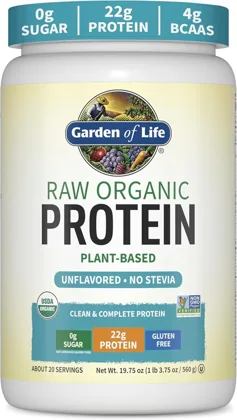
Garden of Life Raw Organic Protein
22 g protein; no stevia on the reviewed formula.
Contains sesame. Not a guarantee of symptom-free digestion.
Check price at AmazonRead the product analysisAffiliate links: we may earn a commission if you buy, at no extra cost to you.
- Match the exact product and serving size used in the calculation.
- Count labeled protein, not the weight of a scoop.
- Check allergens and whether the portion feels manageable.
On this page
- Is 30 grams a requirement for breakfast?
- Which combinations reach about 30 grams?
- How can you make the portions practical?
- How do you count protein without confusing it with serving weight?
- What changes when you substitute foods or brands?
- Do powder blends make a more complete breakfast?
- How can you compare powder costs without relying on scoop size?
- FAQ
- References
Is 30 grams a requirement for breakfast?
No. Thirty grams here is a recipe reference, not a universal breakfast prescription. The examples show how to assemble that amount from ordinary servings. They do not establish how much protein you personally need at breakfast or across the day.
The NIH Office of Dietary Supplements describes adequate nutrition and protein as supporting training, not replacing it. That does not mean everyone needs the same breakfast or should use an athletic nutrition target.
Meal size is personal, too. Yogurt with two eggs may feel manageable to one person and substantial to someone with low appetite. Use the portions below to understand the arithmetic, not as a challenge to finish food. There is also no need to favor a powder when a food pairing suits your preferences and routine.
Which combinations reach about 30 grams?
Using the reviewed nutrition records, these six pairings calculate to at least 30 grams of protein. The first three are food-first options; the last three use optional powders. Check your current packages before applying the numbers.
| Breakfast pairing | Protein calculation | Calories before extras |
|---|---|---|
| 170 g FAGE Total 0% plain yogurt + 2 Eggland’s Best Classic large eggs | 18 + 12 = 30 g | 90 + 120 = 210 |
| 110 g Good Culture Organic 2% cottage cheese, 16-ounce formula + 170 g FAGE Total 0% plain yogurt | 14 + 18 = 32 g | 90 + 90 = 180 |
| 3 Eggland’s Best Classic large eggs + 170 g FAGE Total 0% plain yogurt | 18 + 18 = 36 g | 180 + 90 = 270 |
| One labeled 22 g-protein serving of Raw Organic Protein Unflavored / No Stevia + 240 mL Silk Unsweet Soymilk | 22 + 8 = 30 g | 90 from soymilk; powder calories not verified |
| One reviewed serving of Raw Organic Protein & Greens Chocolate + 2 Eggland’s Best Classic large eggs | 20 + 12 = 32 g | 120 + 120 = 240 |
| One reviewed serving of Raw Organic Meal Chocolate + 2 Eggland’s Best Classic large eggs | 20 + 12 = 32 g | 150 + 120 = 270 |
Scroll sideways for all columns.
Only the listed ingredients are counted. Fruit, grains, added fats, cooking oil, and other toppings are outside both the protein and calorie calculations. The powder-and-eggs rows assume no additional calorie-containing mixer. The Raw Organic Protein row has no total calorie figure because its serving calories were not verified.
How can you make the portions practical?
Separate the protein pairing from the amount of preparation involved. Yogurt with eggs requires some cooking; yogurt with cottage cheese does not. Neither needs to become a complicated recipe to make the numbers work.
For a worked weekday example, imagine choosing the yogurt-and-two-eggs option and serving the yogurt in a side bowl. Use this short preparation log:
- Put the empty bowl on a kitchen scale and zero it before adding yogurt.
- Weigh the 170 g yogurt portion used in the calculation, rather than assuming any container is one serving.
- Use two large eggs matching the reviewed label. Cook them in your preferred style.
- Record any butter, oil, cheese, or other additions separately if you are also tracking calories.
The yogurt and egg labels put that pairing at approximately 30 grams of protein. How much space it occupies on the plate depends on preparation.
If cooking is the obstacle, the two-dairy pairing may fit your routine better. If appetite is the obstacle, look honestly at the listed portions rather than assuming a drink will automatically feel smaller.
For an older adult who regularly leaves food unfinished, the small-appetite nutrition guide addresses intake and assessment before any fixed breakfast target.
How do you count protein without confusing it with serving weight?
Use the protein line on the Nutrition Facts panel, not the total weight of the food or powder. A serving’s weight includes more than protein.
For example, the reviewed Protein & Greens panel lists a 30.5 g scoop containing 20 g of protein. Counting the scoop’s entire weight as protein would overstate the total. The unflavored Raw Organic Protein record reports 22 g of protein per serving, but its exact serving weight and calories remain unverified here. Follow the current package rather than borrowing another powder’s scoop size.
For a weighed food portion, the calculation is: protein = portion weight ÷ labeled serving weight × labeled protein. Using the FAGE values, 85 g of yogurt provides approximately 9 g of protein. Halving the yogurt in the first pairing while keeping two eggs therefore changes its total from 30 g to 21 g.
These remain label estimates, not laboratory measurements of your breakfast.
What changes when you substitute foods or brands?
Recalculate from the replacement’s own label. A similar-looking food, another flavor, or a different package size does not necessarily provide the same protein per serving.
The liquid example specifically uses Silk Unsweet Soymilk, with 8 g of protein per 240 mL. Do not carry that number over to almond milk or oat milk. Likewise, the cottage cheese calculation uses the Good Culture Organic 2% 16-ounce product, not a different single-serving cup or formula.
Allergen checks are separate from protein calculations. The yogurt and cottage cheese contain milk, Silk contains soy, and the eggs contain egg. The table does not establish the powders’ full allergen statements. Read each current package; the absence of an allergen in this abbreviated table is not an allergen-free claim.
Do powder blends make a more complete breakfast?
Not simply because they are named “Greens” or “Meal.” Those names do not establish that a serving supplies everything you need for breakfast, and the manufacturer figures here are nutrition facts, not evidence of superior health effects.
The reviewed Protein & Greens panel lists 3 g of fiber per serving; it does not make the powder a replacement for vegetables or a meal. The reviewed Meal Chocolate panel lists 6 g of fiber and 150 calories per serving. Mixed with water, that calorie figure alone does not establish a sufficient, complete breakfast.
Older Meal panels differ, so check your current package rather than combining figures from different versions. Neither blend has been established here as a treatment for constipation or appetite loss.
Keep the food-first versus supplement-first choice focused on your practical needs, not the blend’s name.
How can you compare powder costs without relying on scoop size?
Compare cost per gram of labeled protein, not cost per scoop or per gram of powder. Scoop sizes and protein amounts can differ between products.
The formula is: package cost ÷ (servings per package × protein grams per serving). For a clearly hypothetical example, a $30 tub with 20 servings of 22 g protein contains 440 g of labeled protein. That works out to about $0.068 per gram, or $0.68 per 10 g of protein. This is a worked example, not a current product price.
A protein powder cost-per-gram calculator can help compare that arithmetic. It cannot decide whether the serving, ingredients, or preparation fit your breakfast better than food.
FAQ
Do I need to trim the 32- or 36-gram options down to exactly 30 grams?
Those examples deliberately use full reviewed servings instead of awkward fractions. Thirty grams is the article’s calculation reference, not a prescribed dose. Whether any of these portions fits your needs is a separate question.
Can I use a food-tracking app instead of the package label?
An app can perform the arithmetic, but its entry needs to match your exact product and portion. A generic yogurt entry or an older product formula may not match the package you are using.
Which listed option avoids yogurt, cottage cheese, and eggs?
The Raw Organic Protein and Silk pairing is the only listed option without those foods. That is not an allergen-free claim: Silk contains soy, and the powder’s full current allergen statement still needs checking.
Can I stir a partial serving of powder into yogurt?
That creates a different calculation from the table. Count the actual fraction of the powder’s labeled serving, then add the yogurt’s protein. A partial serving cannot be credited with the protein listed for a whole serving.
Does the calorie column tell me how much breakfast I should eat?
No. It reports known calories for the named ingredients, before extras. It is not an energy prescription or a judgment that the lowest-calorie pairing is preferable. Protein arithmetic alone does not establish a complete breakfast.
References
- FAGE Total 0% plain yogurt Nutrition Facts
- Good Culture Organic Cottage Cheese 2% 16oz Nutrition Facts
- Egglands Best Classic large eggs Nutrition Facts
- Silk Unsweet Soymilk Nutrition Facts
- Raw Organic Protein Unflavored / No Stevia
- Raw Organic Protein & Greens Chocolate
- Raw Organic Meal Chocolate
- Dietary Supplements for Exercise and Athletic Performance
Labels and evidence checked October 4, 2026. For general information, not a personal treatment plan.