
CoQ10
Quick answer
CoQ10 is a substance your body naturally contains, and it has important functions. That does not automatically mean a CoQ10 supplement will help everyone.
- CoQ10 is naturally present in the human body, with high levels in the heart, liver, kidneys, and pancreas.
- Researchers have studied CoQ10 because it is important in the body, but research in heart disease is inconclusive.
- Research in heart failure is also inconclusive, although there is evidence it may reduce the risk of some complications of heart surgery.
- The overall scientific evidence does not support CoQ10 for reducing muscle pain caused by statins; see the CoQ10 Statin Decision Map for the safer decision workflow.
- The small amount of evidence currently available suggests CoQ10 probably does not have a meaningful effect on blood pressure.
- No serious side effects have been reported, but mild side effects such as insomnia or digestive upset may occur.
- CoQ10 may interact with warfarin and insulin, and it may not be compatible with some types of cancer treatment.
CoQ10 is widely marketed for energy, heart health, and statin support. The evidence is more mixed than the marketing suggests. This guide uses official U.S. evidence summaries to help you make a practical decision about whether CoQ10 belongs on your list of supplements to consider.
On this pageTable of Contents
- 1What CoQ10 is
- 2Science in simple terms
- 3Why people take it
- 4What the evidence says
- 5Strength of evidence
- 6Common supplement forms and what changes between them
- 7Timing and practical use notes
- 8Who may benefit
- 9Who should use caution
- 10What users often get wrong
- 11When to talk to a clinician
- 12Current CoQ10 product coverage
- 13FAQ
Featured Product Routes
If CoQ10 still looks worth comparing, the next question is usually not whether the ingredient sounds important. It is which live formula analysis best clarifies ubiquinol tradeoffs, cost, and brand positioning.
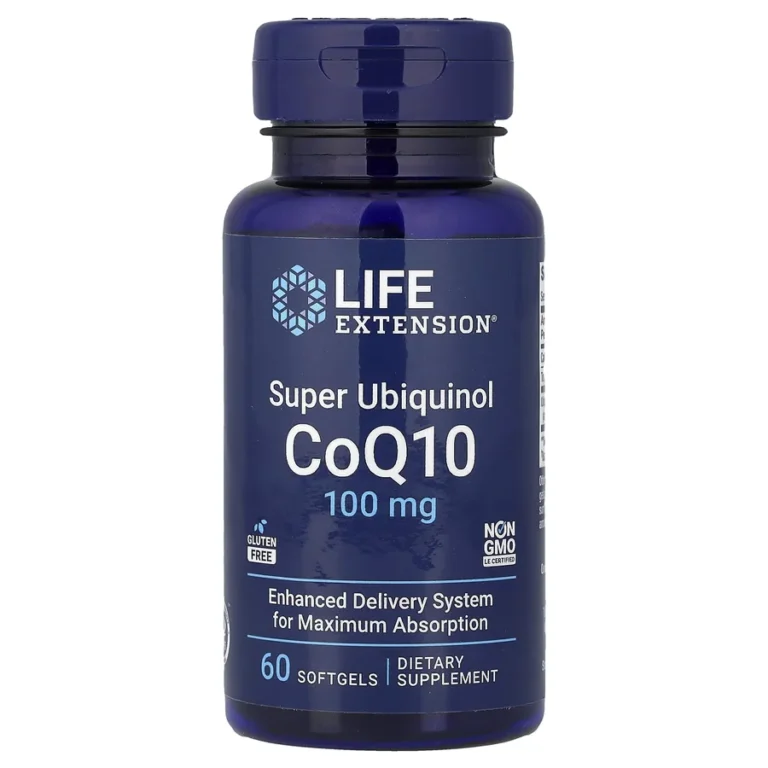 Softgels Life Extension Super Ubiquinol CoQ10 100 mg Kaneka ubiquinol 100 mg; PrimaVie shilajit complex 100 mg per label serving.
Brand pattern Life Extension Helpful when you want to understand how the brand frames evidence, premium positioning, and formula complexity before buying.
Wider library Products Hub Browse the larger products library if your real question is broader heart-health marketing, energy claims, or how CoQ10 compares with other supplement priorities.
Softgels Life Extension Super Ubiquinol CoQ10 100 mg Kaneka ubiquinol 100 mg; PrimaVie shilajit complex 100 mg per label serving.
Brand pattern Life Extension Helpful when you want to understand how the brand frames evidence, premium positioning, and formula complexity before buying.
Wider library Products Hub Browse the larger products library if your real question is broader heart-health marketing, energy claims, or how CoQ10 compares with other supplement priorities.
What CoQ10 is
CoQ10, also called coenzyme Q10, is a substance naturally present in the human body. According to the National Center for Complementary and Integrative Health, higher levels are found in organs such as the heart, liver, kidneys, and pancreas.
That matters because people often hear that CoQ10 is “vital” or “essential” and assume taking more must be helpful. The better way to think about it is simpler: something can be important in normal biology without being a useful supplement for every person.
Science in simple terms
CoQ10 has important functions in the body, which is why researchers have studied whether taking it as a supplement might have health benefits. But biology and supplement results are not the same thing.
A nutrient or compound can be naturally present in the body and still have limited, mixed, or disappointing results when tested as a supplement. That is the key idea to keep in mind with CoQ10.
Why people take it
Most people looking into a CoQ10 supplement are usually trying to answer one of a few practical questions:
- Could it help with general energy support?
- Could it help with heart-related concerns?
- Could it help with muscle pain linked to statins?
- Is it worth trying because it is “natural” and seems low risk?
Those are reasonable questions. The problem is that the strongest marketing claims often go further than the evidence does.
What the evidence says
Heart disease: Research on CoQ10 in heart disease is inconclusive.
Heart failure: Research is also inconclusive here, though there is evidence it may reduce the risk of some complications of heart surgery.
Statin-related muscle pain: The overall scientific evidence does not support the idea that CoQ10 reduces muscle pain caused by statins. If that is your reason for considering it, use the CoQ10 Statin Decision Map before comparing product forms.
Blood pressure: The small amount of evidence currently available suggests CoQ10 probably does not have a meaningful effect on blood pressure.
General “energy” claims: CoQ10 is often sold for energy support, but the source notes used for this page do not establish a clear, broad benefit for everyday energy in otherwise typical supplement use.
Strength of evidence
The overall picture is mixed and limited rather than clear-cut.
- Strong support: Not established for the common consumer claims most people ask about.
- Mixed or inconclusive: Heart disease and heart failure.
- Not supported overall: Statin-related muscle pain.
- Probably little meaningful effect: Blood pressure.
- Best-supported caution area: Drug interactions and practical safety review.
If you are deciding whether to buy CoQ10, the main question is not whether it sounds biologically plausible. It is whether the evidence supports your specific reason for taking it.
Common supplement forms and what changes between them
CoQ10 products are sold in more than one retail form, but the source notes used for this page do not establish that one common form is clearly best for most people.
The practical point is that product form does not solve the bigger evidence problem. If the reason for taking CoQ10 is vague, changing the form is unlikely to answer the real question. Start with whether CoQ10 is likely to help your goal at all, then consider product details.
Timing and practical use notes
The source notes used here do not support one universal “best time” rule for taking CoQ10. In real-world use, the more important issues are whether you have a clear reason for taking it, whether it fits with your medications, and whether mild side effects show up.
If you want a practical timing guide, see best time to take CoQ10. If you want a side-effect overview, see CoQ10 side effects.
Who may benefit
The people most likely to get value from CoQ10 are not necessarily the people drawn in by broad wellness marketing. CoQ10 is more reasonable to discuss when there is a specific question behind it.
- People who want an evidence-based conversation about a heart-related use, while understanding the evidence is still inconclusive.
- People hearing about CoQ10 around heart surgery, where there is evidence it may reduce the risk of some complications in that setting.
- People who want to review whether a supplement makes sense before buying into vague “energy support” claims.
For everyday self-directed use, the case is often weaker than the marketing suggests.
Who should use caution
CoQ10 may deserve more caution than many buyers expect.
- People taking warfarin: CoQ10 may interact with it.
- People using insulin: CoQ10 may interact with it.
- People receiving some types of cancer treatment: CoQ10 may not be compatible.
- Anyone sensitive to supplements: Mild side effects such as insomnia or digestive upset may occur.
No serious side effects have been reported in the source cited here, but “no serious side effects reported” is not the same as “safe for everyone in every situation.”
What users often get wrong
- “It is important in the body, so extra must help.” Not necessarily. Normal body function does not prove supplement benefit.
- “It is good for heart health.” The heart-related evidence is still inconclusive.
- “It helps statin muscle pain.” Overall, the scientific evidence does not support that use.
- “It lowers blood pressure.” Current evidence suggests it probably does not have a meaningful effect.
- “Natural means low-risk.” Drug interactions still matter, especially with warfarin, insulin, and some cancer treatments.
- “Different product forms solve the uncertainty.” Product form does not fix weak or inconclusive evidence.
When to talk to a clinician
Talk to a clinician before starting CoQ10 if any of the following apply:
- You take warfarin.
- You use insulin.
- You are receiving cancer treatment.
- You want to use CoQ10 for a heart-related reason and want help understanding what “inconclusive” means for your situation.
- You develop insomnia, digestive upset, or any other concerning reaction after starting it.
You can also use our general guide on when to talk to a clinician before adding a new supplement.
Current CoQ10 product coverage
Our live CoQ10 product coverage is still intentionally selective, which is useful in a category where a single cleaner ubiquinol product may be a better comparison point than a crowded list of vague “heart support” formulas.
- Life Extension Super Ubiquinol CoQ10 100 mg is the clearest starting point if you want to compare price, ubiquinol positioning, softgel simplicity, and branded-ingredient trust without extra stack ingredients.
For the broader company pattern, see Life Extension. To browse every live product analysis, use the Products Hub.
Compare specific product labels:
- Thorne Ovarian Care: A 40:1 inositol blend with folate and a CoQ10 complex; fertility benefit remains uncertain, and serving size matters.
FAQ
What is CoQ10, in simple terms?
It is a substance naturally present in the human body. It has important functions, which is why researchers have studied whether taking it as a supplement might help in certain situations.
Does CoQ10 help with energy?
It is often marketed that way, but the source notes used for this page do not establish a clear broad benefit for general energy. “Important in the body” is not the same as “helpful for everyone as a supplement.”
Does CoQ10 help with statin muscle pain?
According to NCCIH, the overall scientific evidence does not support CoQ10 for reducing muscle pain caused by statins.
Is CoQ10 proven for heart health?
No clear broad claim is supported here. Research on CoQ10 in heart disease is inconclusive, and research in heart failure is also inconclusive.
Can CoQ10 lower blood pressure?
The small amount of evidence currently available suggests it probably does not have a meaningful effect on blood pressure.
Can CoQ10 interact with medications?
Yes. CoQ10 may interact with warfarin and insulin, and it may not be compatible with some types of cancer treatment.
What side effects should I know about?
No serious side effects have been reported in the source cited here, but mild side effects such as insomnia or digestive upset may occur.
Update Note
Last reviewed and updated on October 2, 2026. We revisit priority pages when important evidence, safety, labeling, or regulatory context changes.
Editorial information
Reviewed for Trust
- Publisher: Supplement Explained Editorial Team
- Review model: Editorial evidence review; clinician review is shown only when a named clinician is listed.
- Last reviewed: October 2, 2026
- Last updated: October 2, 2026
- Editorial Policy | How We Review Evidence | Research Process | Disclaimer
- Use: Informational only. Not personal medical advice.