

Biotin
Quick answer
Biotin is a B vitamin involved in converting food into usable energy. Deficiency is rare, and evidence for extra biotin improving hair or nails in people without deficiency is limited. High-dose supplements can interfere with some blood tests. Tell your clinician and laboratory what you take before testing.
Some affected tests for heart injury can read falsely low. If you need emergency care, disclose biotin use without delaying care to stop the supplement first.
Forms & labels
Biotin is available as a single-ingredient supplement, in B-complex products, and in some multivitamins.
See forms & labels →Benefits & evidence
Biotin deficiency can cause hair and nail changes, but hair shedding or brittle nails do not establish a deficiency.
Read the evidence →Safety
Biotin can cause misleading laboratory results even when you feel well.
Read safety details →What biotin does in the body
Biotin is a water-soluble B vitamin. According to the NIH Office of Dietary Supplements, it helps the body break down fats, carbohydrates, and proteins from food into energy the body can use. Many foods contain biotin, and most people get enough from what they eat.
Evidence for hair and nail benefits
Biotin deficiency can cause hair and nail changes, but hair shedding or brittle nails do not establish a deficiency. Correcting a demonstrated deficiency is different from using extra biotin to treat unexplained hair loss.
Does biotin help hair growth if you are not deficient?
Official NIH guidance says there is little scientific evidence to support broad hair, skin, and nail claims for routine biotin use. The literature described by NIH includes case reports and small uncontrolled studies, not strong evidence of a predictable hair-growth benefit in people without deficiency.
The nail research has similar limits: small studies without strong controls cannot reliably separate an effect of biotin from other reasons for improvement. A report about brittle nails is also not evidence that the same supplement treats pattern hair loss.
If breakouts appeared after starting a hair blend, check the whole formula, not only biotin; the acne evidence and the lab-test issue are separate questions.
Supplement forms and label checks
Common supplement forms and dose context
Biotin is available as a single-ingredient supplement, in B-complex products, and in some multivitamins. NIH notes that the free biotin used in supplements is well absorbed when taken by mouth.
When reading a supplement label, check the amount per serving, the serving size, and whether biotin is listed in mcg or mg. If you take more than one supplement, check each label for biotin so you can account for the combined amount.
A biotin-free MSM formula is not automatically an effective alternative for hair loss. Removing biotin from a product does not prove that its other ingredients improve hair growth.
Biotin and collagen are different supplements: biotin is a vitamin, while collagen peptides are a protein ingredient. Their evidence and label amounts need to be evaluated separately. See biotin vs. collagen for hair support for that comparison.
If you are already taking biotin and want practical scheduling advice, see the best time to take biotin.
Daily intake, high-dose amounts and timing
For healthy people, NIH lists an adequate intake (AI), not a recommended dietary allowance (RDA), for biotin. An AI is used when there is not enough evidence to set an RDA. It refers to total daily intake from food and supplements, not an amount everyone needs to take as a supplement.
| Life stage | AI (mcg/day) |
|---|---|
| Adults, 19 years and older | 30 |
| Pregnancy | 30 |
| Breastfeeding | 35 |
As a label-reading example, 5 mg equals 5,000 mcg, and 10 mg equals 10,000 mcg. A 10,000 mcg serving would supply about 333 times the adult AI. These are amount comparisons, not proven doses for hair or nail benefits.
No tolerable upper intake level (UL) has been established for biotin because the available data are insufficient to set one. That does not mean high doses are risk-free or that 10,000 mcg is an appropriate daily amount for everyone.
Time to visible changes
There is no reliable “works by week three” answer here. If biotin helps because someone was actually low in biotin, any visible change in hair or nails would usually be more of a slow-growth question than a same-week result.
Safety, medicines and when to seek advice
Who should use caution
Biotin can cause misleading laboratory results even when you feel well. If you are planning bloodwork, tell the ordering clinician about biotin in any product you take, including combination supplements.
Long-term use of certain anticonvulsant medicines can affect biotin status. Ask the prescribing clinician whether this matters in your situation. Do not stop or change prescribed medicines to manage biotin intake on your own.
When to talk to a clinician
Talk to a clinician if you have unexplained hair thinning, brittle nails, a rash, or neurological symptoms. Those symptoms do not diagnose biotin deficiency, and a high-dose beauty supplement is not a substitute for finding their cause.
If you want help deciding whether biotin fits your situation, this guide on when to talk to a clinician can help you prepare for that conversation.
Getting biotin from food
Most people can get enough biotin from food alone. Food sources include eggs, fish, meat, nuts, and seeds. A concern about deficiency or a medicine that affects biotin status still calls for clinical advice rather than simply adding a high-dose supplement.
Biotin and blood test interference
Biotin can interfere with some laboratory methods, called assays, and produce misleading results. The interference does not necessarily reflect a real change in the hormone or other substance being measured. Some thyroid and other hormone tests may read falsely high or falsely low, depending on the assay.
NIH reports that even a single 10 mg dose interfered with some thyroid tests within 24 hours. This finding is not a 24-hour clearance rule: it does not tell you when biotin will stop affecting a different test or person.
Troponin is a blood marker of heart muscle injury used to help assess a possible heart attack. FDA warns that some affected troponin tests can read falsely low because of biotin, potentially obscuring heart injury. Some assays have been modified to reduce interference, but FDA reports continued concerns. If you need urgent care, tell the care team about biotin use without delaying care to pause it.
What to disclose before bloodwork
Tell the ordering clinician and laboratory:
- The names or labels of the supplements you take, including multivitamins and hair, skin, and nail blends.
- The biotin amount per serving, how many servings you take, and how often.
- When you last took each biotin-containing product.
Ask whether the tests ordered can be affected by biotin and what test-specific instructions to follow. Whether and how long to pause biotin depends on the assay and clinical circumstances; do not assume a universal interval works for everyone. For more detail, see biotin and lab tests.
A related product review
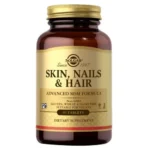
This is a related mixed-formula review, not evidence that a beauty supplement treats hair loss or a biotin deficiency.
More specific guides
Editorial information
About this guide
- Author: Ümit Karatay
- Review model: Editorial evidence review; clinician review is shown only when a named clinician is listed.
- Last updated: October 10, 2026
- Editorial Policy | How We Review Evidence | Research Process | Disclaimer
- Use: Informational only. Not personal medical advice.