
Goal guide
Fish Oil for Dry Eyes: Why the Evidence Is Mixed
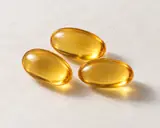
Fish oil has not consistently improved dry-eye symptoms in clinical trials. The evidence is mixed: the large 2018 DREAM trial and a 2024 trial of re-esterified triglyceride (rTG) omega-3 found no statistically significant symptom advantage over their control oils. A high amount of EPA and DHA, two omega-3 fats, on the label does not guarantee relief.
Persistent symptoms deserve an eye-care assessment rather than relying on a supplement. Seek prompt eye care if you develop new eye pain or vision changes.
What the clinical trials found
Both trials measured symptoms using the Ocular Surface Disease Index (OSDI), a dry-eye symptom questionnaire. The amounts below describe what researchers studied. They are not dosing recommendations.
| Study | Who took part | Formulation and control | Main findings |
|---|---|---|---|
| 2018 DREAM trial | 535 adults at 27 centers with moderate to severe dry-eye symptoms for at least six months. Existing dry-eye treatments were allowed. | 3 g of fish-derived EPA + DHA daily versus 5 g of olive oil daily, for 12 months. | Mean OSDI improvement was 13.9 points with omega-3 and 12.5 points with olive oil. There was no statistically significant between-group benefit in symptoms or signs. |
| 2024 rTG omega-3 trial | 132 adults with dry eye and meibomian gland dysfunction (MGD), an eyelid gland condition. At 12 weeks, 58 omega-3 participants and 57 control participants completed the trial. | rTG omega-3 providing 1,680 mg EPA + 560 mg DHA daily versus 3,000 mg grapeseed oil daily, for 12 weeks. | The primary OSDI symptom-score change did not differ significantly between groups at 12 weeks (P = 0.28). Secondary findings can guide further research but do not establish that rTG eye supplements are superior. |
In DREAM, both groups improved. Improvement from the start of a study is not proof that fish oil helped when the control group also improved. These trials tested specific formulations against specific oils; they do not settle every possible formulation or establish that olive oil and grapeseed oil are equivalent controls.
Why smaller studies and reviews can disagree
Some smaller studies and reviews have reported benefits. The studies examined in a 2023 meta-analysis differed in participants, formulations, comparison treatments and outcome measures. Those differences help explain conflicting findings when studies are combined. A favorable pooled result does not mean every omega-3 product works for dry eyes.
Different omega-3 products do not share evidence automatically
The source, formulation, amounts and added ingredients matter when deciding whether research applies to a product.
- Plain fish oil: Listing EPA and DHA does not make a supplement identical to the formulation or amount tested in a trial.
- rTG eye formulas: A re-esterified triglyceride label is not proof of better dry-eye results. The formulation alone cannot be assumed to overcome DREAM's findings.
- Omega-3/omega-6 blends: These are different formulas. Results from a fish-oil trial cannot automatically be applied to a blend with additional fats.
- Algal oil: A different omega-3 source does not establish equivalent dry-eye outcomes. See our fish oil versus algal oil comparison for more about these options.
Oral capsules and topical eye drops are different products. Do not put fish oil, algal oil or any other supplement oil intended for swallowing into your eyes.
Specks or cobwebs drifting in vision are another question. Read lutein and eye floaters for the evidence limits and changes that need an urgent eye exam.
Check what is contributing to your dry eyes
Dry eye can involve too few tears, tears that do not work well or tears that evaporate too quickly. An eye-care professional can assess tear quantity, evaporation and the eyelids rather than assuming the symptoms reflect a vitamin deficiency.
Medicines, contact lenses, screen habits, your environment and other conditions may matter. Before an appointment, keep a brief record of when symptoms occur, whether they change with screen use or surroundings, and which eye drops or other treatments you currently use. Bring your medicine and supplement list, too.
Ask what may be causing your symptoms, whether your current care is appropriate, and whether screen breaks or environmental changes could help. For separate questions about supplements, see our guide to eye vitamins and screen fatigue.
What to check on an omega-3 label
If you are considering an omega-3 supplement, bring the bottle or a photo of its full label to your eye-care professional. Check these details:
- EPA + DHA per labeled serving: Read the amounts of these two omega-3 fats, not just the total fish-oil weight. Our fish-oil label math guide explains the distinction.
- Capsules per serving: A labeled serving may contain more than one capsule. Do not mistake the per-serving amount for the amount in each capsule.
- Other ingredients and allergen information: Check for added oils or other ingredients and fish-allergen labeling. If you have a fish allergy or take medicines, ask a clinician or pharmacist about the exact product rather than assuming it is suitable.
A larger EPA + DHA number does not mean a better dry-eye outcome. The trial amounts above are not a self-treatment plan, and supplements are not a substitute for prescribed eye care.
For general background, see our omega-3 guide. If you are considering NOW Ultra Omega-3 Fish Oil, review that exact product's label rather than assuming it has been shown to treat dry eyes.
References
Sources checked October 13, 2026. General information, not a personal treatment plan.