

Zinc and Copper Supplements Compared: Dose Before Ratio
Choose a zinc-and-copper supplement by the absolute amounts and the reason for taking it, not by a ratio alone. The manufacturer formula for Jarrow Zinc Balance provides 15 mg zinc and 1 mg copper per capsule. Solaray Zinc Copper provides 50 mg zinc and 2 mg copper, plus iodine. Those are substantially different zinc amounts, even before food or another supplement is counted. [1] [2]
The US adult zinc upper limit is 40 mg per day from all sources for routine intake. Solaray’s 50 mg capsule exceeds that amount by itself. A medically supervised reason for a higher intake is different from choosing a daily product because its zinc-to-copper ratio sounds appealing. The limit is not a target or an individual safety guarantee. [3]
Zinc amounts of 50 mg or more taken for weeks can impair copper absorption and affect immune function and HDL cholesterol. Excess zinc can also cause nausea. Added copper is not permission to use high zinc indefinitely. [3]
Compare the amounts and ingredients
The Jarrow details come from its October 10, 2026 manufacturer listing. Solaray’s complete formula below comes from the official panel archived September 27, 2026; its October 10 manufacturer product text lists the same main nutrient amounts. Check the full panel on the bottle you select, rather than assuming a seller’s current stock matches a dated label example.
| Detail | Jarrow Zinc Balance | Solaray Zinc Copper |
|---|---|---|
| Zinc per capsule | 15 mg | 50 mg |
| Zinc source | L-methionine sulfate | Bisglycinate |
| Copper per capsule | 1 mg | 2 mg |
| Copper source | Gluconate | Bisglycinate |
| Arithmetic zinc:copper ratio | 15:1 | 25:1 |
| Iodine | Not listed as an active nutrient | 53 mcg from kelp |
| Other notable component | No pumpkin seed listed | Pumpkin seed, 10 mg |
| Initial decision issue | Does supplemental zinc/copper fit the overall plan? | What justifies the higher zinc amount? |
The ingredient forms identify the formulations. They do not prove that either finished product has superior absorption or better outcomes for every person. [1] [2]
Why the amounts matter more than the ratio
In a hypothetical label comparison, a 15:1 zinc-to-copper ratio can describe 15 mg zinc plus 1 mg copper or 45 mg zinc plus 3 mg copper. The ratio is the same; the total zinc exposure is not. In the second example, supplemental zinc alone exceeds the US adult routine upper limit of 40 mg from all sources.
A laboratory copper-to-zinc ratio is a different measurement from the zinc-to-copper amounts on a supplement label. A cross-sectional study of 154 people with inflammatory bowel disease found associations between serum copper-to-zinc ratios and selected inflammation markers. It did not test these supplements or establish an optimal capsule ratio or personal treatment plan.
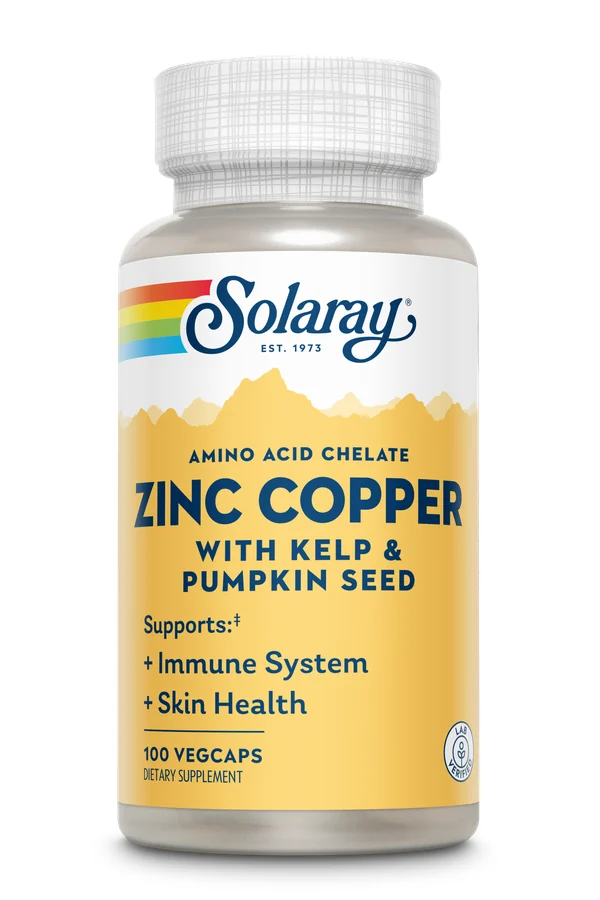
Solaray Zinc Copper with Kelp & Pumpkin Seed
Manufacturer label example: 50 mg zinc + 2 mg copper per capsule; 100 capsules. The zinc amount exceeds the US adult routine upper limit before food.
Ask the seller to confirm the current full panel and package before buying.
Check price at HerbsProWe may earn a commission from this link.
Do you automatically need copper with zinc?
A combination label does not establish that you need either nutrient. The reason for zinc use, total intake and duration matter more than choosing a universal copper ratio. Do not add copper independently to make an otherwise excessive zinc routine feel balanced.
Solaray’s archived panel warns that extended use may adversely affect copper status despite the formula’s 2 mg copper. Its suggestion that additional copper might be advisable is not a reason to adjust copper yourself; review a higher-zinc plan with a clinician. [2]
Check needs and total intake
For adults age 19 and older, the zinc RDA is 11 mg daily for men and 8 mg for women. These are total dietary requirements, not amounts everyone should add in a capsule. A lower-zinc product can reduce one source of extra zinc without establishing that supplementation is needed. [3]
Total intake includes food, multivitamins and other zinc-containing products. A clear medical indication may change how the upper limit is applied under care; that context should be explicit rather than inferred from an “immune support” claim. Symptoms and a ratio cannot diagnose a deficiency.
Jarrow’s formula and package denominator
Jarrow’s manufacturer formula supplies 15 mg zinc and 1 mg copper, with other ingredients including microcrystalline cellulose, a hypromellose-and-water capsule and vegetable-source magnesium stearate. The panel does not list iodine as an active nutrient. [1]
It offers a lower zinc amount than the Solaray capsule for someone comparing these formulas and looking for no listed added iodine. That is not a recommendation that every adult take Jarrow or that its mineral forms are clinically superior.
The October 10 manufacturer listing is titled “Zinc Balance TWO-PACK” and displays a 100-capsule descriptor. A two-pack price is not a single-bottle price. Match the number of bottles and capsules in your current offer before calculating cost per capsule.
Jarrow’s warning calls for professional advice before use during pregnancy or nursing, for people under 18, or with medicines or a medical condition. It also says to discontinue use for adverse reactions and keep the product away from children. [1]
Solaray’s high-zinc formula
Solaray’s archived capsule panel combines 50 mg zinc, 2 mg copper, 53 mcg iodine and 10 mg hulled pumpkin seeds. It also lists cellulose, a vegetable cellulose capsule, magnesium stearate and silica. [2]
Its distinguishing issue is the 50 mg zinc amount, not merely its different ratio. The iodine is an additional nutrient to assess, not an extra to ignore. A low capsule price would not establish that this high-zinc formula is appropriate for routine use or that 100 capsules should be taken on 100 consecutive days.
The manufacturer asks users to inform a licensed practitioner, reject a broken or missing seal and keep the product away from children. Its October 10 product page also displays a California reproductive-harm warning. Read the complete current label, including its extended-use caution. [2] [4]
Do you need iodine in the same product?
That question should be separated from the zinc-and-copper decision. If iodine is already provided elsewhere or is being managed under a clinical plan, an extra 53 mcg needs to be included in the discussion. The presence of kelp does not itself answer whether it belongs in your supplement. [2]
A product without listed iodine can be a more direct comparison for a shopper looking only at zinc and copper. But “without listed iodine” should be established from the actual panel, not inferred from a short title.
What mineral names can tell you
L-methionine sulfate, gluconate and bisglycinate identify different ingredient forms. Those names do not establish that either finished product produces better absorption or clinical results. A relevant comparative study would be needed for that claim.
A manufacturer quality statement, a chelation term and a direct clinical trial answer different questions. Neither label earns a “best absorbed” designation from terminology alone.
Check overlap and medicines
For a hypothetical overlap example, a multivitamin containing 15 mg zinc plus a separate 15 mg capsule supplies 30 mg supplemental zinc before food is counted. That arithmetic does not establish that the combination is needed or suitable.
Bring the complete supplement and medication list to a pharmacist or clinician. Zinc can affect the absorption of certain antibiotics and penicillamine; other products may also add zinc or copper. Medicine-specific review is more useful than a universal mineral-spacing rule. [3]
For a clinician-directed higher amount, clarify the purpose, duration and how the plan will be reviewed.
Read the full Solaray label
For the high-zinc formula, additional ingredients and extended-use warning, see the Solaray Zinc Copper review.
Related reading
For the arithmetic behind capsules, servings and nutrient quantities, see our serving-size and dose guide. For a broader label comparison, use the zinc-copper balance map; it is a label tool, not a personal ratio prescription.