

Marine vs bovine collagen: which should you choose?
Choose marine or bovine collagen mainly by animal source, allergy needs, ingredients and cost per gram. Marine collagen is usually fish-derived; bovine collagen comes from cattle. Current research does not establish that a marine label alone makes a supplement better for skin, hair or nails.
Avoid fish-derived products if you have a fish allergy. Neither source is vegan. Ask about suitability before use during pregnancy or with a medical condition.
The distinction extends beyond collagen source: our guide to gelatin-free versus vegan supplement labels explains capsule shells, fish gelatin and why kosher certification alone does not answer the question.
Two plain powders to compare
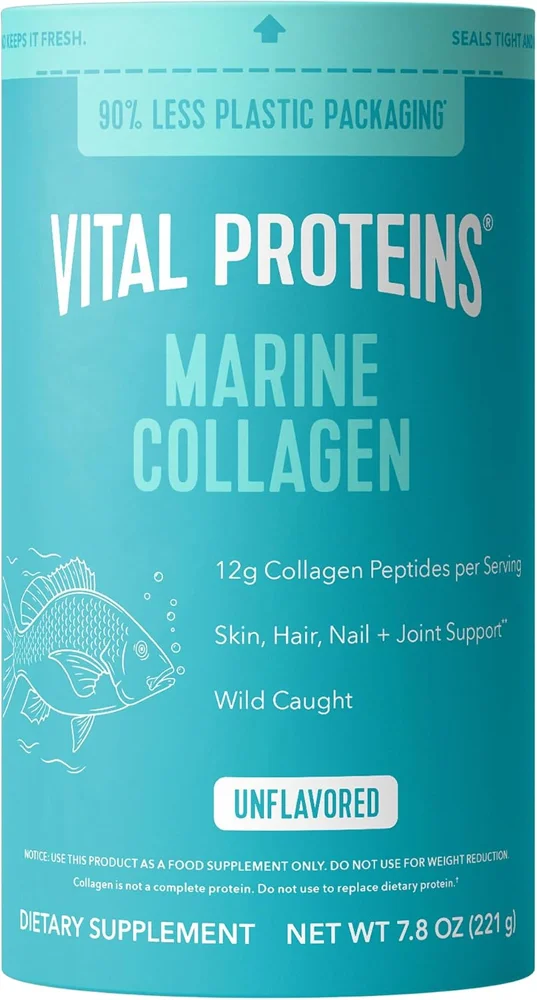
Vital Proteins Marine Collagen Unflavored 7.8 oz
The selected 7.8 oz label identifies cod and 12 g collagen per serving.
Check current price at Amazon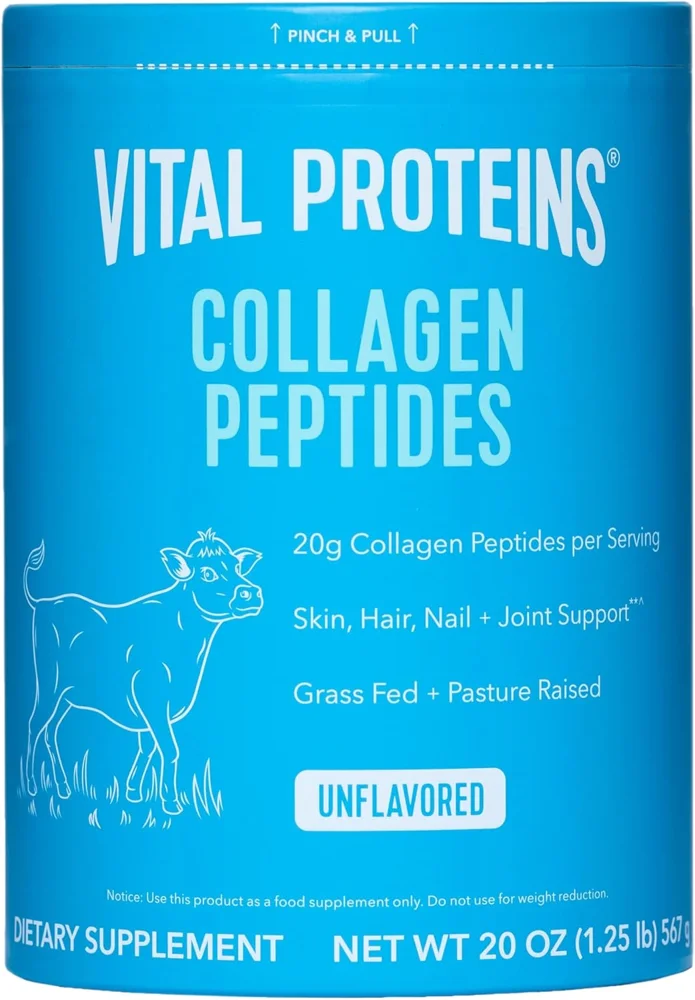
Vital Proteins Collagen Peptides Unflavored 20 oz
Bovine-derived, single-ingredient powder; 20 g collagen per labeled serving.
Check current price at AmazonAffiliate links: we may earn a commission if you buy.
The differences that affect a purchase
| Check | Marine | Bovine |
|---|---|---|
| Source | Usually fish skin or scales; verify species | Cattle-derived; verify source on the label |
| Allergy check | Fish is relevant; read the full allergen statement | Read the full label; do not infer allergy suitability |
| Dietary fit | May fit a fish-eating diet, not vegan | Does not fit a diet avoiding beef |
| Serving | Varies by product; not a standard 12 g | Varies by product; not a standard 20 g |
| Benefit evidence | No guaranteed superiority based on source | No guaranteed superiority based on source |
| Value | Use delivered cost per gram | Use the same denominator |
Does marine collagen work better?
Studies of oral collagen often assess skin hydration or elasticity, but the results depend on the trials being pooled. A 2025 meta-analysis of 23 randomized trials reported positive pooled results for hydration, elasticity and wrinkles. Its higher-quality and non-industry-funded subgroups did not show statistically significant benefits. Those findings make a blanket anti-aging promise hard to justify; they do not prove that no individual can benefit.
Comparing separate marine and bovine trials is not the same as a reliable head-to-head comparison at the same dose in the same population. A source subgroup that is not statistically different also does not prove the two products are equivalent. Neither finding supports paying a premium simply because a label says “marine.”
The evidence concerns studied regimens, not every collagen tub. Evidence about a source or peptide ingredient does not establish that either featured finished product is clinically superior to the other.
What about collagen types and absorption?
Type I, II or III on a label is not a map of where the supplement will go in your body. Hydrolyzed collagen has been broken down into smaller peptides; source and processing are different pieces of information. Absorption claims alone do not establish a meaningful improvement in wrinkles or hair growth.
For a muscle-building goal, read collagen versus protein powder. Do not replace a varied protein intake with collagen just because a powder contains protein.
Compare the exact tub, not just the brand
The selected Vital Proteins Marine Collagen 7.8 oz Amazon label, inspected October 10, 2026, specifies three tablespoons (12 g), about 18 servings, collagen from cod and “Contains: cod.” An undated manufacturer comparison chart instead uses two scoops and whitefish. Use the instructions and allergen statement on your exact tub; do not combine the two records.
If you prefer tablets to either powder, the Youtheory Collagen tablet review adds the animal-source and six-tablet serving checks needed for a fair comparison.
The reviewed bovine option is the 20 oz plain Collagen Peptides tub with a 20 g serving. These different serving sizes are label facts, not recommendations to take one rather than the other.
Advanced, flavored and creamer formulas may add other ingredients. If you want a plain powder, use the unflavored, no-sweetener checklist rather than assuming every product in a brand’s collagen range is single-ingredient.
Compare value with the same arithmetic
Use: delivered bottle cost / total grams of collagen in that bottle. For a blend, the tub’s net weight may include non-collagen ingredients, so use the labeled collagen amount multiplied by servings.
For a hypothetical comparison, $30 for 300 g collagen is $0.10/g, while $45 for 300 g is $0.15/g. The second costs 50% more for the same collagen amount; this calculation says nothing about clinical benefit. Those figures are examples, not live retailer prices.
Does one source have fewer contaminants?
Neither an ocean-themed label nor grass-fed wording is a finished-product contaminant test. Ask what was measured, which laboratory performed the work, and whether the result covers the product or lot you are buying. “Tested” without results or limits is difficult to evaluate.
The collagen testing map explains how to compare reports. For a digestive concern, see collagen and bloating before switching animal sources without checking the added ingredients.