
Collagen vs Protein Powder for Muscle
Collagen is protein, but it is not nutritionally interchangeable with complete protein such as whey for a muscle-focused diet. It lacks tryptophan, an essential amino acid. A small, short trial found within-group muscle protein synthesis increases with whey and pea, not collagen, but did not establish long-term superiority. You do not need to buy both.
Whey contains milk; plant powders may contain other allergens. Do not test a suspected allergy by switching formulas. If a medical condition affects your diet, discuss protein choices with your clinician.
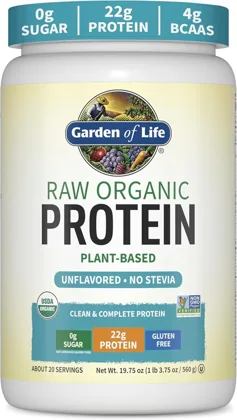
Garden of Life Raw Organic Protein
22 g protein; no stevia on the reviewed formula.
Contains sesame. Not a guarantee of symptom-free digestion.
Check price at AmazonRead the product analysis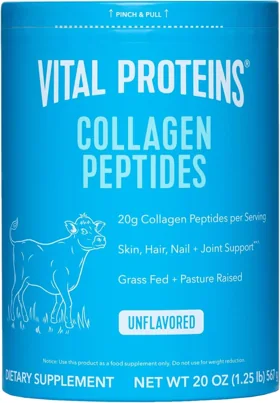
Vital Proteins Collagen Peptides
Plain bovine collagen without the Advanced formula extras.
Not complete protein; not a substitute for muscle-focused protein.
Check price at AmazonRead the product analysisAffiliate links: we may earn a commission if you buy, at no extra cost to you.
- Check the protein source and amino acid profile.
- Confirm whether collagen is included in total protein.
- Use current package details, including milk ingredients.
On this page
- Can collagen replace whey for muscle?
- How do collagen, whey, pea, and mixed shakes compare?
- What did the whey, pea, and collagen study actually find?
- How should you count a shake with added collagen?
- Which optional powder fits the protein goal?
- Do you need both, and what should guide the purchase?
- FAQ
- References
Can collagen replace whey for muscle?
No. Collagen is protein, but it is not nutritionally interchangeable with a complete protein such as whey when the goal is supporting muscle. Collagen lacks tryptophan, an essential amino acid, a distinction discussed in the 2024 trial comparing whey, pea, and collagen protein.
Essential amino acids are ones the body needs from food. A complete protein supplies all of them; a protein gram count alone does not describe that amino acid profile. The NIH Office of Dietary Supplements' exercise guidance explains why protein sources and their amino acid profiles matter alongside adequate nutrition.
This does not mean collagen is fake protein or that its grams should disappear from a food log. It means a collagen-only powder is not a like-for-like replacement for complete protein. You can choose collagen peptides for another goal without treating them as a complete muscle protein, and there is no requirement to buy collagen and whey together.
How do collagen, whey, pea, and mixed shakes compare?
Compare the protein source and amino acid profile before comparing scoop sizes or front-label protein totals. These four options should not be treated as equivalent simply because each supplies protein.
| Option | What the protein source tells you | Practical choice check |
|---|---|---|
| Collagen-only powder | Collagen lacks tryptophan and is not a complete protein, as discussed in the comparative trial. | Do not use it as a nutritionally equivalent substitute for complete protein in a muscle-focused comparison. |
| Whey powder | Whey is a milk-derived complete protein. Protein source matters in exercise nutrition. | Consider whether milk-derived ingredients fit your dietary needs, then check the specific package. |
| Pea protein powder | A plant-protein source with an amino acid profile different from whey and collagen; pea was evaluated separately in the trial. | Check whether the product is pea protein or a blend. A trial of one supplement is not evidence for every formula. |
| Milk-protein-and-collagen shake | Complete milk protein combined with incomplete collagen, as in the reviewed mixed shake. | Read total protein and included collagen as overlapping numbers, not amounts to add together. |
Scroll sideways for all columns.
A source comparison is not a brand ranking. Ingredient and nutrition information can identify what you are buying, but a manufacturer's label cannot establish a muscle-building advantage.
What did the whey, pea, and collagen study actually find?
The small randomized trial found an increase in integrated muscle protein synthesis within the whey and pea groups, but not within the collagen group. It did not establish definitive head-to-head superiority for muscle growth or strength.
The study involved 31 healthy older men with a mean age of 72. They followed a controlled diet for seven days, then received 50 grams per day of supplemental protein, split between breakfast and lunch, for another seven days. Those details describe the study, not an intake recommendation.
Muscle protein synthesis describes production of new muscle protein. Here it was measured across a short period, rather than as long-term changes in muscle size or strength. Importantly, the reported figure showed no significant time-by-group interaction or group effect.
Improvement within one group and no improvement within another do not, by themselves, prove a statistically significant difference between the groups. Read this as a short mechanistic study that informs the comparison, not a guarantee that whey or pea will produce more muscle for every reader.
It also was not a trial of the exact branded powders or ready-to-drink shake discussed here. Their label facts should not be presented as exact-product clinical results.
How should you count a shake with added collagen?
Count collagen as part of a mixed shake's protein total, not an extra amount on top. The manufacturer listing for the 325-milliliter Vital Proteins Collagen & Protein Shake states 30 grams of total protein, including 10 grams of collagen, and 160 calories.
The Collagen & Protein Shake combines milk protein concentrate with bovine collagen. The entire 30 grams should therefore not be described as 30 grams of complete protein. It contains milk and is not verified lactose-free.
How would one carton look in a food log?
One carton's entry keeps the total and the included collagen separate:
- Total protein: 30 grams.
- Collagen within that total: 10 grams.
- Noncollagen remainder: 30 minus 10 equals 20 grams.
The entry is one 30-gram total, not 40 grams. If your log has only a total-protein field, enter 30 rather than adding a second 10-gram entry. You can note the collagen contribution separately.
This preserves both facts: collagen contributes to total protein, and all of the grams do not share the same amino acid profile.
If the carton is intended to stand in for food, compare protein shakes and meal replacements as a separate decision.
Which optional powder fits the protein goal?
You can verify specific label claims, but those claims are not proof that a powder produces better muscle results. These products are optional purchases, not requirements for training.
What does Raw Organic Protein list?
The Raw Organic Protein Unflavored / No Stevia listing states 22 grams of protein, 0 grams of sugar, and no stevia. Check the current package for serving details and ingredients. Those facts do not establish a muscle benefit or make this product equivalent to the pea supplement used in the trial.
What does plain Collagen Peptides list?
For the plain 20-ounce Vital Proteins Collagen Peptides Unflavored product, the reviewed record shows a front-label claim of 20 grams of bovine collagen. It does not resolve the Nutrition Facts protein quantity, calories, or serving count, so check the current package for those details.
This bovine collagen product is not vegan, and collagen is not a complete protein. Do not treat the front-label collagen amount as a confirmed Nutrition Facts protein amount or borrow serving information from another formula.
Do you need both, and what should guide the purchase?
No, you do not need to buy both. Start with whether your ordinary meals provide adequate nutrition and protein, then decide whether a supplement fills a practical gap. Protein foods and supplements support training; they do not replace it, as the NIH exercise guidance explains.
For a muscle-focused choice, check the protein source, the package's serving details, and whether collagen is already included in the total. If you choose collagen for another goal, keep that decision separate from the question of complete protein for muscle nutrition.
Do not shop around a supposed universal per-meal absorption ceiling. Protein absorption and a study's measurement of muscle protein synthesis are different questions; neither justifies a one-size-fits-all intake rule.
Consider protein as one part of workout recovery. When comparing costs, use current package figures in the protein-powder cost-per-gram calculator. A lower cost per labeled gram does not make an incomplete protein nutritionally equivalent to a complete one.
FAQ
Is the mixed shake lactose-free or suitable for a milk allergy?
It contains milk, and a lactose-free status has not been verified. Do not choose it for a milk allergy or use it to test a suspected allergy. Check the current package, and ask your clinician about an appropriate alternative.
Can the mixed shake replace a full meal?
The reviewed record does not establish it as a full-meal replacement or a clinical oral nutrition supplement. Its 160 calories and 30 grams of protein are label facts, not proof that it covers a meal's nutrition needs.
How can I compare cost without relying on advertised prices?
Divide package price by servings per package times protein grams per serving. For a hypothetical $24 tub with 20 servings of 20 grams each, $24 divided by 400 grams equals $0.06 per labeled protein gram. Compare similar protein types; this calculation does not account for amino acid quality.
Does “no stevia” make a powder better for muscle?
No muscle benefit is established by that formulation claim. “No stevia” describes what the listed product leaves out; it does not prove greater muscle protein synthesis or better gastrointestinal tolerance. Keep taste and ingredient preferences separate from evidence about muscle.
Does the trial mean I should take 50 grams of supplemental protein daily?
No. That was the trial's supplemental amount, split across breakfast and lunch, not a recommended dose for readers. A small, short trial in healthy older men cannot set a protein target for every age, health condition, or diet.
References
Labels and evidence checked October 4, 2026. For general information, not a personal treatment plan.