
Magnesium Glycinate Powder vs Capsules: Which Format Fits Your Routine?
Magnesium glycinate powder and capsules solve different practical problems. Powder avoids swallowing several capsules but requires measuring and mixing. Capsules provide counted units but may require several to reach the labeled serving. Neither physical format, by itself, proves better absorption or better results.
On this pageTable of Contents
- 1Start with the inconvenience you are trying to avoid
- 2A real same-brand example
- 3Powder: the benefits are practical, not automatically biological
- 4Capsules: count the actual unit amount
- 5Tablets are a third format, not a synonym for capsules
- 6Does powder absorb faster or work better?
- 7Compare cost using the same denominator
- 8Safety is about intake and circumstances, not whether it is a drink
The clearest comparison uses the exact products you might buy rather than a generic claim about all powders or all pills. Solaray’s reviewed powder and 120-capsule formula offer a useful example: both declare 350 mg magnesium per full label serving, but the powder uses a rounded scoop and the capsule formula uses four capsules with added BioPerine. [1] [2]
Start with the inconvenience you are trying to avoid
| Your situation | What to examine first | What not to assume |
|---|---|---|
| You dislike swallowing several capsules | A purpose-made powder and its measuring instructions | That every capsule can safely be opened |
| You want counted, portable units | Capsule amount per unit and capsule count per serving | That one capsule equals the front-label amount |
| You dislike sweetened drinks | The complete powder ingredient list | That “unflavored” means no taste |
| You need a specific smaller amount | An appropriate unit size or validated measuring method | That an eyeballed fraction of a scoop is precise |
| You want the lower cost | Price for the same declared elemental amount | That cheaper per bottle means cheaper per comparable quantity |
These are decision prompts, not a personalized dose-selection tool. The useful question is which package fits an appropriate plan with the least confusion.
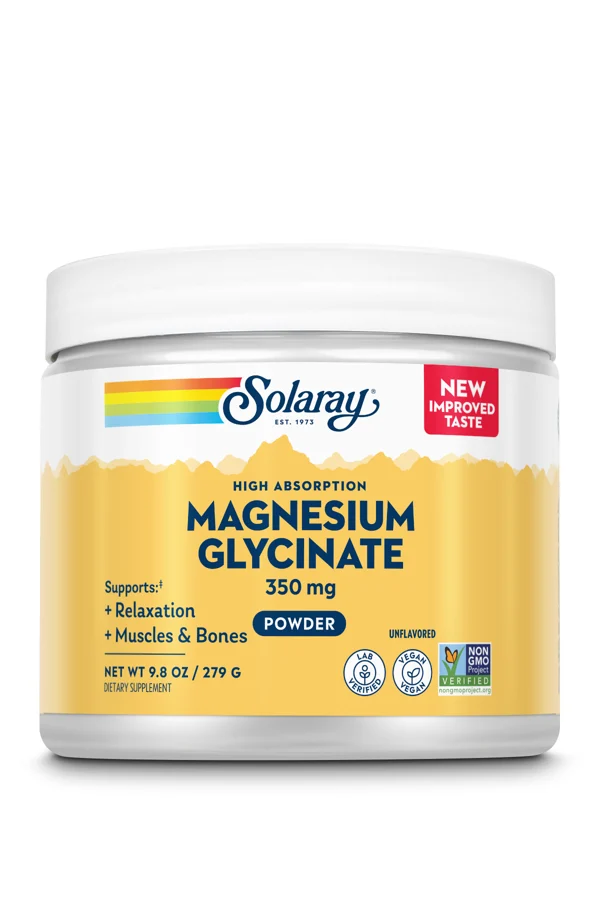
Solaray Magnesium Glycinate Powder
350 mg magnesium per rounded scoop. 9.8 oz powder.
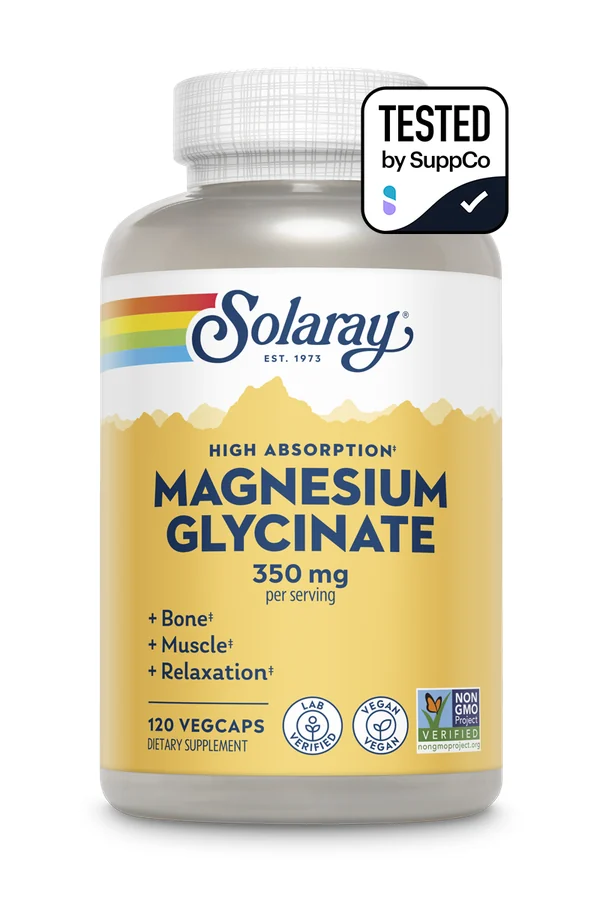
Solaray High Absorption Magnesium Glycinate 120 VegCaps
350 mg magnesium per four capsules. 120 capsules.
Check price at HerbsProWe may earn a commission from this link.A real same-brand example
| Feature | Solaray powder | Solaray 120 VegCaps |
|---|---|---|
| Magnesium per full serving | 350 mg | 350 mg |
| Full serving | Rounded 5.57 g scoop | Four capsules |
| Servings per container | 50 | 30 |
| Notable additional ingredient | Citric acid | BioPerine 5 mg per serving |
| Preparation | Mix as directed | Count intact capsules as directed |
The two formulas therefore are not simply the same contents in different packaging. The difference in BioPerine and other ingredients can matter even when the magnesium amount matches. [1] [2]
Powder: the benefits are practical, not automatically biological
A drink format can remove the need to swallow a capsule. It can also make ingredient preferences more visible: Solaray’s reviewed powder has no added sweetener listed, while Thorne’s magnesium bisglycinate powder lists monk fruit concentrate. That allows a shopper to compare a specific preference rather than choose on a vague “cleaner” claim. [1] [3]
If powder is the format you prefer, compare Thorne, Solaray and Doctor’s Best powders by scoop weight, added ingredients and cost per equal magnesium amount. Their scoops are not interchangeable.
The trade-off is preparation. You need the correct measuring tool, a suitable drink, and a place to keep the powder. A large rounded scoop and a smaller level scoop are not interchangeable, even if both containers use the word magnesium.
A scoop’s mass is the weight of the entire serving. Its nutrient table separately states elemental magnesium. Confusing those two can produce a much larger misunderstanding than the difference between powder and capsules.
Capsules: count the actual unit amount
In the Solaray example, four capsules provide 350 mg, so one capsule corresponds arithmetically to 87.5 mg. In the reviewed Pure Encapsulations product, one capsule provides 120 mg. “One capsule” does not identify a standardized magnesium amount across brands. [2] [4]
Capsules may simplify counted units and travel, but their full serving can still mean several units. A 120-capsule bottle supplying four capsules per serving has 30 full servings, not 120. This distinction should be resolved before comparing price or planning a reorder.
We have not measured the size of these capsules or run swallowing tests. Capsule format should not be turned into an unsupported “easy to swallow” claim.
Tablets are a third format, not a synonym for capsules
NOW Magnesium Glycinate Tablets provide 200 mg in two tablets. Their coating and other ingredients differ from a two-piece capsule. A question about opening a capsule therefore cannot automatically answer whether a tablet may be crushed or divided. [5]
The NOW tablet review provides a concrete example: 100 mg per tablet, 200 mg per two-tablet serving, with separate 90- and 180-count bottles.
If swallowing capsules is the problem, check whether your exact magnesium capsule can be opened; permission is product-specific.
For any proposed change to a product’s physical form, check the exact manufacturer’s instructions or ask a pharmacist. An intact tablet or capsule is not evidence of its release characteristics merely from its appearance.
Does powder absorb faster or work better?
We did not establish a suitable direct clinical comparison showing that the Solaray powder produces superior absorption or outcomes to its capsule counterpart. Even when a study measures a concentration difference for a formulation, that is not automatically evidence of better sleep, symptom control, or long-term health.
Use the format comparison for what it can reliably answer: preparation, ingredients, unit count, and cost. Use appropriate clinical evidence for the separate question of whether magnesium supplementation is useful for the condition you are concerned about. The name and physical format cannot supply that answer by themselves.
Compare cost using the same denominator
A fair comparison is price ÷ total declared elemental magnesium in the container. Comparing cost per serving alone can be misleading when the servings contain different amounts.
At the September 27, 2026 manufacturer prices, Solaray powder costs $26.99 for 50 servings of 350 mg, or about $0.154 per 100 mg. The 120-capsule bottle costs $18.39 for 30 servings of 350 mg, or about $0.175 per 100 mg. The powder is slightly less expensive per equal magnesium amount in this same-day comparison; tax and shipping are excluded. [6] [7]
This cost unit is bookkeeping, not a recommendation to consume 100 mg or to fractionate a capsule.
Safety is about intake and circumstances, not whether it is a drink
The US adult supplemental magnesium upper limit is 350 mg daily from supplements and medications; naturally occurring food magnesium is not included. Either format contributes to that supplemental intake. Both can cause gastrointestinal effects, and kidney impairment or certain medicines require additional caution. [8]
For persistent or important symptoms, changing from capsules to powder is not a substitute for finding the cause. For a straightforward format decision, choose the product whose label amount, ingredient list, and preparation you can follow reliably. A routine you understand is more useful than a theoretical format advantage the evidence has not established.
Related reading
For the four-capsule serving and BioPerine details, see our Solaray 120-capsule magnesium glycinate review.
For the rounded scoop, ingredient list, and price calculation, see our Solaray magnesium glycinate powder review.
To compare different magnesium formats and labeled amounts, use our magnesium glycinate supplement comparison.
References
- Solaray Magnesium Glycinate Powder: Supplement Facts.
- Solaray Magnesium Glycinate: 120-capsule Supplement Facts.
- Thorne Magnesium Bisglycinate POWDER.
- Pure Magnesium Glycinate: 30-capsule label.
- NOW Magnesium Glycinate Tablets.
- Solaray Magnesium Glycinate Powder.
- Solaray Magnesium Glycinate product page.
- NIH ODS: Magnesium, Health Professional Fact Sheet.