
Compare formats & ingredients
Psyllium vs wheat dextrin: fiber choice, mixing and evidence
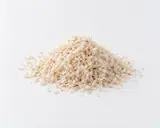
If your goal is constipation relief or LDL cholesterol lowering, psyllium has more directly applicable evidence. If easy mixing matters most, wheat dextrin dissolves without a gel-like texture and can help you add fiber. It should not be assumed to deliver the same constipation or cholesterol benefits as psyllium.
Increase fiber gradually within label directions. Take psyllium powder or granules with at least 8 oz (240 mL) of liquid per dose; never swallow the powder dry. Ask a clinician before use if you have swallowing trouble or a possible bowel blockage, and ask a pharmacist about spacing your exact fiber product from each medicine. Do not self-treat bleeding, severe abdominal pain or vomiting with fiber; seek medical care. Trouble breathing or swallowing after use needs urgent help. Seek advice for persistent constipation; MedlinePlus's psyllium directions limit self-treatment for constipation to one week unless a clinician directs otherwise.
Affiliate link: we may earn a commission if you buy. Read the product review.
How the fibers differ
Both are soluble fibers, but solubility alone does not tell you whether a fiber forms a gel or is fermented. Tufts' comparison of psyllium and wheat dextrin explains the physical differences that help distinguish their effects and handling.
| What matters | Psyllium | Wheat dextrin |
|---|---|---|
| Gel formation | Viscous: forms a gel in water. | Nonviscous: dissolves without forming a viscous gel. |
| Fermentation | Resists fermentation. | Fermentable; gas is possible. |
| Mixing and texture | Thickens in liquid; follow the label's mixing and drinking instructions. | Readily dissolves, making it less noticeable when mixed. |
| Evidence for the goal | More directly applicable evidence for constipation and LDL lowering. | Can contribute fiber, but psyllium studies do not establish equivalent constipation or LDL effects. |
| Label serving | Varies by product; compare dietary fiber grams per labeled serving, not just powder weight. | Varies by product; check the current serving size and dietary fiber grams rather than teaspoons alone. |
Resistance to fermentation does not guarantee that psyllium will cause no digestive symptoms. If tolerance is a concern, our guide to bloating with psyllium explains the precautions.
For constipation, psyllium has clearer support
The 2023 AGA/ACG guideline for chronic idiopathic constipation in adults conditionally suggests fiber supplementation. Its implementation discussion identifies psyllium as the fiber with evidence among those evaluated. This is a conditional recommendation, not a guarantee of relief.
That guidance is not high-certainty, head-to-head proof that wheat dextrin cannot help anyone's regularity. It does mean that evidence for psyllium should not be transferred to a wheat dextrin powder simply because both products supply fiber.
LDL lowering is a separate question from regularity
A change in bowel regularity does not establish that a fiber lowers LDL cholesterol. Psyllium has more directly applicable evidence for this cholesterol outcome than wheat dextrin. The distinction matters because soluble fibers differ in gel formation and fermentation; an equal number of fiber grams does not establish an equal cholesterol effect.
Our psyllium husk guide covers its cholesterol and constipation uses in more detail. Do not stop prescribed cholesterol treatment in favor of either fiber supplement without discussing the change with your clinician.
Compare fiber grams, not grams of powder
Hypothetical label comparison: Imagine a psyllium-based product lists 6 g of powder per serving and 3 g of dietary fiber. A wheat dextrin product lists 4 g of powder per serving and 3 g of dietary fiber. This is an example only, not a Metamucil or Benefiber label comparison.
The powder weights differ by 2 g, but the fiber amounts differ by 0 g: both servings provide 3 g of dietary fiber. The larger powder serving does not provide more fiber in this example. Equal fiber grams also do not make the two ingredients interchangeable for constipation or LDL lowering.
For actual product labels, see our reviews of Metamucil Sugar-Free Orange 23.3 oz and Benefiber Original 17.6 oz. Match the named version and check the current package's serving instructions.
Check the exact formula, not just the brand
A brand's gummies, advanced formulas and products sold in other countries may use different fibers. Do not assume every Metamucil product contains psyllium or every Benefiber product contains wheat dextrin. Check the fiber ingredient, serving size and dietary fiber amount on the exact package.
The manufacturer's US Benefiber Original page identifies wheat dextrin and describes the powder as clear-dissolving and gluten-free. Gluten-free processing does not by itself establish suitability for someone with a wheat allergy. If you have celiac disease or a wheat allergy, check the exact current package and get clinical advice before choosing it.
Sources
Sources and labels checked October 15, 2026. How we review. General information, not personal medical advice.